Jump to Recipe
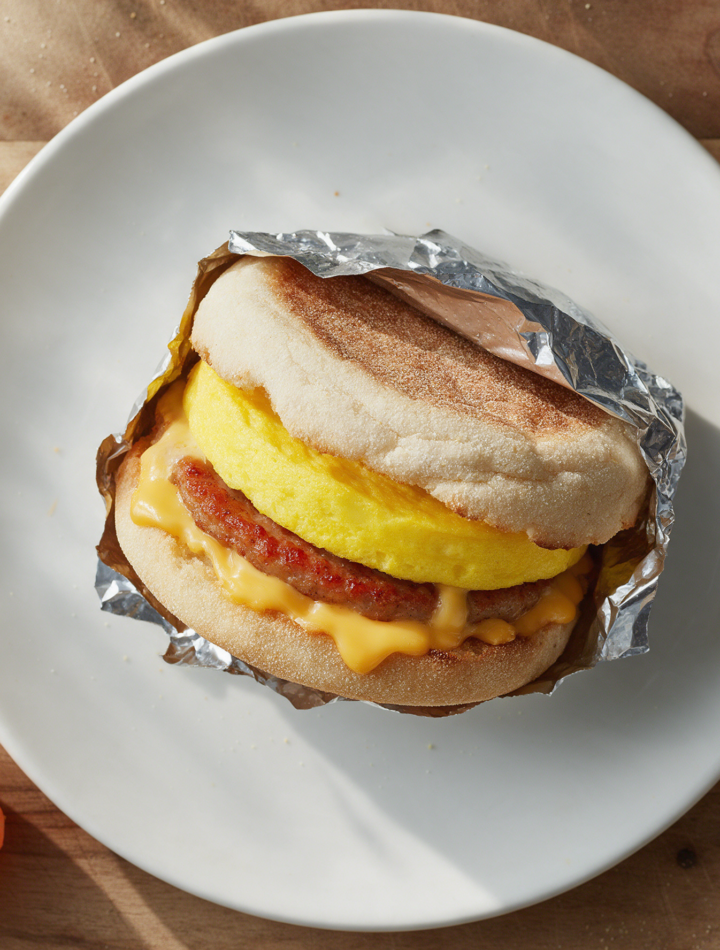
This sausage egg and cheese breakfast sandwich, like these high-protein baked egg cups, has 39 grams of protein per sandwich and takes about 55 minutes start to finish, most of it hands-off while the eggs bake and the sausage cooks. The protein comes from real bulk pork sausage, two eggs, and a slice of sharp cheddar, not a powder, so it eats like an actual breakfast sandwich.
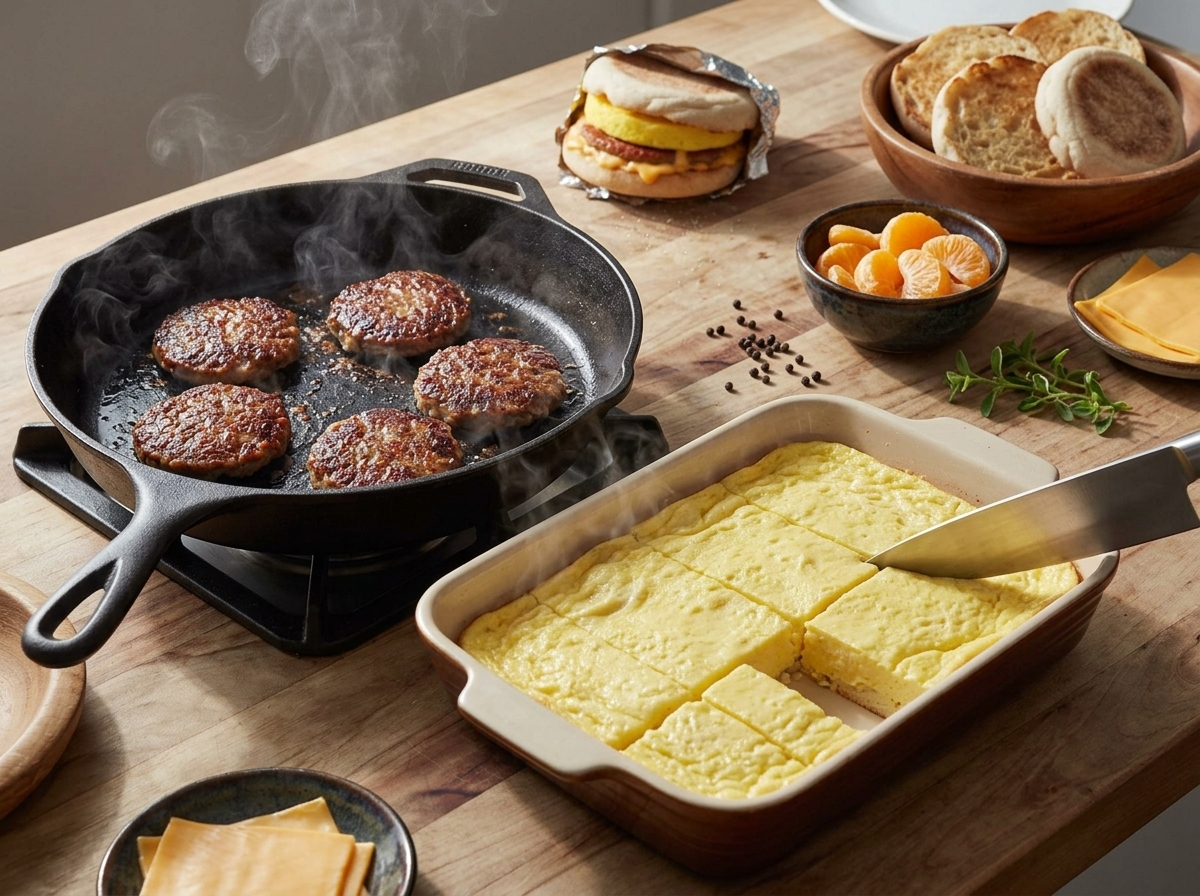
The eggs bake in a 9×13-inch dish instead of a muffin tin, so you get flat rectangles that actually fit the English muffin instead of round pucks that slide off. The sausage cooks in a cast iron skillet while the eggs are in the oven, so both finish around the same time.
Once assembled, the sandwiches need to cool fully before you wrap them. Skip that step and the muffin turns soggy in the freezer, since warm steam gets trapped inside the foil.
I bake a batch of these on Sunday when the week ahead looks too rushed for a real breakfast. They reheat from frozen in under 2 minutes, which beats standing at the stove on a Tuesday.
Why You’ll Love This Recipe
- Delivers 39 grams of real protein per sandwich
- Freezes flat for three months without getting soggy
- Ready in 90 seconds from the freezer to your hand
- Uses one skillet and one baking dish, no fuss
Ingredient Notes
- bulk breakfast sausage: Use plain bulk sausage, not links, so you can press it into flat patties that match the muffin shape.
- eggs: Twelve eggs baked together in a dish give you six thick rectangles instead of round patties that slide off the muffin.
- cheddar cheese: Sharp cheddar holds up to freezing and reheating better than mild. American melts softer if that’s what you prefer.
- English muffins: Toast them well before assembling so they don’t turn gummy once frozen and reheated.
- milk: A few tablespoons in the eggs keep the baked rectangles tender instead of rubbery.
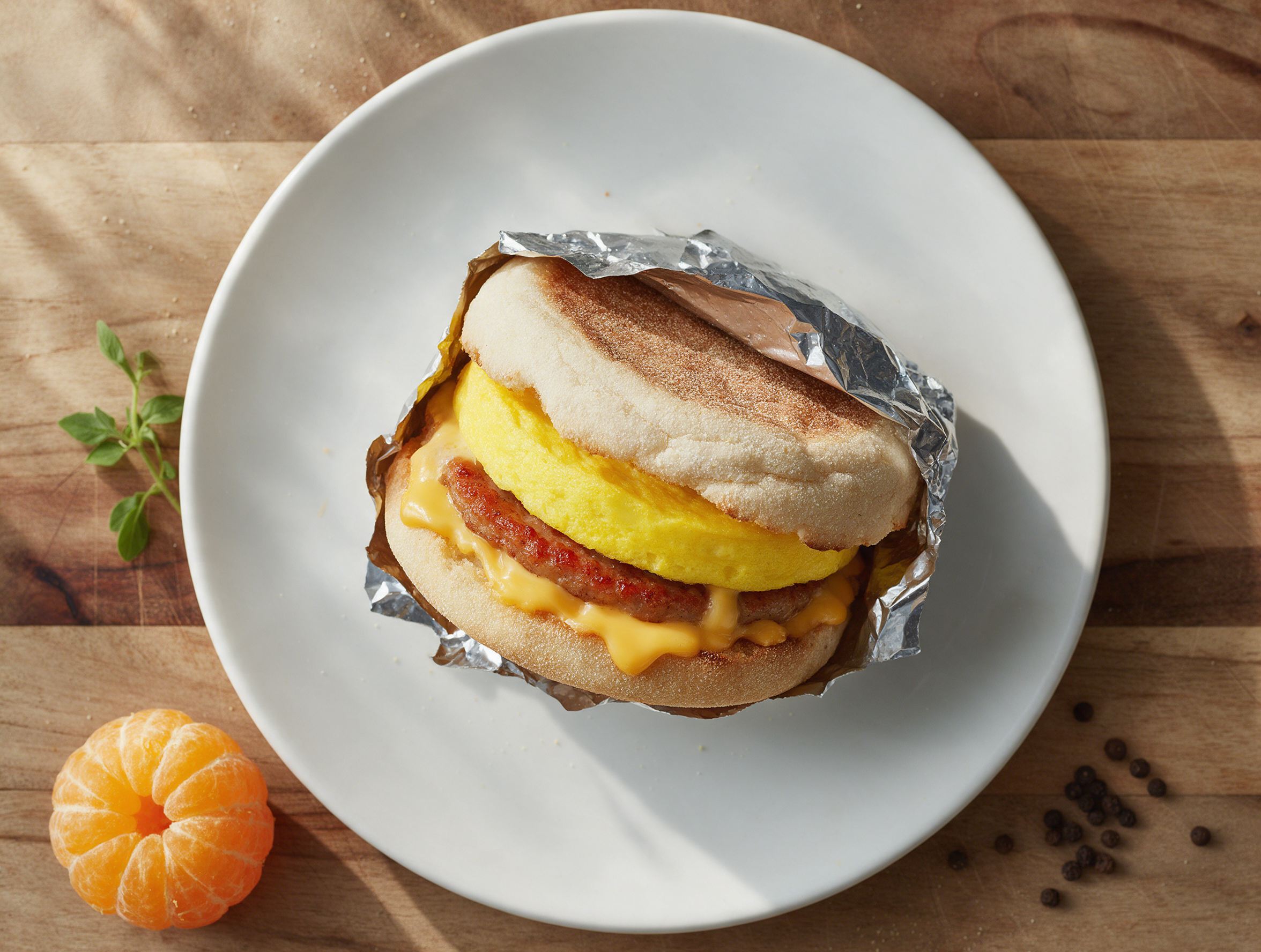
Make-Ahead Sausage Egg Cheese Breakfast Sandwiches
Ingredients
Method
- Heat oven to 350F/175C. Grease a 9x13-inch (23x33cm) baking dish with the butter.
- Whisk the 12 eggs with 3 tbsp milk, 1/2 tsp salt, and 1/4 tsp black pepper in a mixing bowl until smooth. Pour into the prepared dish.
- Bake for 20 to 22 minutes, until the center is fully set and no longer jiggles when you shake the pan. Cool in the dish for 5 minutes, then cut into 6 rectangles about the size of the English muffins.
- While the eggs bake, divide the 680 g (1.5 lb) bulk breakfast sausage into 6 patties, about 113 g (4 oz) each, pressed 1/2 inch thick and slightly wider than the muffins since they shrink as they cook.
- Heat the 12-inch cast iron skillet over medium heat. Cook the patties in two batches of 3 so they aren't crowded, 4 to 5 minutes per side, until an instant-read thermometer reads 160F/71C and there's no pink in the center.
- Split and toast the English muffins until golden at the edges.
- Lay a slice of cheddar on the bottom half of each warm muffin so it starts to melt, then add a sausage patty and an egg rectangle. Close with the muffin top.
- Cool the assembled sandwiches completely on a wire rack, about 15 minutes, before wrapping. Wrapping them warm traps steam and makes the muffin soggy once frozen.
- Wrap each sandwich tightly in foil or parchment, then place in a freezer bag or airtight container. Freeze for up to 3 months.
- To reheat from frozen, unwrap and microwave on 50% power for 90 seconds, then full power for 30 to 45 seconds, until hot in the center.
Notes
- Cook sausage to 160F/71C internal, no pink in the center.
- Cool sandwiches fully before wrapping or they turn soggy in the freezer.
- Cut the egg bake while still warm for cleaner rectangles.
- Toast muffins before assembling so they hold up to reheating.
Tips for Success
- Press sausage patties slightly wider than the muffins since they shrink and round out as they cook.
- Check sausage with an instant-read thermometer and pull it at 160F/71C so the center isn’t pink.
- Cool sandwiches fully on a rack before wrapping or trapped steam will make the muffin soggy in the freezer.
- Label each wrapped sandwich with the date so you use up the oldest ones first.
- Cut the baked egg while it’s still warm, it holds together better than once it firms up cold.
Variations
- Swap cheddar for pepper jack and add a pinch of chili powder to the eggs for a spicier version.
- Use maple breakfast sausage instead of plain for a sweeter edge that plays well with the cheddar.
- Replace the English muffin with a split biscuit for a softer, more Southern-style sandwich.
Storage and Reheating
Wrap each sandwich tightly in foil or parchment once fully cooled, then store them in a freezer bag or airtight container. They keep well in the freezer for up to 3 months without much loss in texture.
To reheat from frozen, unwrap and microwave on 50% power for 90 seconds, then finish on full power for 30 to 45 seconds until the center feels hot. Swap foil for a paper towel first if you left it on, since foil can’t go in the microwave.
For a crisper muffin, reheat in a 350F/175C oven for 15 to 18 minutes instead, keeping the foil on for the first 10 minutes so the inside doesn’t dry out.
Serving Suggestions
These sandwiches don’t need much else since the sausage, egg, and cheese already cover a full plate. A piece of fruit or a handful of berries on the side, not unlike the fruit topping on cottage cheese pancakes with blueberry compote, rounds things out without much extra work.
For weekend mornings when there’s more time, I’ll fry a sandwich fresh instead of pulling one from the freezer and add hot sauce or a smear of mustard on the muffin before closing it up.
FAQ
How do I know when the egg bake is done for these breakfast sandwiches?
The eggs are done when the center is fully set and doesn’t jiggle when you shake the dish, usually 20 to 22 minutes at 350F/175C. The edges will pull slightly away from the sides of the pan. If the middle still looks wet, give it another 2 to 3 minutes.
Can I use turkey sausage instead of pork sausage in these freezer sandwiches?
Yes, turkey breakfast sausage works, though it’s leaner and cooks a bit faster, so start checking the internal temperature around 4 minutes per side. It has slightly less fat than pork sausage, which can make the patties a touch drier once reheated from frozen. A light spray of oil in the skillet helps.
How long do sausage egg and cheese breakfast sandwiches last in the freezer?
They keep well for up to 3 months when wrapped tightly in foil or parchment and stored in an airtight bag. After that they’re still safe to eat but the muffin can pick up freezer odors and the texture gets drier. Label each one with the date before freezing.
What goes well with these freezer breakfast sandwiches on a busy morning?
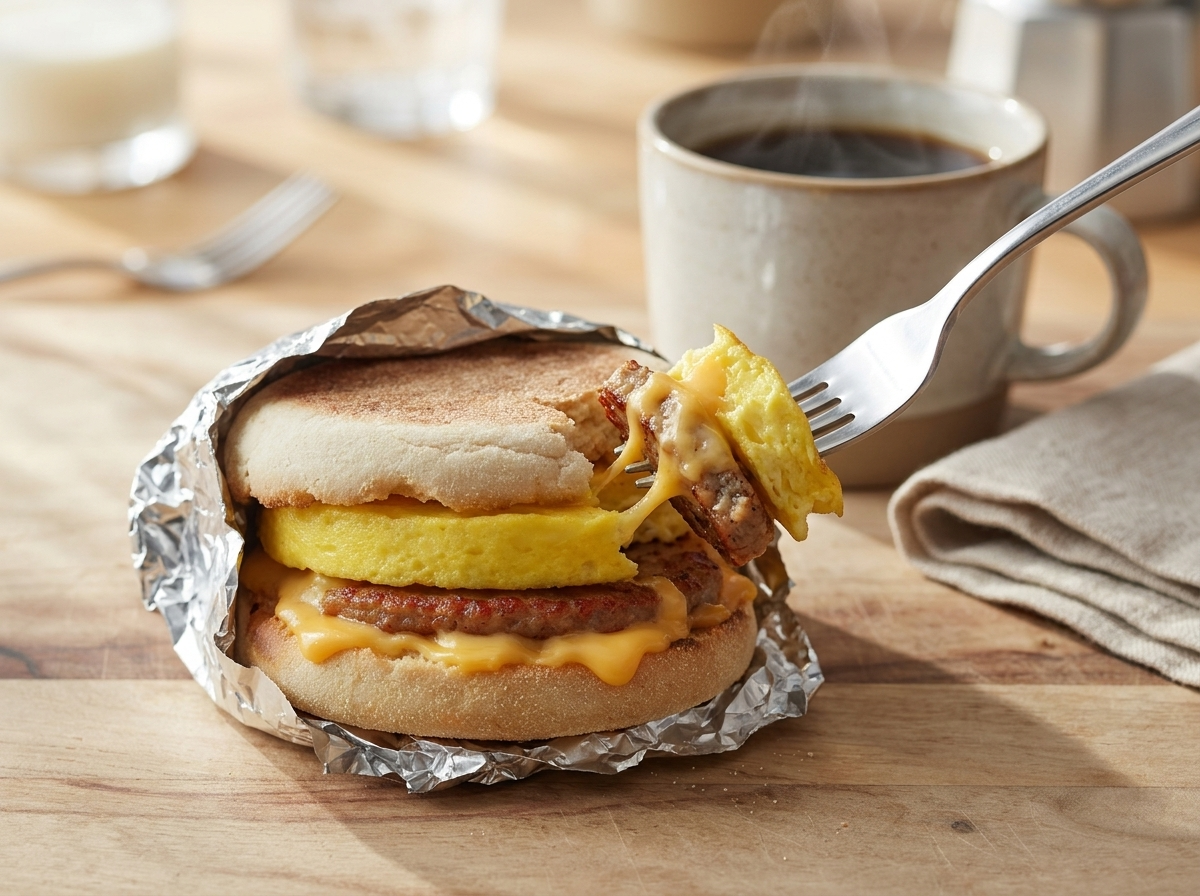
Fresh fruit or a small glass of juice balances the richness since the sandwich itself is already heavy on protein and fat. Coffee or milk on the side rounds it out without adding much prep. I keep berries in the freezer too so there’s no extra chopping.
Are sausage egg and cheese breakfast sandwiches gluten free?
No, not as written, since the English muffin contains wheat flour. Swap in a certified gluten-free English muffin or a gluten-free biscuit and the rest of the recipe, the sausage, eggs, and cheese, stays the same. Double check your sausage label too, since some brands add fillers with gluten.
Why did my breakfast sandwich turn soggy after freezing?
Soggy sandwiches almost always mean they were wrapped before fully cooling, which traps steam against the muffin. Toasting the muffins well before assembly also helps them hold up better once frozen and reheated. Let sandwiches cool at least 15 minutes on a rack before wrapping them.