
Jump to Recipe
These baked egg cups have 30 grams of protein per serving and take about 35 minutes start to finish. The protein comes from eggs, cottage cheese, feta and diced ham, not a scoop of powder, so they taste like an actual breakfast instead of something you choke down with a fork, the same way these cottage cheese pancakes skip the powder too.
I started making a double batch of these on Sunday afternoons once my kids stopped caring what was in a muffin tin and just wanted something they could grab before the bus. Twelve cups from one batch gets us through Wednesday.
The base is simple. Eggs and egg whites give the structure, cottage cheese keeps everything from drying out, feta brings the salt and tang, and diced ham is what gets you to 30 grams without stacking on six eggs a person.
One thing that trips people up: if your spinach isn’t squeezed dry, the eggs turn watery under the feta instead of setting firm. Wilt it, then wring it out in a clean towel before it goes into the tin.
Why You’ll Love This Recipe
- 30 grams of protein per serving from real eggs, ham and cheese
- Bakes in one 12-cup muffin tin, no extra pans to wash
- Freezes well so Sunday prep covers weekday mornings
- Kids can eat them cold straight from the fridge
Ingredient Notes
- eggs: Use large eggs, they set the structure of every cup and carry most of the protein.
- egg whites: Adds protein without extra fat or a heavy yolk taste. Swap in 2 more whole eggs instead if you want, but you lose about 3g protein per serving.
- cottage cheese: Full-fat cottage cheese keeps the eggs from drying out and disappears into the texture once baked. Low-fat works too but the cups come out slightly firmer.
- feta: Salty and firm enough to hold its shape in the oven. Goat cheese works as a substitute with a similar tang.
- ham: Diced deli ham or leftover baked ham both work here, and it’s where a good chunk of the protein comes from. Swap for turkey sausage if you want more spice.
- spinach: Squeeze it dry after wilting or the egg cups turn watery instead of setting firm. Frozen spinach works fine if thawed and wrung out well.

High-Protein Baked Egg Cups with Spinach and Feta
Ingredients
Method
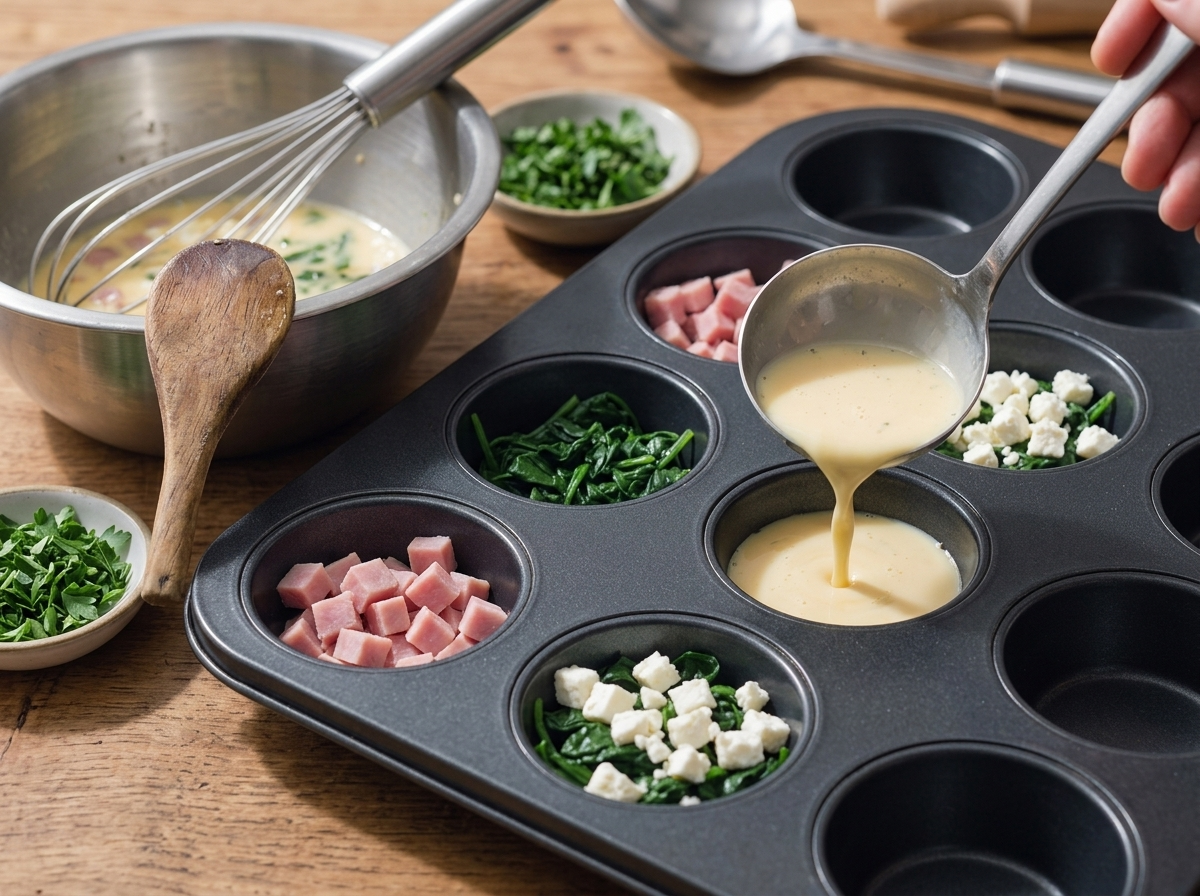
- Heat oven to 350 F / 175 C. Grease a 12-cup muffin tin generously with butter, right on the metal, not paper liners, since egg sticks to paper no matter how well you spray it.
- Heat olive oil in an 8-inch nonstick skillet over medium heat. Add spinach and cook 2 to 3 minutes, stirring, until wilted. Transfer to a clean towel and squeeze out as much liquid as you can.
- In a large mixing bowl, whisk the eggs, egg whites, cottage cheese, salt, pepper and garlic powder until mostly smooth (small curds of cottage cheese are fine).
- Divide the diced ham, wilted spinach and feta evenly among the 12 muffin cups.
- Ladle the egg mixture over the filling in each cup, filling to about 3/4 full to leave room for puffing.
- Bake for 18 to 22 minutes, until the centers are set, no longer jiggly, and a thermometer inserted into the middle reads 160 F / 71 C.
- Cool the cups in the tin for 5 minutes, then run a thin knife around the edge of each one and lift out onto a wire rack.
- Serve warm, or cool completely before storing.
Notes
- Grease the tin well, sticking is the most common complaint with this recipe.
- Squeeze spinach dry twice if using frozen, it holds more water than you'd think.
- Double the batch on a Sunday and freeze half for a fast weekday breakfast.
- Swap 2 whole eggs for the egg whites if you want richer flavor, protein drops about 3g per serving.
Tips for Success
- Grease the muffin tin directly with butter instead of paper liners, since egg sticks to paper no matter how well you spray it.
- Squeeze wilted spinach dry in a clean towel before adding it, or the egg cups turn watery under the feta.
- Fill cups only 3/4 full since the eggs puff up in the oven and overflow if the tin is too full.
- Check doneness at 18 minutes by pressing the center gently, it should spring back and hit 160F/71C on a thermometer.
- Cool the cups in the tin for 5 minutes before running a knife around the edge, or they tear apart coming out too soon.
Variations
- Swap the ham for cooked crumbled turkey sausage for a spicier version with about the same protein per serving.
- Use shredded cheddar instead of feta for a milder, kid-friendly version that still holds its shape when baked.
- Add diced roasted red pepper or sauteed mushrooms alongside the spinach for more vegetables without changing the protein count.
Storage and Reheating
Baked egg cups keep in an airtight container in the fridge for 4 to 5 days. Pack them in a single layer or between sheets of parchment so they don’t stick together.
To reheat, microwave 2 cups on a plate for 45 seconds from the fridge or about 90 seconds from frozen, checking every 30 seconds so they don’t turn rubbery. For a firmer texture, reheat in a 350F/175C oven for 8 to 10 minutes.
These freeze well for up to 2 months in a freezer bag with the air pressed out. Thaw overnight in the fridge before reheating, or microwave straight from frozen using the timing above.
Serving Suggestions
Serve two egg cups with a slice of whole-grain toast and a handful of berries for a breakfast that holds you until lunch. A dash of hot sauce or salsa on top wakes up the feta without adding much sodium.
For a dinner-for-breakfast plate, pair them with roasted potatoes or a small green salad. They also work cold, straight from the fridge, tucked into a lunch bag next to a piece of fruit.

FAQ
Why are my baked egg cups rubbery instead of soft?
Rubbery egg cups usually mean they were baked too long or too hot. Pull them at 18 to 20 minutes when the centers spring back and a thermometer reads 160F/71C, not when the tops are fully browned. A high ratio of egg whites to whole eggs can also make them firmer, so keep the ratio in the recipe if you want a softer bite.
Can I use turkey bacon instead of ham in this recipe?
Yes, swap in an equal weight of cooked turkey bacon and the protein count stays close to the same. Crisp it first in a skillet before dicing, since raw or soft turkey bacon turns soggy once it’s surrounded by egg. Crumble it small so it distributes evenly through the muffin cups.
Can I freeze baked egg cups with spinach and feta?
Yes, these freeze well for up to 2 months in a freezer bag with the air pressed out. Thaw overnight in the fridge, then reheat in the microwave in 30-second bursts or in a 350F/175C oven for 8 to 10 minutes. Avoid refreezing after thawing, the texture gets watery.
What goes with baked egg cups for a full breakfast?
Whole-grain toast and a handful of berries round out the plate without adding much prep. A dash of hot sauce or salsa on top adds brightness against the salty feta. For a heartier meal, add roasted potatoes or a small side salad.
Are baked egg cups with feta and ham gluten free?
Yes, this recipe is naturally gluten free since there’s no flour or breading involved. Double-check your ham label though, some cured or processed hams include fillers or additives that contain gluten, so pick a plain deli or roast ham if that’s a concern for you.
What’s the difference between egg cups and a mini frittata?
Egg cups bake in individual portions in a muffin tin, while a frittata bakes as one large round in a skillet or dish and gets sliced after. The texture is similar since both use whisked eggs and mix-ins, but egg cups are easier to portion, grab, and freeze one at a time.