Jump to Recipe
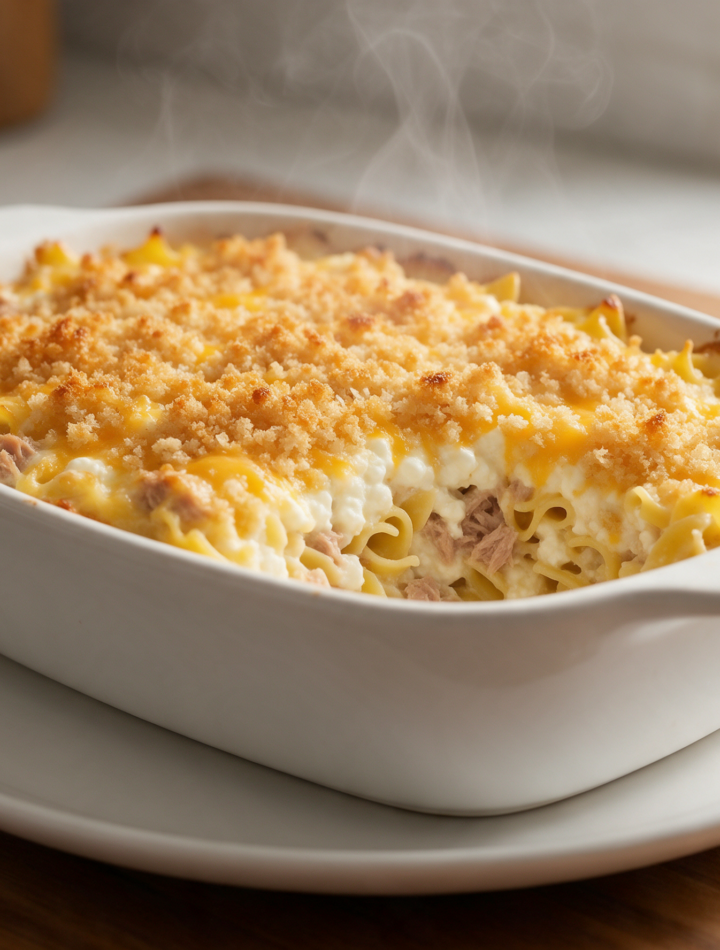
This tuna noodle casserole has about 42 grams of protein per serving and takes about an hour start to finish. The protein comes from three cans of tuna, cottage cheese, and sharp cheddar, not a scoop of powder, so it still tastes like the diner casserole you grew up with.
The swap here is the sauce. Instead of a can of condensed soup, you make a quick roux, blend cottage cheese until smooth, and stir it in with the cheddar. It thickens the same way and adds a lot more protein without tasting like cottage cheese.
Skip blending the cottage cheese and you’ll end up with small white curds scattered through the sauce instead of a smooth finish. A blender or food processor fixes that in about 30 seconds, so don’t skip it even if it feels like an extra step.
My kids eat this without noticing the swap, which is the only test that matters at my house on a Sunday.
Why You’ll Love This Recipe
- Delivers 42 grams of protein from real food, not powder
- Swaps canned soup for a homemade cottage cheese sauce
- Feeds a family of six with real leftovers for lunch
- Comes together with about 30 minutes of active prep
Ingredient Notes
- cottage cheese: Use small curd, 2% milkfat, and blend it smooth before adding it to the sauce. Ricotta works but loses some protein per serving.
- canned tuna: Tuna packed in water keeps the sauce from getting oily. Drain it well and press out extra liquid with a fork.
- egg noodles: Wide egg noodles hold the sauce best. Rotini or gluten-free egg noodles both work if that’s what you have.
- sharp cheddar: Sharp cheddar gives more flavor per cup than mild, so you don’t need extra cheese to taste it.
- panko breadcrumbs: Panko browns crisper than regular breadcrumbs. Toss with melted butter before it goes on top so it colors evenly.
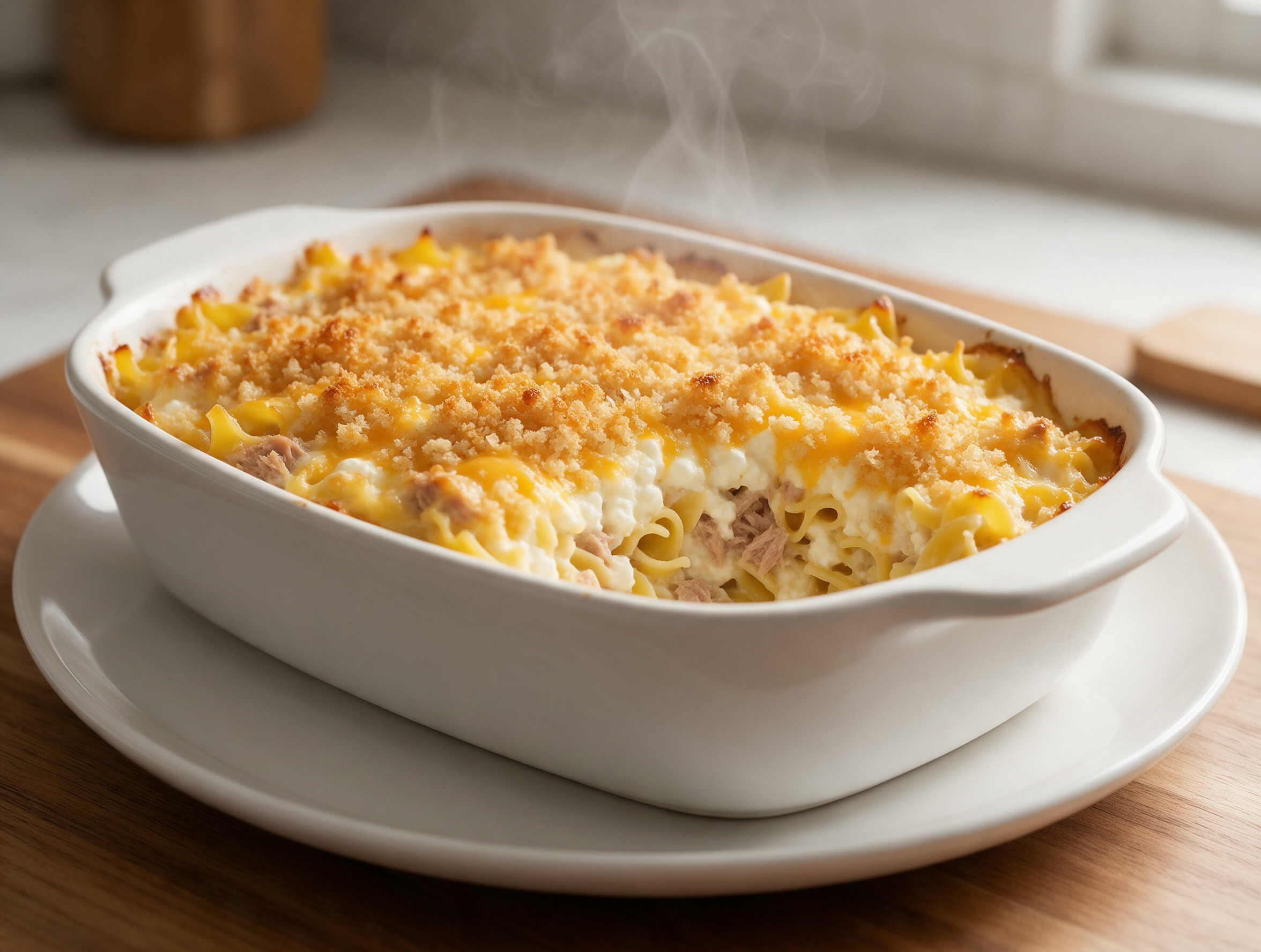
Creamy Baked Tuna Noodle Casserole with Cottage Cheese
Ingredients
Method
- Heat the oven to 375 F / 190 C. Butter a 9x13-inch (23x33 cm) baking dish.
- Bring a 4-quart / 3.8 L pot of salted water to a boil. Cook the egg noodles until al dente, about 7 to 8 minutes. Drain and set aside.
- In a 12-inch (30 cm) skillet, melt 2 tbsp butter over medium heat. Add the onion and cook 4 to 5 minutes until soft. Add the garlic and cook 30 seconds until fragrant.
- Add the remaining 2 tbsp butter and the flour to the skillet. Whisk constantly for 1 minute to cook out the raw flour taste.
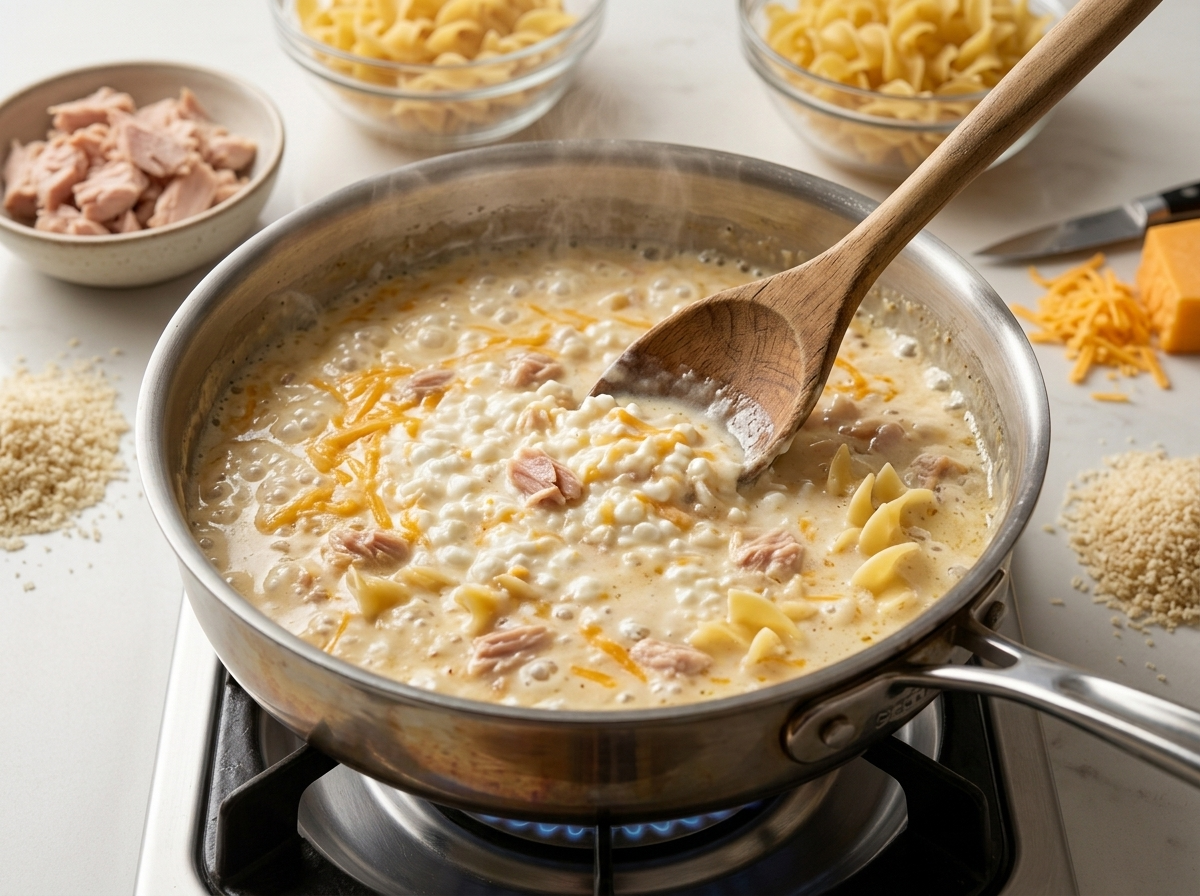
- Slowly whisk in the milk. Cook 3 to 4 minutes, whisking often, until the sauce coats the back of a spoon.
- Remove the skillet from the heat. Puree the cottage cheese in a blender or food processor until smooth, about 30 seconds, then stir it into the skillet along with 1 cup of the cheddar, lemon juice, dill, salt, and pepper. Stir until the cheese melts.
- In a large bowl, combine the cooked noodles, drained tuna, and peas. Pour the sauce over the top and fold gently until everything is coated, keeping some tuna in flakes.
- Spread the mixture evenly into the prepared baking dish.
- Mix the panko with the melted butter and parmesan. Sprinkle it over the casserole along with the remaining 1/2 cup cheddar.
- Bake uncovered for 25 to 30 minutes, until the sauce bubbles at the edges and the top is golden brown.
- Let the casserole rest 10 minutes before serving so the sauce sets.
Notes
- Blend cottage cheese completely smooth before adding it to the sauce.
- Drain and press the tuna dry to avoid a watery casserole.
- Rest the casserole 10 minutes before serving so it holds its shape.
- Divide the cheddar so half melts into the sauce and half browns on top.
Tips for Success
- Blend the cottage cheese completely smooth before adding it to the sauce, or you’ll get small curds instead of a creamy texture.
- Drain the tuna well and press out extra liquid with a fork, so the casserole doesn’t turn watery in the oven.
- Cook the roux a full minute before adding milk, or the sauce will taste like raw flour.
- Keep some tuna in flakes instead of shredding it fully, so you get texture in every bite.
- Rest the casserole 10 minutes after baking, so the sauce firms up enough to hold its shape when scooped.
Variations
- Swap egg noodles for whole wheat rotini to add fiber without changing how the sauce works.
- Use canned salmon instead of tuna for a milder, richer flavor with the same amount of protein.
- Add a layer of sliced tomatoes under the breadcrumbs for extra acidity and color on top.
Storage and Reheating
Refrigerate leftover casserole in an airtight container for 3 to 4 days. Reheat individual portions in the microwave for 2 minutes, or cover the dish with foil and warm it in a 350 F / 175 C oven for 15 to 20 minutes until heated through.
This casserole also freezes well. Freeze the fully baked and cooled casserole, tightly wrapped, for up to 2 months, then thaw it in the fridge overnight before reheating in the oven so the top stays crisp instead of soggy.
Serving Suggestions
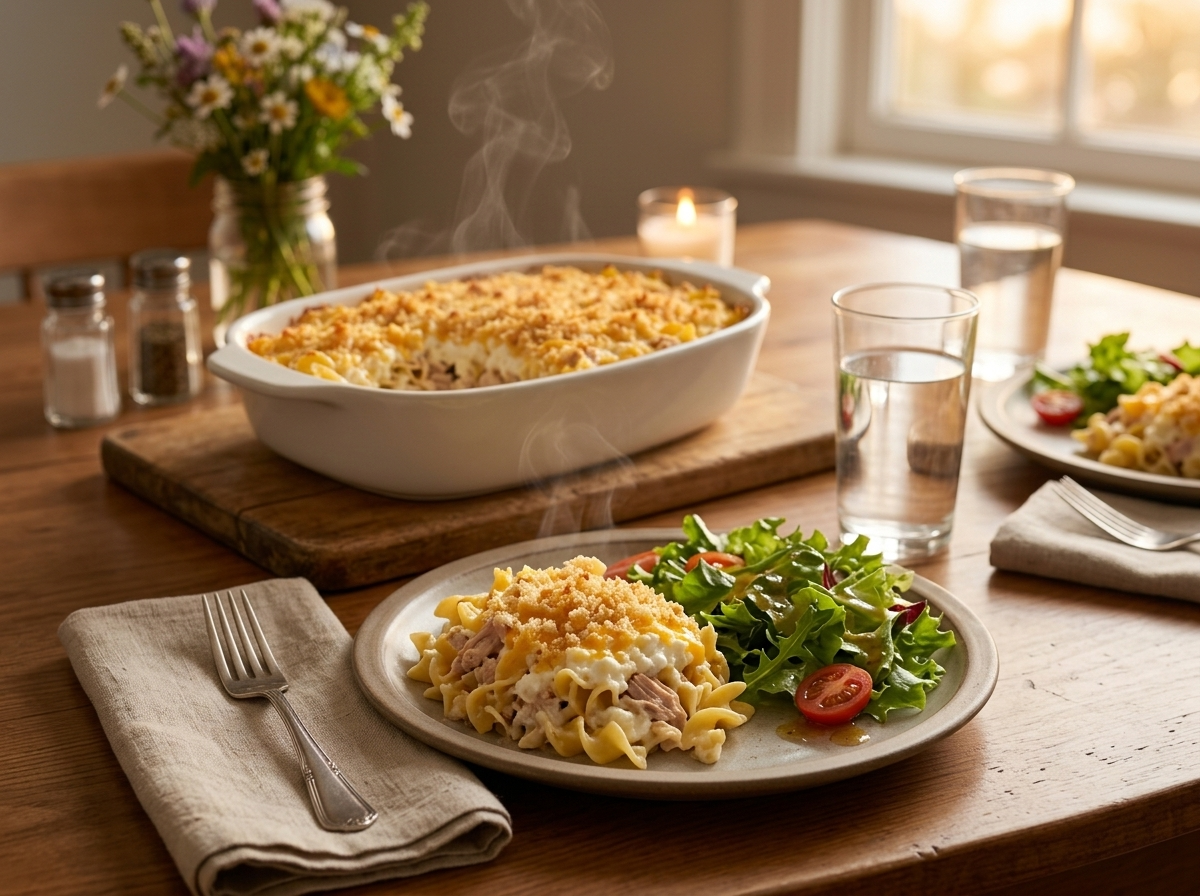
A simple green salad with a sharp vinegar dressing cuts through the richness of this casserole better than anything creamy. Steamed green beans or roasted broccoli work too, since the dish is already heavy on cheese and sauce.
Skip another starchy side. The egg noodles already cover that job, so bread just competes with the casserole instead of rounding it out.
This is the kind of dinner that reheats fine for weekday lunches, so I usually make the full 9×13 dish even for just my family of four and count on leftovers.
FAQ
Why is my tuna noodle casserole with cottage cheese watery instead of creamy?
If your tuna noodle casserole with cottage cheese turns out watery, the tuna probably wasn’t drained well or the cottage cheese wasn’t blended into the sauce first. Press the tuna between paper towels before mixing it in, and always puree the cottage cheese smooth so it thickens the sauce instead of releasing extra liquid as it bakes.
Can I use ricotta instead of cottage cheese in this tuna noodle casserole?
Yes, ricotta works in place of cottage cheese, though it’s lower in protein per cup and gives a richer, less tangy sauce. You’ll lose about 4 grams of protein per serving swapping in an equal amount of ricotta, so stick with cottage cheese if the protein count matters to you.
Can I assemble this tuna noodle casserole ahead and bake it later?
Yes, you can assemble it up to 24 hours ahead and refrigerate it unbaked, covered tightly. Pull it out 20 minutes before baking so it’s not going into the oven ice cold, then add about 10 extra minutes to the bake time since it’s starting cold.
What goes with tuna noodle casserole with cottage cheese besides a plain salad?
A green salad with a vinegar dressing cuts the richness better than anything creamy. Steamed green beans or roasted broccoli work too, since the casserole itself is already heavy on cheese and sauce. Skip another starchy side, the egg noodles already cover that job.
Is tuna noodle casserole with cottage cheese gluten-free?
No, this casserole isn’t gluten-free as written, since it uses egg noodles and a flour-based roux for the sauce. You can swap in gluten-free egg noodles and a gluten-free flour blend for the roux, and the cottage cheese sauce works the same way either way.
What’s the difference between this and a classic cream of mushroom tuna casserole?
The main difference is the sauce. Classic tuna noodle casserole leans on a can of condensed cream of mushroom soup for creaminess, while this version blends cottage cheese into a homemade roux for similar texture with more protein per serving and less sodium from canned soup.