Jump to Recipe
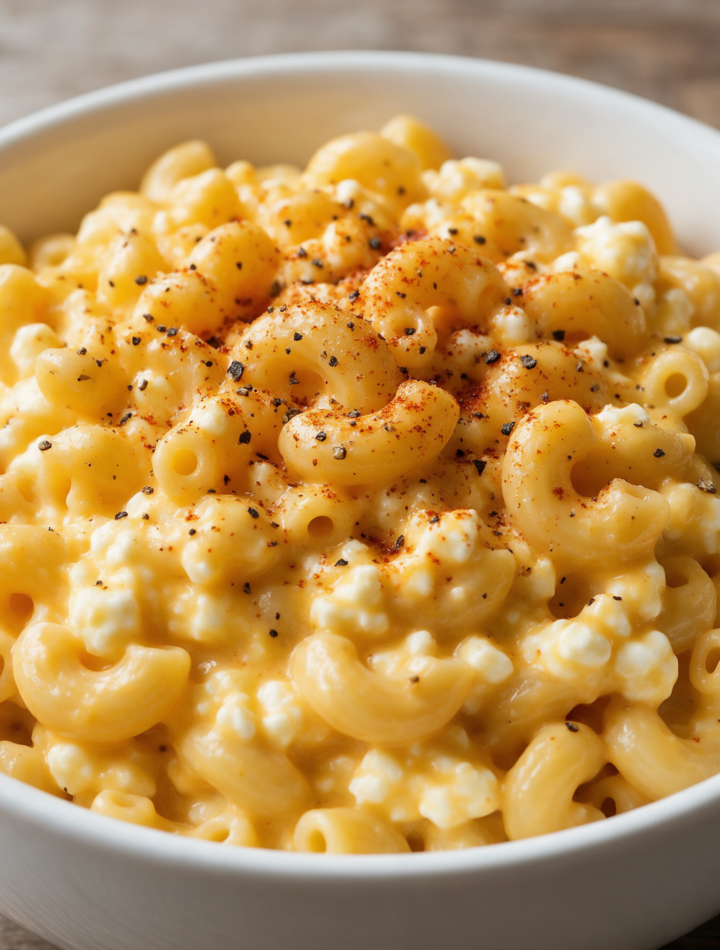
This cottage cheese mac and cheese has 37 g of protein per serving and takes 30 minutes. The protein comes from cottage cheese, cheddar, Parmesan and regular elbow macaroni, not powder, so it tastes like real mac and cheese.
The cottage cheese gets blended smooth and does the job of cream and a flour-and-butter roux. Each serving is about 370 g of food, which is a full dinner plate and not a side dish.
It isn’t identical to the boxed kind. The sauce is thicker and a little tangier, and it needs gentle heat. If the pot bubbles after the cottage cheese goes in, the sauce turns grainy and you can’t undo it.
Use 4% small curd cottage cheese. Low-fat works but comes out thinner.
Why You’ll Love This Recipe
- 37 g protein per serving from real food, no powder
- One pot and one blender, 30 minutes start to finish
- No flour roux and no cream to measure
- Reheats on the stove without separating
Ingredient Notes
- cottage cheese: Use 4% small curd. Large curd works but takes longer to blend smooth. Look for at least 11 g protein per 100 g on the label.
- sharp cheddar: Shred it from a block. Bagged shreds are coated with anti-caking starch, which can make the sauce slightly gritty.
- elbow macaroni: Regular elbow macaroni has about 12.5 g protein per 100 g dry. Protein pasta raises the total but changes the texture, so I stick with regular.
- Parmesan: Traditional Parmesan is made with animal rennet. Check the label if you’re cooking for a vegetarian.
- Dijon mustard: One teaspoon sharpens the cheese flavor and you won’t taste mustard. Skip it if you must, but the sauce will taste flatter.
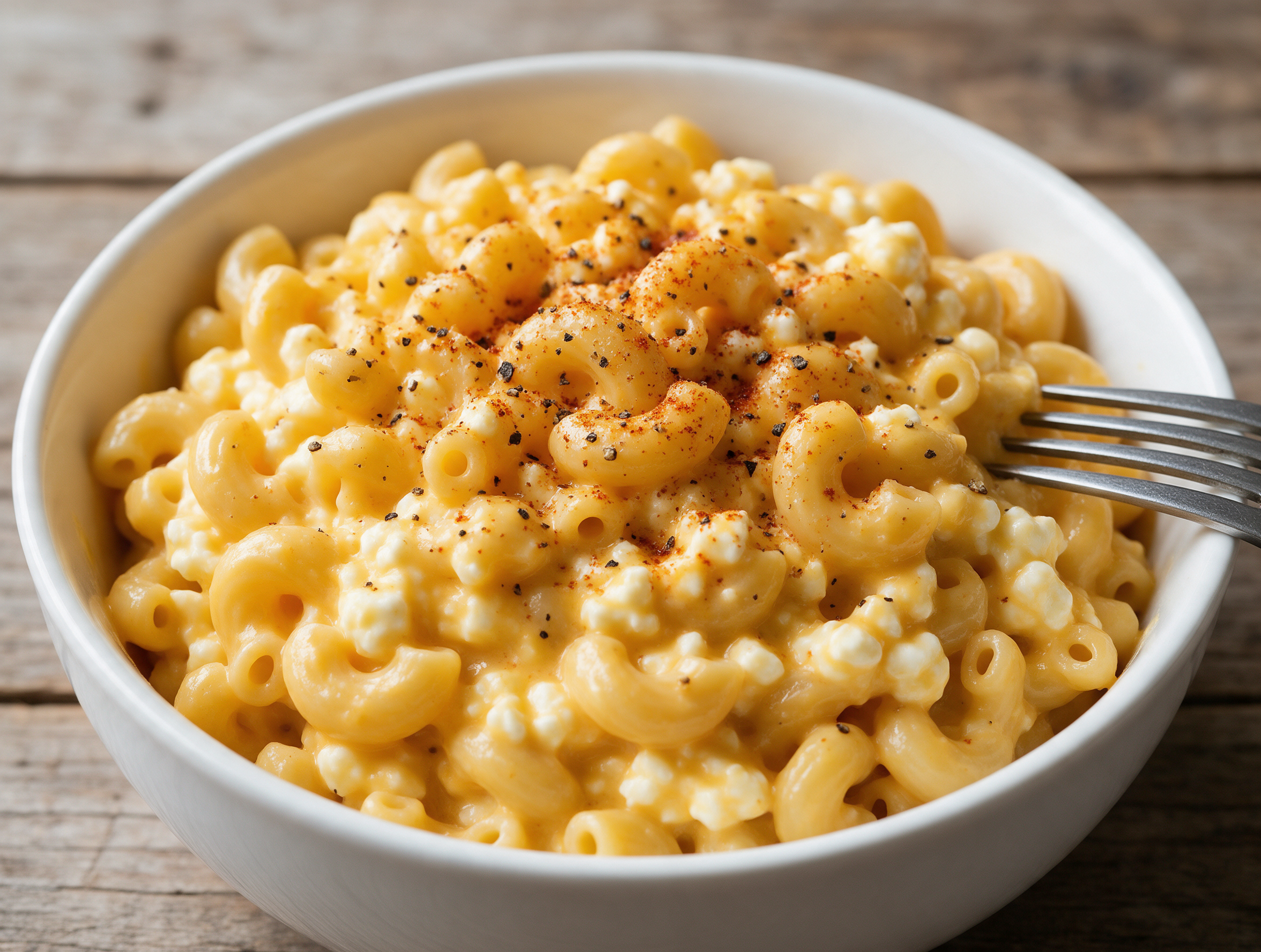
Creamy Cottage Cheese Mac and Cheese with 37g Protein
Ingredients
Method
- Fill the 5-quart / 4.7 L pot with 3 L of water, add the salt, and bring to a boil over high heat, about 8 minutes. While it heats, shred the cheddar and grate the Parmesan.
- Cook the macaroni for 1 minute less than the package time, usually 7 to 8 minutes, until al dente. Scoop out 60 ml of the pasta water, then drain the pasta and leave it in the colander.
- While the pasta cooks, blend the cottage cheese, milk, Parmesan, Dijon, garlic powder, paprika and pepper in the 1.5 L blender for 45 seconds. Scrape the sides once, until no curds are visible.
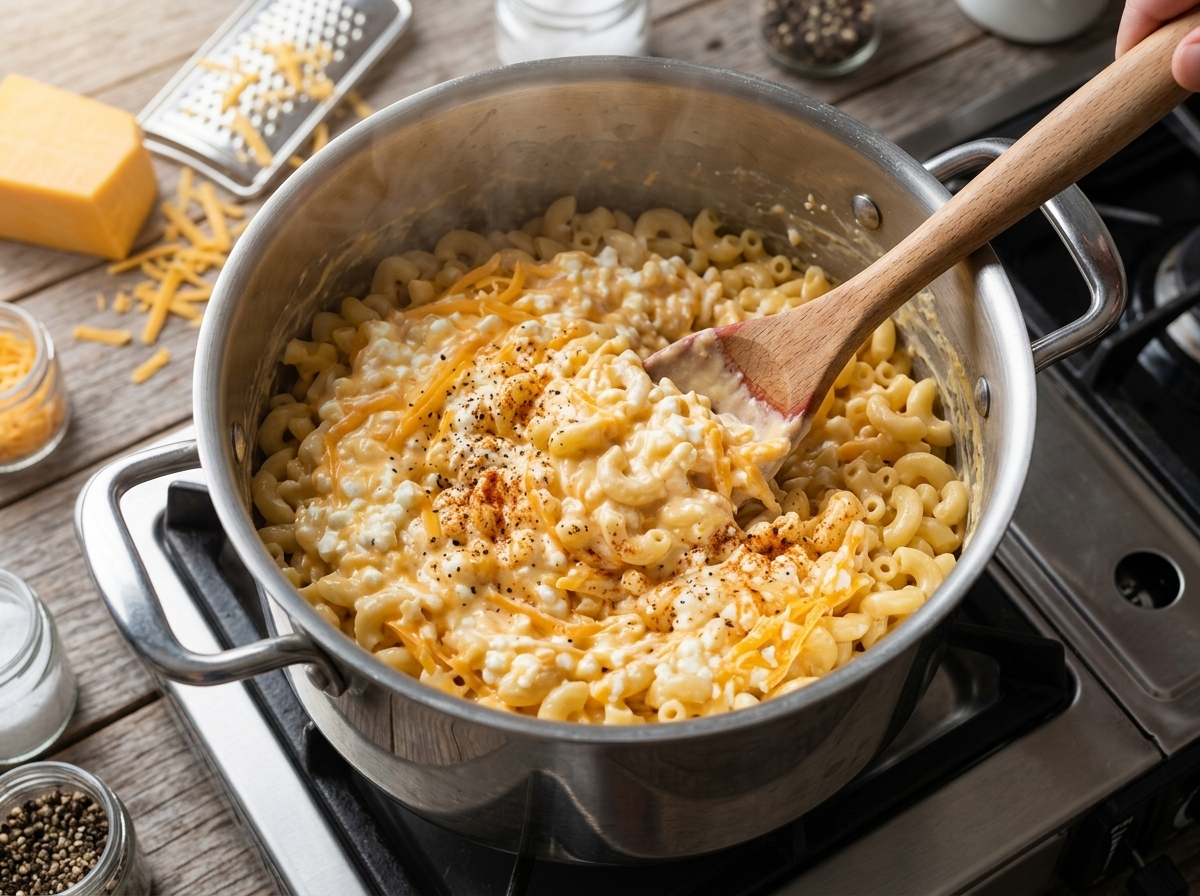
- Return the empty pot to the burner on the lowest heat and melt the butter. Pour in the blended sauce and stir for 2 minutes until steaming, with no bubbles at the edge. If it bubbles, pull the pot off the heat, because boiling makes the sauce grainy.
- Add the cheddar a handful at a time, stirring until each addition melts. Fold in the drained macaroni and loosen with the reserved pasta water, 1 tablespoon at a time, until the sauce coats the pasta. Taste for salt and serve within 10 minutes.
Notes
- Protein for the whole pot is about 149 g: pasta 37, cottage cheese 55, cheddar 42, Parmesan 11, milk 4.
- This recipe uses no protein powder, so there is no powder-free version and no protein lost.
- Do not boil the sauce after the cottage cheese goes in, or it turns grainy.
- Serve within 10 minutes of finishing for the best texture.
- Salt the pasta water well, because the cottage cheese sauce is mild on its own.
Tips for Success
- Shred the cheddar from a block yourself, since bagged shreds carry starch that leaves the sauce slightly gritty.
- Keep the burner on low once the blended cottage cheese goes in, and pull the pot off the heat if bubbles appear at the edge.
- Blend the sauce for a full 45 seconds and scrape down the sides once, because leftover curds will not melt in the pot.
- Cook the macaroni one minute short of the package time, since it keeps softening once it’s tossed in the hot sauce.
- Add reserved pasta water one tablespoon at a time and stop when the sauce slides off the spoon in a thick ribbon.
Variations
- Stir in 200 g shredded cooked chicken breast at the end to add about 15 g protein per serving.
- Spread the finished mac in a 23 x 33 cm / 9 x 13 inch dish, top with 40 g panko, and bake at 200 C / 400 F for 12 minutes.
- Swap half the cheddar for pepper jack and fold in one diced, seeded jalapeno for a Tex-Mex version.
Storage and Reheating
Cottage cheese mac and cheese keeps 3 to 4 days in an airtight container in the fridge. Get it into the fridge within 2 hours of cooking.
Reheat in a 26 cm / 10-inch skillet over low heat with 2 tablespoons of milk per portion, stirring for 4 to 5 minutes until hot all the way through. In the microwave, heat at 70% power for 90 seconds, stir, then go in 30-second bursts until hot.
Skip the freezer. The blended cottage cheese sauce turns grainy and watery after thawing.
Serving Suggestions
Cottage cheese mac and cheese is best served within 10 minutes of finishing, straight from the pot. The sauce thickens as it sits, so loosen it with a splash of milk if it tightens up.
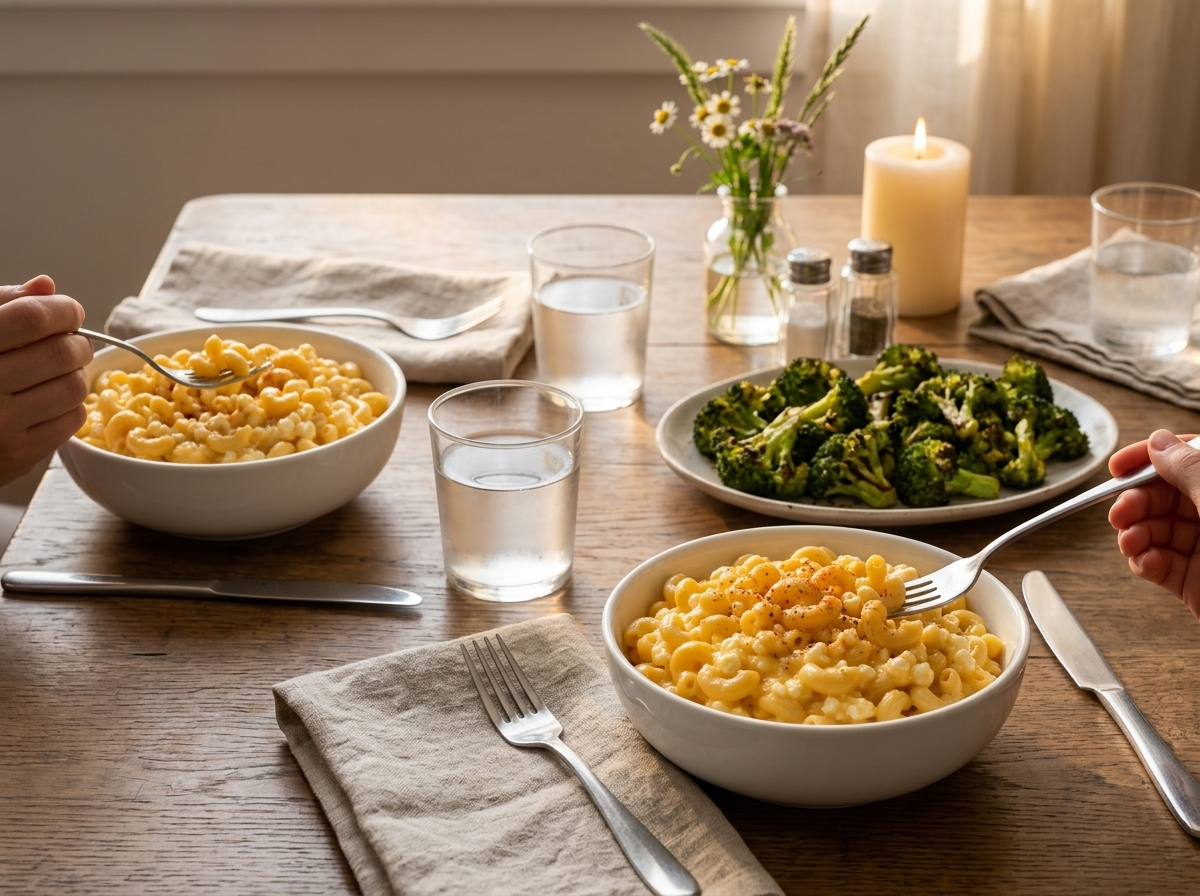
Pair it with something green and sharp. Roasted broccoli, a vinegar-dressed slaw, or sliced dill pickles all cut the richness.
If you want more crunch, top each bowl with crushed buttered crackers or a spoonful of toasted panko.
FAQ
Why is my cottage cheese mac and cheese grainy?
The sauce was too hot or the cottage cheese wasn’t blended long enough. Heat above a simmer makes the milk proteins clump, and unblended curds stay as curds. Blend for 45 seconds, keep the burner on low, and take the pot off the heat if you see bubbles at the edge.
Can I use fat-free cottage cheese instead of 4% in mac and cheese?
Yes, but the sauce comes out thinner and a little chalky. Fat-free cottage cheese has about the same protein as 4%, so the totals hold. Use 2% if you want a middle ground, and add the cheddar a handful at a time so the sauce holds together.
Can I freeze cottage cheese mac and cheese?
I don’t recommend it. Freezing breaks the blended cottage cheese sauce, and it turns grainy and watery when thawed. Refrigerate leftovers in an airtight container for 3 to 4 days instead, and reheat on the stove with a splash of milk.
What goes well with cottage cheese mac and cheese?
Something green and a little sharp. Roasted broccoli, a slaw with vinegar dressing, or sliced pickles cut through the richness. The mac already has about 37 g protein per serving, so you don’t need a meat side unless you want one.
Does cottage cheese mac and cheese taste like cottage cheese?
Barely. Blending removes the curd texture, and the sharp cheddar and Dijon cover most of the tang. The sauce is slightly lighter and tangier than a flour-and-milk version. My two kids ate it without comment, which is how I knew it worked.
Is cottage cheese mac and cheese gluten free?
Not as written, because elbow macaroni is wheat. Use a gluten-free elbow pasta and cook it by the package time, since brands vary. Protein per serving will shift with the pasta, so check the label. Check the cheese labels too if you buy pre-shredded.