Jump to Recipe
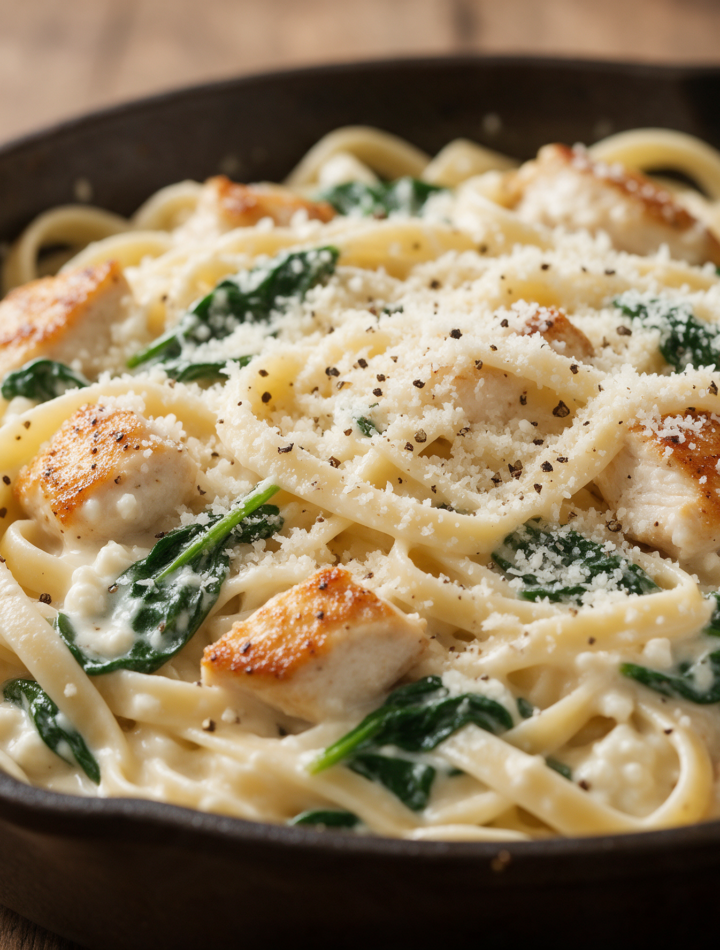
This cottage cheese Alfredo skillet has 45 grams of protein per serving and takes about 35 minutes from stove to table. The protein comes from real chicken breast, cottage cheese and Parmesan, not a scoop of protein powder, so the sauce tastes like actual Alfredo.
The trick is blending the cottage cheese with a little milk before it goes into the pan. Skip that step and you get sauce with visible curds instead of something smooth enough to coat pasta.
I make this in my garage-sale cast iron skillet because it holds steady heat and keeps the sauce from breaking while I toss in the noodles. One pan for the chicken, one pot for the pasta, and dinner’s done.
Spinach wilts right into the sauce at the end, so you get a vegetable in the pan without a second dish to wash. My kids eat it without noticing the spinach, which is all I ask on a weeknight.
Why You’ll Love This Recipe
- 45 grams of protein per serving from real food
- One skillet plus one pot, minimal cleanup
- Cottage cheese sauce with no heavy cream needed
- Ready in about 35 minutes on a weeknight
Ingredient Notes
- fettuccine: Any long pasta works here; I like fettuccine because it holds the sauce well, but penne or rotini are fine swaps.
- chicken breast: Cut into even 1-inch cubes so it cooks through in the same 6 to 7 minutes without drying out.
- cottage cheese: Use small curd, full-fat cottage cheese for the smoothest blend; low-fat versions blend thinner and taste watery.
- whole milk: Whole milk gives the sauce body. 2% works but the sauce will be a touch thinner.
- parmesan: Buy a block and grate it yourself. Pre-shredded Parmesan has anti-caking starch that keeps the sauce from going silky.
- baby spinach: Baby spinach wilts in under a minute and adds color without changing the flavor of the sauce much.
- garlic: Fresh cloves matter here since the garlic only cooks for 30 seconds; jarred minced garlic can taste flat.
- red pepper flakes: Optional, but a half teaspoon adds background heat without making the dish taste spicy.
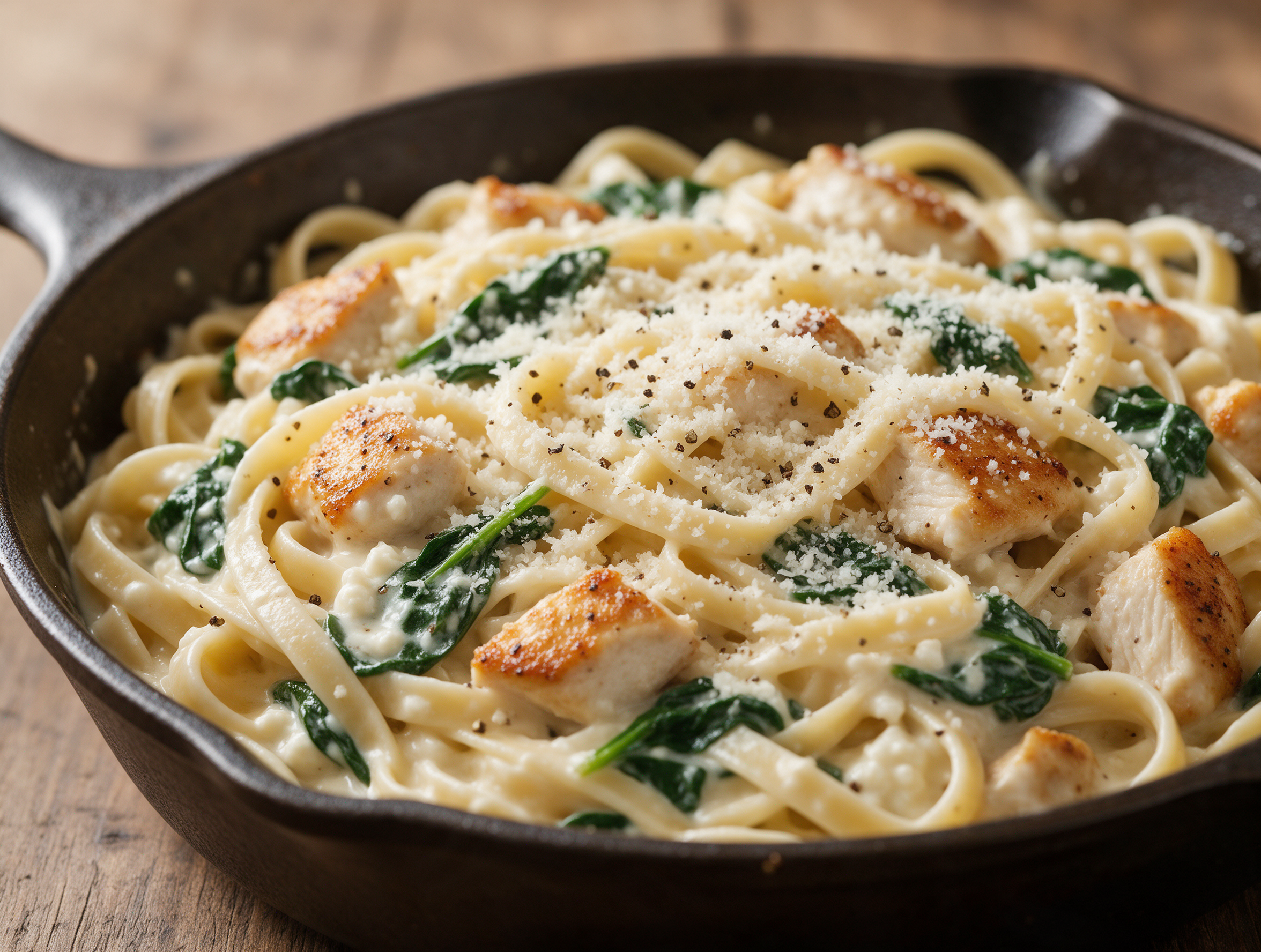
Creamy Cottage Cheese Alfredo Skillet with Chicken
Ingredients
Method
- Bring a 4-quart / 3.8 L pot of generously salted water to a boil. Cook 340 g / 12 oz fettuccine according to package directions until al dente, about 9 minutes. Scoop out 1 cup / 240 ml pasta water, then drain the pasta.
- Pat 340 g / 12 oz chicken cubes dry and season with 1/2 tsp salt and 1/4 tsp black pepper. Heat 1 tbsp olive oil in a 30 cm / 12-inch cast-iron skillet over medium-high heat.
- Add the chicken in a single layer and sear for 6 to 7 minutes, turning once, until golden and the internal temperature reads 165 F / 74 C. Transfer to a plate.
- In a blender or with an immersion blender, blend the 340 g / 1 1/2 cups cottage cheese with 120 ml / 1/2 cup whole milk until completely smooth, about 1 minute. This step keeps the sauce silky instead of grainy.
- Lower the heat to medium and melt 1 tbsp butter in the same skillet. Add 3 cloves minced garlic and cook for 30 seconds until fragrant, not browned.
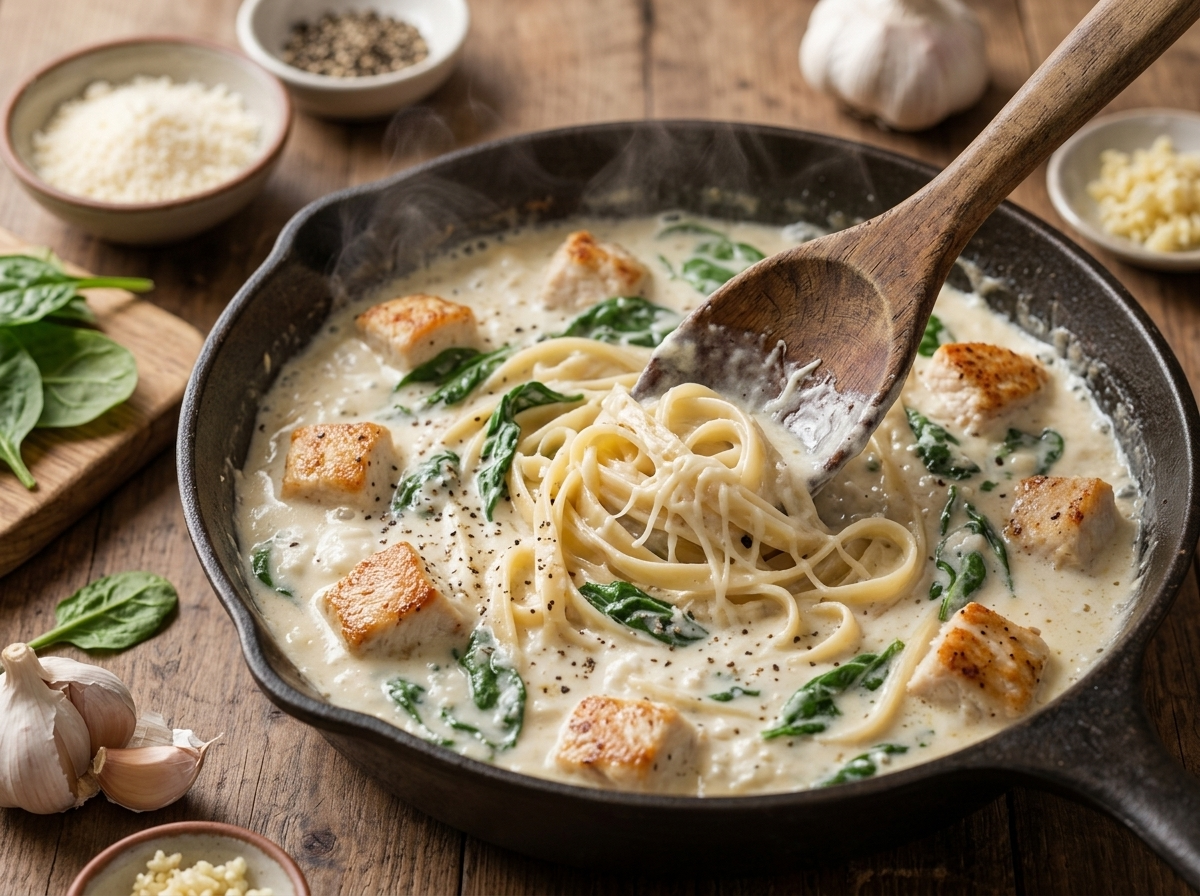
- Pour in the blended cottage cheese mixture and bring to a gentle simmer, stirring often, for 2 to 3 minutes. Do not let it boil hard or the sauce can break and turn grainy.
- Stir in 40 g / 1/2 cup grated Parmesan until melted, then thin the sauce with reserved pasta water, a few tablespoons at a time, until it coats the back of a spoon.
- Add 60 g / 2 cups baby spinach to the skillet and stir until just wilted, about 1 minute.
- Return the cooked pasta and seared chicken to the skillet. Toss for 1 to 2 minutes until everything is coated and warmed through.
- Season with salt, black pepper, and 1/2 tsp red pepper flakes if using. Serve right away with extra Parmesan and chopped parsley.
Notes
- Blend cottage cheese fully smooth before adding it to the skillet.
- Keep sauce at a bare simmer, never a hard boil, once cottage cheese is in.
- Pull chicken at 165 F / 74 C so it doesn't overcook while the sauce reduces.
- Save 1 cup pasta water before draining, you'll need it to loosen the sauce.
Tips for Success
- Blend the cottage cheese completely smooth before it hits the skillet or the sauce will show curds.
- Keep the sauce at a bare simmer once the cottage cheese goes in; a hard boil breaks it and turns it grainy.
- Pull the chicken at 165 F / 74 C on an instant-read thermometer so it stays juicy in the sauce.
- Save at least 1 cup / 240 ml pasta water before draining, since you’ll need most of it to loosen the sauce.
- Use small curd, full-fat cottage cheese for the smoothest blend and the closest texture to real Alfredo.
Variations
- Swap the chicken for 340 g cooked, crumbled Italian sausage for a heartier, spicier version of this skillet.
- Stir in 1 cup sliced mushrooms with the garlic for an earthier sauce with more texture.
- Use gluten-free fettuccine and check your Parmesan label to make the whole skillet gluten-free.
Storage and Reheating
Store leftovers in an airtight container in the fridge for 3 to 4 days. The sauce thickens as it chills, which is normal.
Reheat gently in a skillet over medium-low heat with a splash of milk or reserved pasta water, stirring until the sauce loosens, about 4 to 5 minutes. The microwave works too, in 30-second bursts at 50% power, stirring between each.
I don’t recommend freezing this one. The cottage cheese sauce separates once thawed and doesn’t come back together no matter how much you stir.
Serving Suggestions
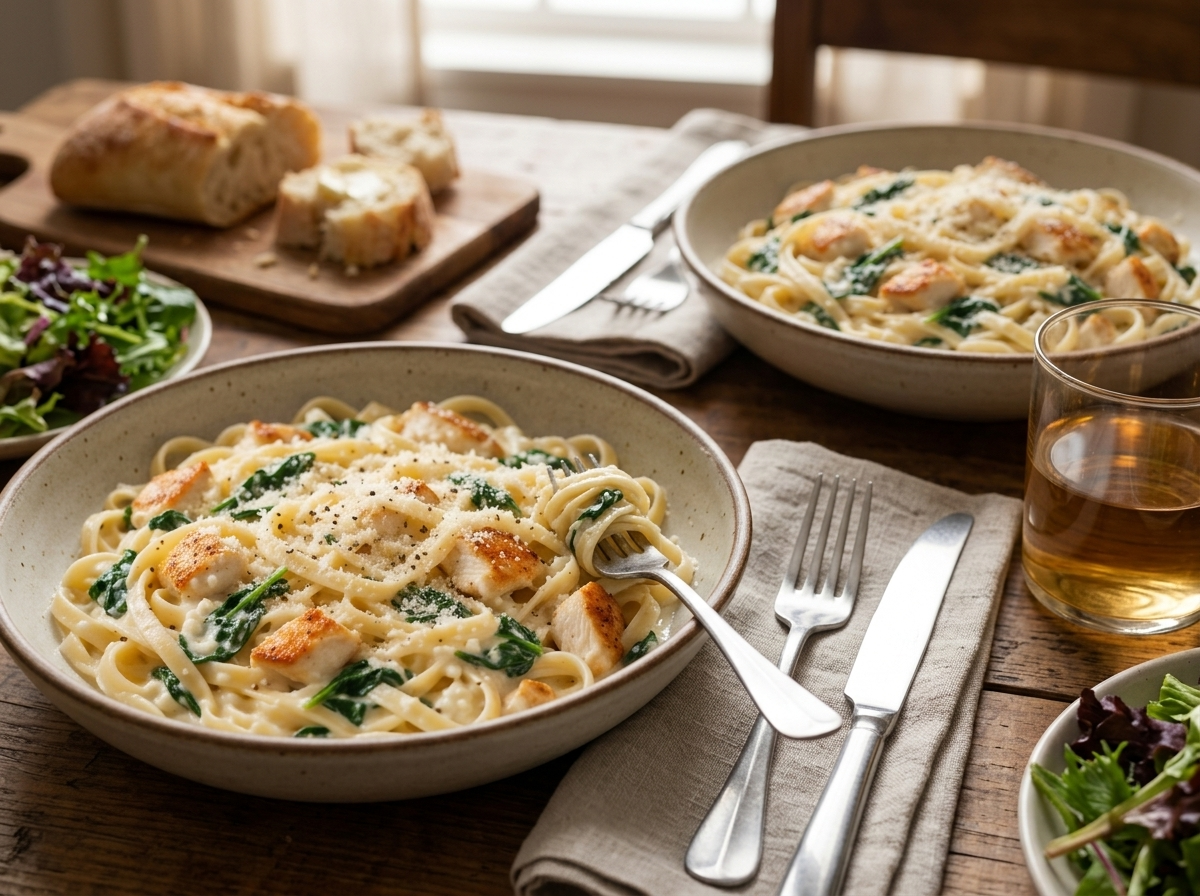
A simple green salad with a sharp vinegar dressing cuts through the richness of the sauce. Garlic bread on the side is good for scraping up whatever’s left in the pan.
For a heavier dinner, add roasted broccoli or steamed green beans alongside. My family eats this with a glass of milk in winter and iced tea the rest of the year.
FAQ
Why did my cottage cheese Alfredo sauce turn out grainy instead of smooth?
Grainy sauce usually means the cottage cheese wasn’t blended long enough or the sauce boiled too hard once it hit the skillet. Blend the cottage cheese and milk until completely smooth first, about 1 minute, and keep the sauce at a bare simmer once it’s in the pan.
Can I use ricotta instead of cottage cheese in this Alfredo skillet?
Yes, ricotta blends just as smooth, though it has less protein than cottage cheese, around 7 grams per 100g versus 11. You’ll lose a few grams of protein per serving, so add an extra 20g of Parmesan if you want to close the gap.
How long does leftover cottage cheese Alfredo skillet keep in the fridge?
It keeps for 3 to 4 days in an airtight container. The sauce thickens as it chills, so reheat it gently on the stove with a splash of milk or reserved pasta water to loosen it back up before serving.
What pairs well with cottage cheese Alfredo skillet for dinner?
A simple green salad with a sharp vinaigrette cuts through the richness, and garlic bread is good for scraping up extra sauce. Roasted broccoli or steamed green beans on the side add some crunch without extra work at the stove.
Is cottage cheese Alfredo skillet gluten-free?
Not as written, since it uses regular fettuccine, but the sauce itself is naturally gluten-free and you can swap in a gluten-free pasta. Just double check your Parmesan and cottage cheese labels, since some brands add gluten-based anti-caking agents.
Why do you blend the cottage cheese instead of just stirring it into the sauce?
Stirring alone leaves the curds visible and the sauce tastes grainy on the tongue. Blending the cottage cheese with milk breaks it down into a pourable, smooth base that coats pasta the way a classic Alfredo sauce does, minus the heavy cream.