Jump to Recipe
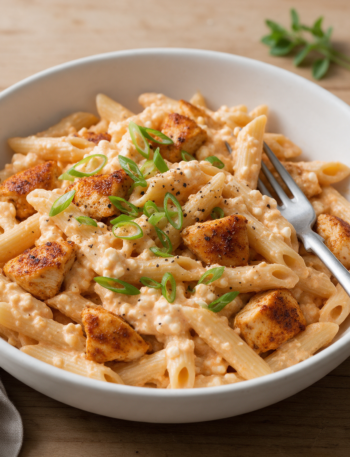
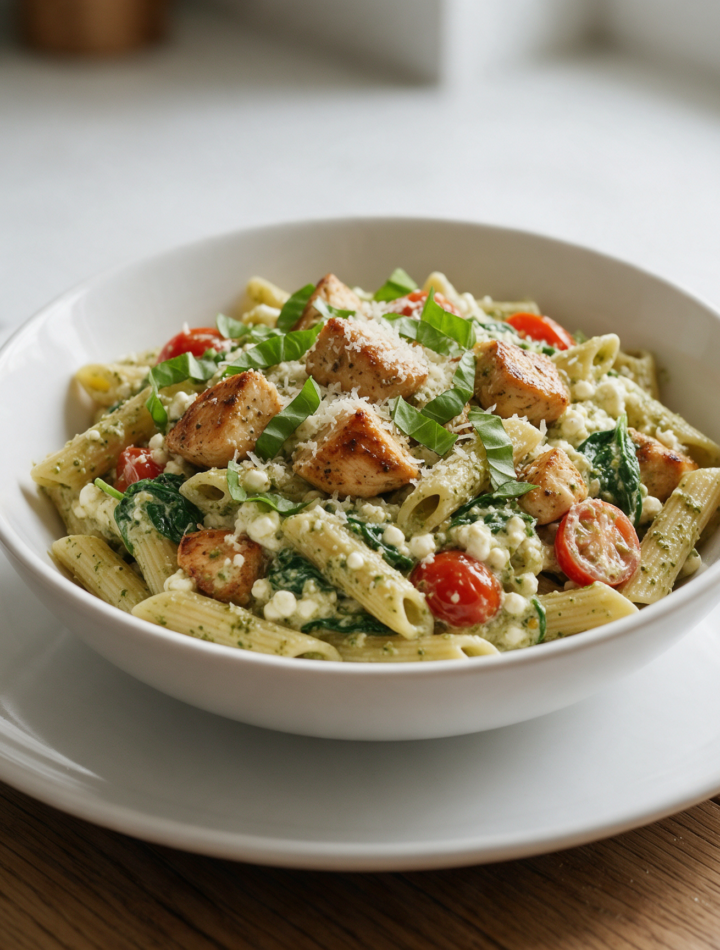
This chicken pesto pasta has about 40 g of protein per serving and takes 25 minutes start to finish. The protein comes from chicken breast, cottage cheese, Parmesan and the pasta itself, not powder, so it tastes like the real thing.
The sauce is cottage cheese blended with jarred basil pesto until smooth. It coats the pasta like a light cream sauce, and once it’s blended you can’t see or taste any curds. Of the 40 g, roughly 19 g is chicken and 9 g is cottage cheese.
One catch. Cottage cheese sauce turns grainy if you cook it hard, so take the skillet off the heat before the sauce goes in. The hot pasta warms it enough.
Each serving is about 375 g, a full plate. My two kids, who don’t care about macros, ate it without asking what was in the sauce.
Why You’ll Love This Recipe
- About 40 g protein per serving from whole foods
- Ready in 25 minutes with one pot and one skillet
- Blended cottage cheese gives a creamy sauce without cream
- Jarred pesto means no basil to wash or chop
Ingredient Notes
- cottage cheese: Use 2% small curd. Full-fat tastes richer, and fat-free works but the sauce comes out a little chalky. Part-skim ricotta is the closest substitute.
- chicken breast: Boneless skinless breast gives the most protein. Thighs work with slightly less protein and stay juicier if you overcook them by a minute.
- basil pesto: Refrigerated deli pesto tastes fresher, but shelf-stable jars work fine. Most of the fat in the sauce comes from the pesto, so check the label for oil and nuts.
- Parmesan: Grate it yourself on a fine grater. Pre-grated Parmesan has anti-caking starch that can make the blended sauce slightly gritty.
- penne or rotini: Pick a shape with ridges or curls so the sauce clings. Whole wheat pasta adds a little fiber and a little protein, with a nuttier taste.
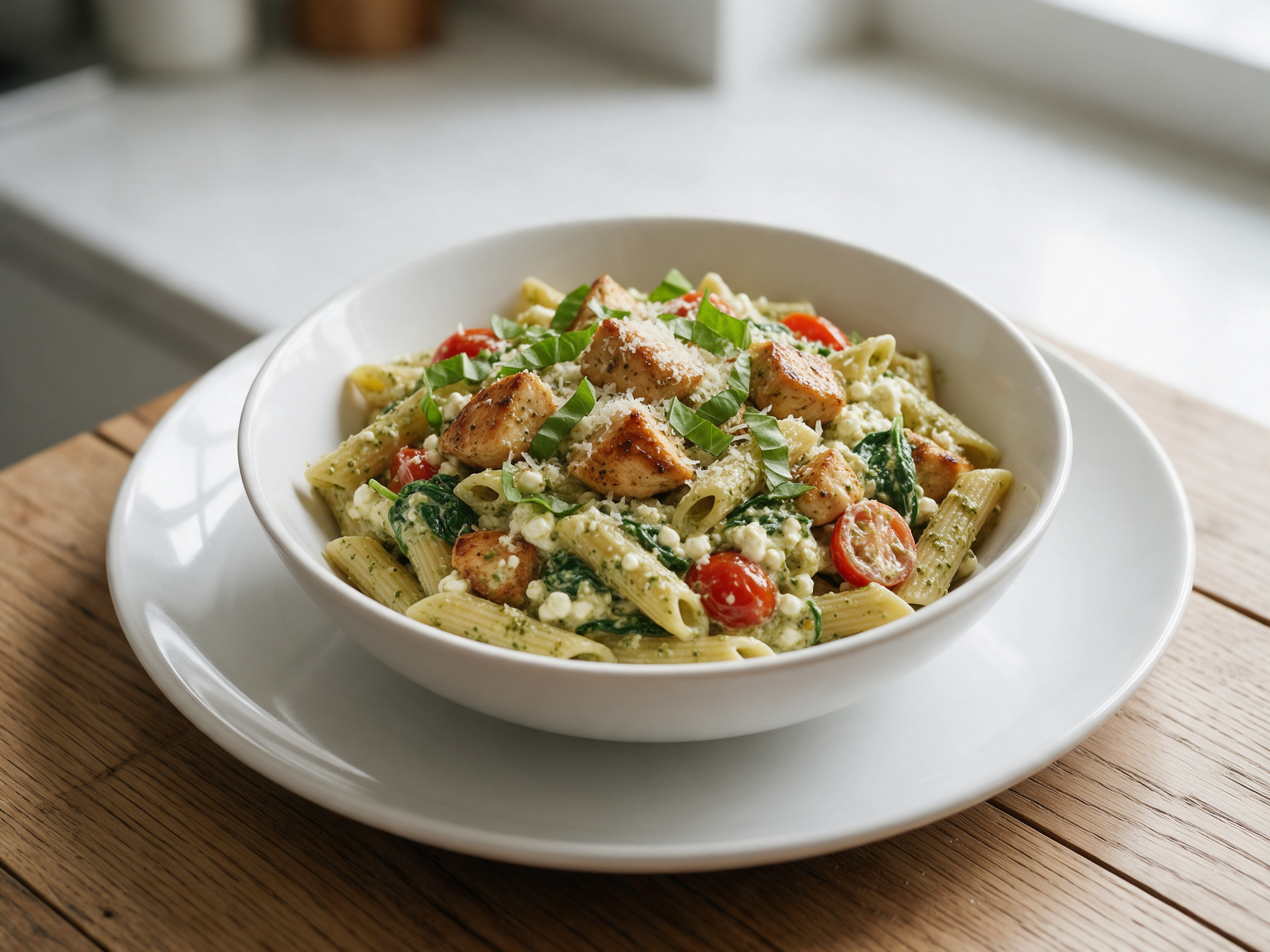
High-Protein Chicken Pesto Pasta with Cottage Cheese Sauce
Ingredients
Method
- Set a 6-quart / 5.7 L pot of water over high heat, add 1 tbsp kosher salt and bring to a boil. While it heats, cut the chicken into 2 cm / 3/4-inch cubes and toss with 1/2 tsp salt and 1/4 tsp pepper. Halve the tomatoes, mince the garlic and grate the Parmesan.
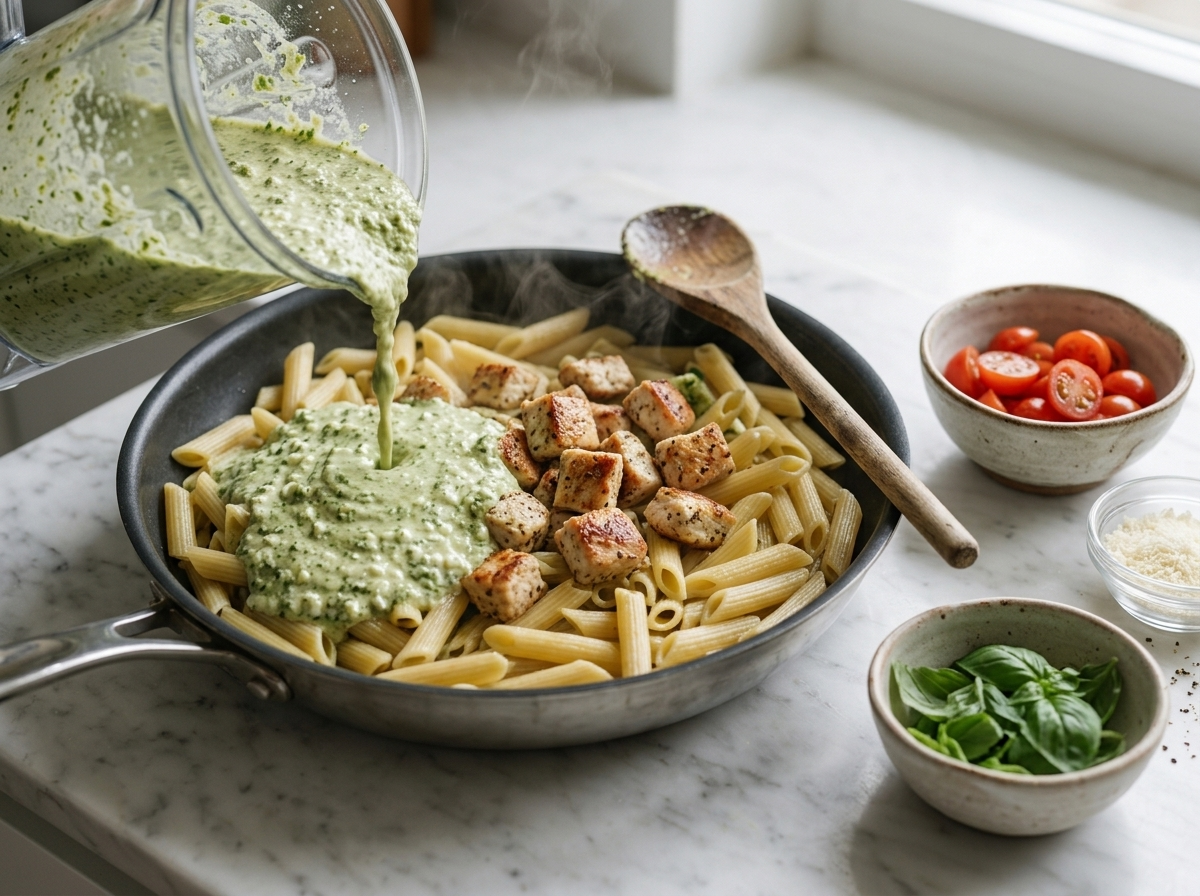
- Add the cottage cheese, pesto, Parmesan, garlic, lemon juice and 1/4 tsp pepper to a blender. Blend on high for 60 seconds, scraping the jar once, until the sauce pours smoothly with no visible curds. Taste before adding any salt.
- Add the penne or rotini to the boiling water and cook for 9 to 10 minutes, until al dente. Scoop out 120 ml / 1/2 cup of pasta water, then drain.
- While the pasta cooks, heat the olive oil in a 30 cm / 12-inch skillet over medium-high heat until it shimmers. Add the chicken in a single layer and cook for 6 to 8 minutes, stirring once or twice, until browned and 165 F / 74 C in the thickest piece.
- Lower the skillet heat, add the tomatoes and spinach, and cook for 1 to 2 minutes until the spinach wilts. Return the drained pasta to the empty pot, off the heat. Add the chicken mixture and the sauce, and toss for 1 minute, stirring in pasta water 2 tablespoons at a time until the sauce coats the pasta like loose cream. Serve right away with extra Parmesan.
Notes
- Protein is about 40 g per serving: chicken 19 g, cottage cheese 9 g, pasta 9 g, Parmesan 3 g.
- Taste the sauce before adding salt, since cottage cheese and Parmesan are already salty.
- Keep the chicken in a single layer in the 30 cm skillet so it browns instead of steaming.
- Nutrition numbers are estimates from standard ingredient data, so check your pesto and pasta labels.
Tips for Success
- Blend the sauce for a full 60 seconds and scrape the jar once, so no curds survive in the finished pasta.
- Pull the skillet off the heat before the sauce goes in, because cottage cheese turns grainy once it boils.
- Cut the chicken into even 2 cm cubes so every piece reaches 165 F / 74 C at the same time.
- Save 120 ml of pasta water before draining and stir it in 2 tablespoons at a time to loosen the sauce.
- Serve within 10 minutes of tossing, since the pasta keeps soaking up sauce and the plate turns thick as it sits.
Variations
- Swap the basil pesto for sun-dried tomato pesto and add 60 g chopped jarred roasted red peppers for a sweeter sauce.
- Use 340 g boneless skinless chicken thighs instead of breast. They stay juicier, with a few grams less protein per serving.
- Stir 150 g steamed broccoli florets in with the spinach to add more vegetables to each bowl without changing the sauce.
Storage and Reheating
Chicken pesto pasta keeps in an airtight container in the fridge for 3 to 4 days. Get it into the fridge within 2 hours of cooking. The sauce thickens as it chills, which is normal.
Reheat each portion in the same 30 cm / 12-inch skillet over low heat with 2 tablespoons of milk or water, stirring for 3 to 4 minutes until it reaches 165 F / 74 C. In the microwave, use 50% power in 60-second bursts and stir between each one. High heat makes the sauce grainy.
Don’t freeze the finished dish, because thawed cottage cheese sauce turns watery. Freeze plain cooked chicken for up to 2 months instead, thaw it overnight in the fridge and blend a fresh batch of sauce when you need it.
Serving Suggestions
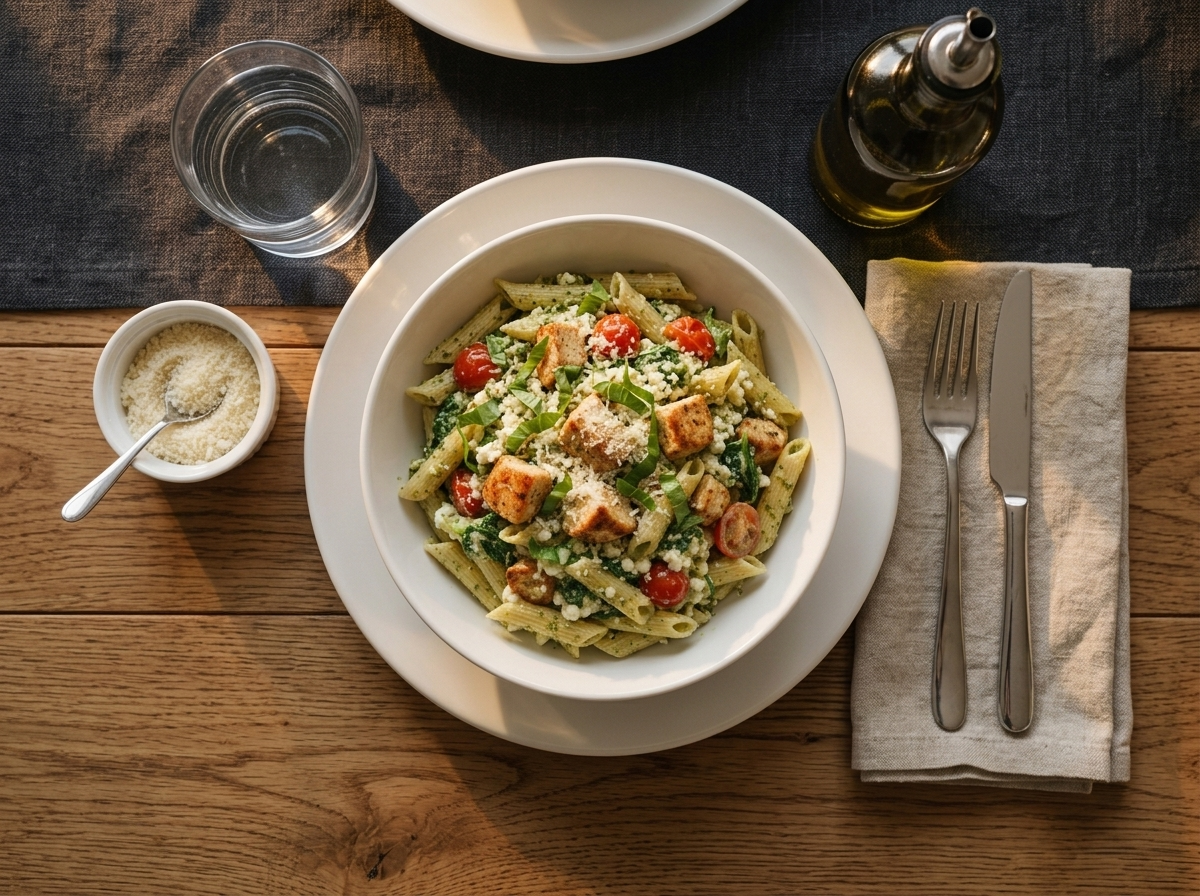
Chicken pesto pasta works as a full dinner on its own. Top each bowl with a spoonful of grated Parmesan, black pepper and a few torn basil leaves if you have them.
If you want a side, roasted broccoli or green beans go well, as does an arugula salad dressed with lemon juice and olive oil. The bitterness cuts through the pesto.
Garlic bread is fine if the plate needs more carbs, though the pasta already covers most of that.
FAQ
Why is my cottage cheese pesto sauce grainy?
Grainy sauce usually means the curds weren’t fully blended or the sauce got too hot. Blend on high for a full 60 seconds, then toss it with the pasta off the heat. Boiling or high heat tightens the curds and makes them separate.
Can I use ricotta instead of cottage cheese in chicken pesto pasta?
Yes, use the same 340 g of part-skim ricotta and the sauce comes out slightly richer and smoother. Protein stays in a similar range. Whole-milk ricotta has less, so expect a few grams fewer per serving, and check your brand’s label.
How do I know the chicken is done without drying it out in this pesto pasta?
Cook the 2 cm cubes until the thickest piece reads 165 F / 74 C on an instant-read thermometer, usually 6 to 8 minutes. Cut one open to check that the center is white with no pink. Pull the chicken as soon as it hits that number, since it sits in hot pasta afterward.
Can I freeze chicken pesto pasta with cottage cheese sauce?
Not once it’s assembled. Thawed cottage cheese sauce turns watery and grainy, and the pasta goes soft. Freeze plain cooked chicken for up to 2 months instead, thaw it overnight in the fridge and blend fresh sauce, which takes about 5 minutes.
What vegetable side goes with chicken pesto pasta?
Roasted broccoli or green beans work well, as does an arugula salad with lemon and olive oil. The pasta is rich from the pesto and Parmesan, so something sharp or bitter balances it. Garlic bread also fits if you want extra carbs.
Is chicken pesto pasta with cottage cheese sauce gluten free?
Not as written, since the penne contains wheat. Use a gluten-free pasta and check that your pesto and Parmesan labels don’t list gluten-containing additives. Chickpea or lentil pasta changes the protein total, so recheck the numbers, and cook it a minute less because it softens fast.