Jump to Recipe
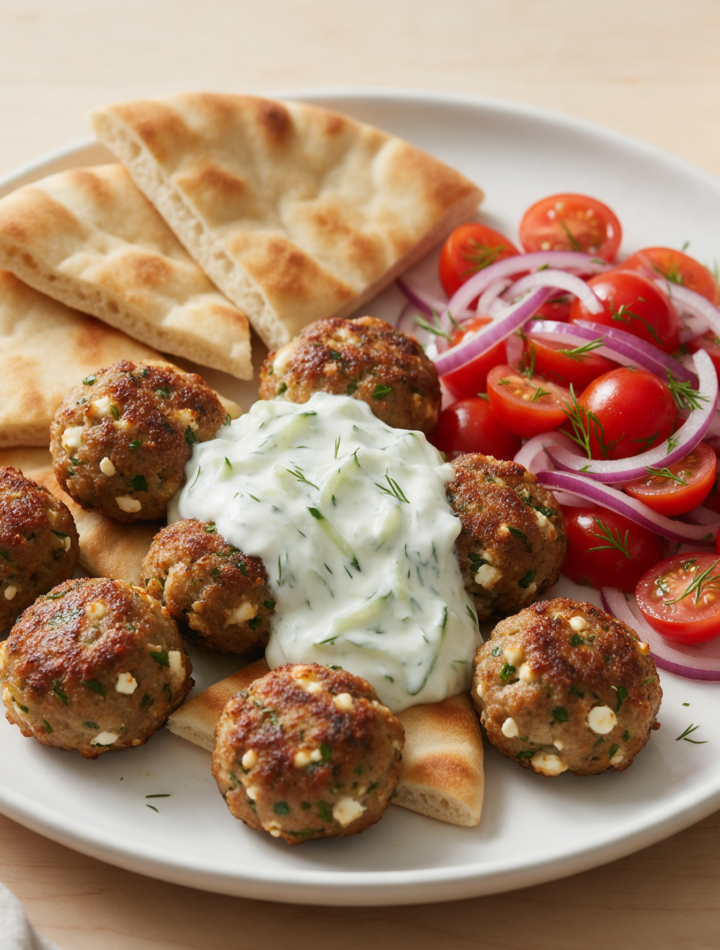
These baked Greek meatballs with tzatziki have about 46 g of protein per serving and take 45 minutes from start to table. The protein comes from beef, feta, an egg and Greek yogurt, not powder, so it tastes like the real thing.
The beef alone covers roughly 28 g of that, and the warm pita adds about 5 g. You get about 20 meatballs, which is 5 per person, and a serving weighs around 380 g with the tzatziki and tomatoes. It eats like a full dinner.
Everything bakes on one sheet pan at 425 F / 220 C, so there’s no splatter and no batches. The trade-off is a lighter crust than you’d get from pan-frying.
One thing to watch: squeeze the grated cucumber in a towel until it stops dripping. Skip that and the tzatziki goes thin and runny by the time you sit down.
Why You’ll Love This Recipe
- About 46 g of protein per serving from real food
- One sheet pan, no frying, no batches
- Feta and grated onion keep the beef juicy
- Baked meatballs freeze for up to 3 months
Ingredient Notes
- ground beef 85/15: I use 85/15 because the fat keeps the meatballs juicy in a hot oven. 90/10 works but turns drier. You can swap half the beef for ground lamb for a more traditional flavor.
- feta: Buy a block packed in brine and crumble it yourself. Pre-crumbled feta is drier and saltier. Leaving it out costs about 3 g protein per serving.
- whole-milk Greek yogurt: Greek yogurt gives the tzatziki its body and most of its protein. Regular yogurt is thinner and drops about 4 g protein per serving.
- English cucumber: English cucumbers have thin skin and few seeds, so you can grate them unpeeled. With a regular cucumber, peel it and scoop out the seeds first.
- panko: Panko keeps the meatballs tender without making them gummy. Use gluten-free breadcrumbs if you need to avoid gluten.
Easy Baked Greek Meatballs with Creamy Cucumber Tzatziki
Ingredients
Method
- Heat the oven to 220 C / 425 F and line a 33 x 46 cm / 13 x 18 inch rimmed sheet pan with parchment. Grate the cucumber into a 20 cm / 8-inch sieve set over a bowl, toss with 1/4 tsp salt, and let it drain for 10 minutes while you mix the meatballs.
- Put the panko and egg in a 3-quart / 2.8 L mixing bowl and let them sit for 2 minutes. Add the beef, feta, grated onion, garlic, parsley, lemon zest, oregano, cumin, 3/4 tsp salt and the pepper. Mix with your hands for about 30 seconds, only until no streaks of egg remain.
- Scoop 40 g portions, about the size of a golf ball, and roll them smooth. Set them 2.5 cm / 1 inch apart on the pan to make about 20 meatballs, then brush the tops with 1 tbsp olive oil.
- Bake for 18 to 20 minutes, until the tops are browned and a meatball from the center of the pan reads 160 F / 71 C. Wrap the pita in foil and warm it on the lower rack for the last 5 minutes.
- While the meatballs bake, squeeze the drained cucumber in a clean kitchen towel until nothing drips. Stir it into the whole-milk plain Greek yogurt with the garlic, 1 tbsp olive oil, lemon juice, dill and the remaining 1/4 tsp salt, then chill until serving.
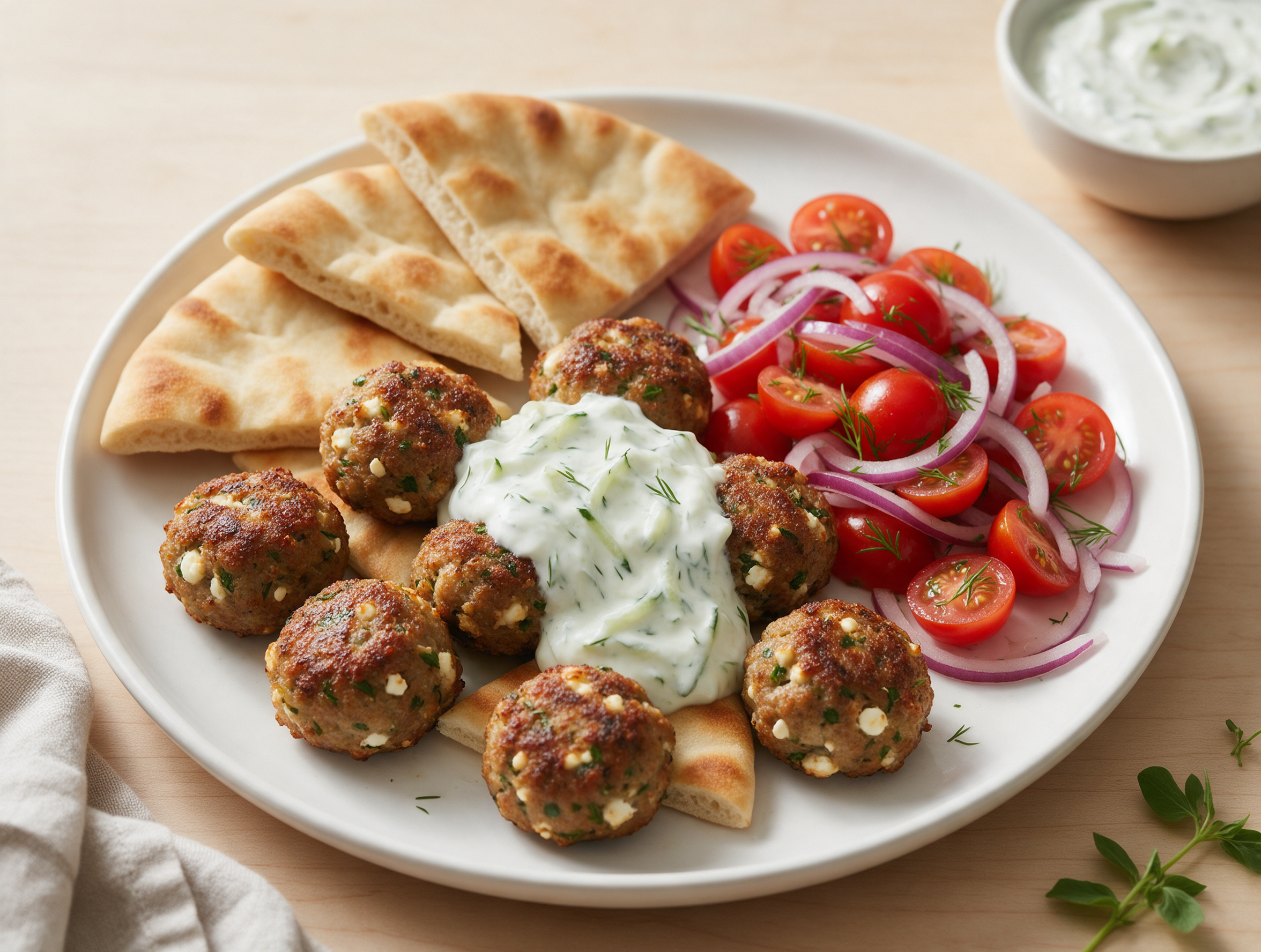
- Rest the meatballs on the pan for 5 minutes. Toss the tomatoes with the red onion, 1 tbsp olive oil, vinegar and a pinch of salt. Plate 5 meatballs per person with a warm pita, about 1/2 cup tzatziki and the tomato salad.
Notes
- Weigh the first meatball at 40 g, then shape the rest to match.
- Leave 2.5 cm / 1 inch between meatballs so they brown instead of steam.
- Salt and drain the cucumber first, then fold it into the yogurt to keep the sauce thick.
- Check one meatball from the center of the pan, not the edge, for 160 F / 71 C.

Tips for Success
- Grate the onion on a box grater instead of dicing it, so it melts into the beef and adds moisture.
- Mix the meat with your hands for about 30 seconds, only until the streaks of egg disappear.
- Weigh the first meatball at 40 g and shape the rest to match so they finish baking together.
- Check one meatball from the middle of the pan with an instant-read thermometer for 160 F / 71 C before pulling the tray.
- Make the tzatziki while the meatballs bake so the garlic mellows and the sauce chills for 25 minutes.
Variations
- Swap half the beef for ground lamb to get a gamier, more traditional flavor. Protein stays within a gram or two per serving.
- Use ground dark-meat turkey instead of beef and add 1 extra tablespoon of olive oil to the mix so the meatballs don’t dry out.
- Serve over 1 cup of cooked rice per person instead of pita, and use gluten-free breadcrumbs in the meatballs for a gluten-free plate.
Storage and Reheating
Store the meatballs in an airtight container in the fridge for 4 days. Keep the tzatziki in a separate container for up to 3 days, and stir it before serving because a little liquid settles on top.
Reheat the meatballs on a sheet pan in a 175 C / 350 F oven for 10 to 12 minutes, until steaming hot in the center. The microwave works too, at 70 percent power for 90 seconds, but the outsides soften.
Freeze cooled meatballs in a single layer on a tray for 1 hour, then bag them for up to 3 months. Thaw overnight in the fridge before reheating. Don’t freeze the tzatziki, since yogurt and cucumber separate when thawed.
Serving Suggestions
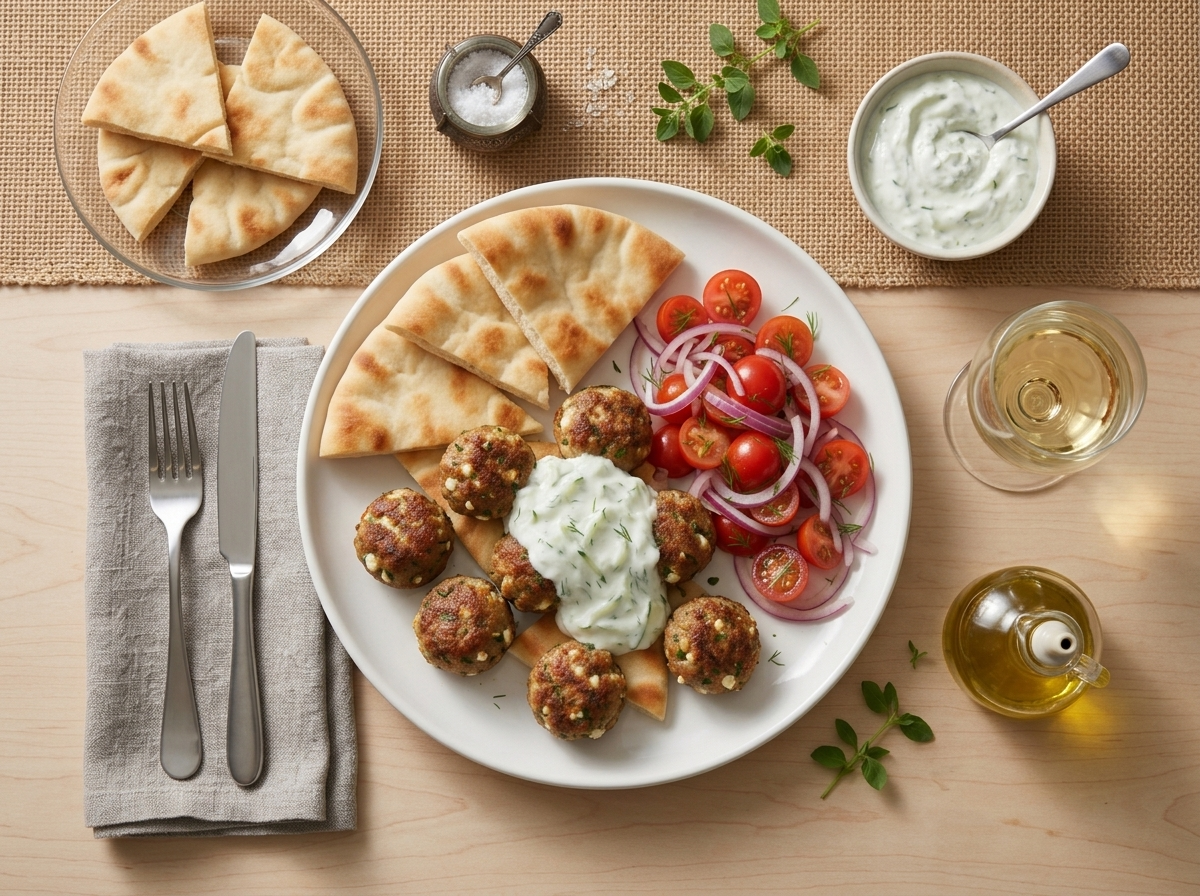
Serve 5 meatballs per plate with a warm pita, about 1/2 cup of tzatziki and a spoonful of the tomato salad. Tear the pita, scoop up a meatball with some sauce, and add a tomato on top.
For a bowl version with yogurt sauce, spoon the meatballs over lemon rice or roasted potatoes. For a lighter plate, skip the pita and wrap the meatballs in butter lettuce leaves.
My two kids don’t care about macros. They care that there’s pita to dip, and that works fine for me.
FAQ
Why are my Greek meatballs dry or tough?
Greek meatballs turn dry when the beef is too lean or the mix is overworked. Use 85/15 ground beef, mix by hand for about 30 seconds, and pull the pan once a meatball reads 160 F / 71 C in the center. Every extra 5 minutes in a 425 F oven tightens them noticeably.
Why is my tzatziki watery?
Tzatziki gets watery when the grated cucumber still holds its juice. Salt it, let it drain in a sieve for 10 minutes, then squeeze it in a clean kitchen towel until nothing drips. Use whole-milk Greek yogurt too, since regular yogurt starts out much thinner.
Can I use regular yogurt instead of Greek yogurt in the tzatziki?
You can, but the sauce will be thinner and you lose protein. Regular yogurt has roughly 4 g per 100 g against about 9 g for Greek, which is about 4 g less per serving here. If it’s all you have, strain it through a cheesecloth-lined sieve in the fridge for 1 hour first.
Can I freeze baked Greek meatballs, and what about the tzatziki?
Freeze the meatballs, but not the tzatziki. Cool the meatballs fully, freeze them in a single layer on a tray for 1 hour, then bag them for up to 3 months. Yogurt and cucumber separate when thawed, so make a fresh batch of tzatziki, which takes about 10 minutes.
What goes well with Greek meatballs and tzatziki besides pita?
Lemon rice, roasted potatoes, or a Greek salad with olives and red onion all work. Pita is already part of this recipe’s protein count, so a rice or potato side adds carbs on top of it. For a lighter plate, wrap the meatballs in butter lettuce leaves instead.
What is the difference between Greek keftedes and these baked Greek meatballs?
Traditional keftedes are usually pan-fried, use bread soaked in milk, and lean on mint and often lamb or a beef-pork mix. This version bakes on one sheet pan, uses panko and an egg, and puts feta inside the meatball. You get less browning and a saltier, milder flavor.