Jump to Recipe
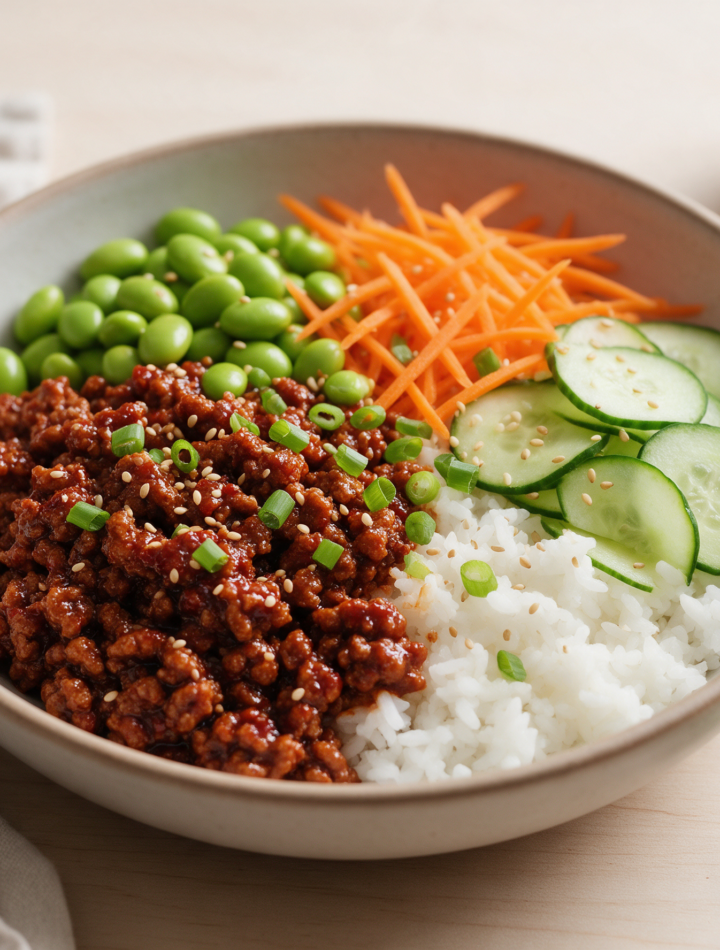
This Korean beef bowl has 32 grams of protein per serving and takes about 35 minutes start to finish. The protein comes from ground beef and edamame, not a scoop of powder, so it tastes like actual dinner instead of a shake.
I make this on weeknights when the kids need food on the table by 6 and I don’t want to think too hard about it. Ground beef browns fast in a 12-inch skillet, the sauce comes together while it cooks, and the edamame boils in the same 4 minutes it takes to mince garlic.
The sauce is soy sauce, brown sugar, gochujang, and sesame oil, thickened with a small cornstarch slurry so it clings to the meat instead of pooling at the bottom of the bowl. If your sauce stays thin, the slurry usually didn’t cook long enough. Give it another minute over the heat.
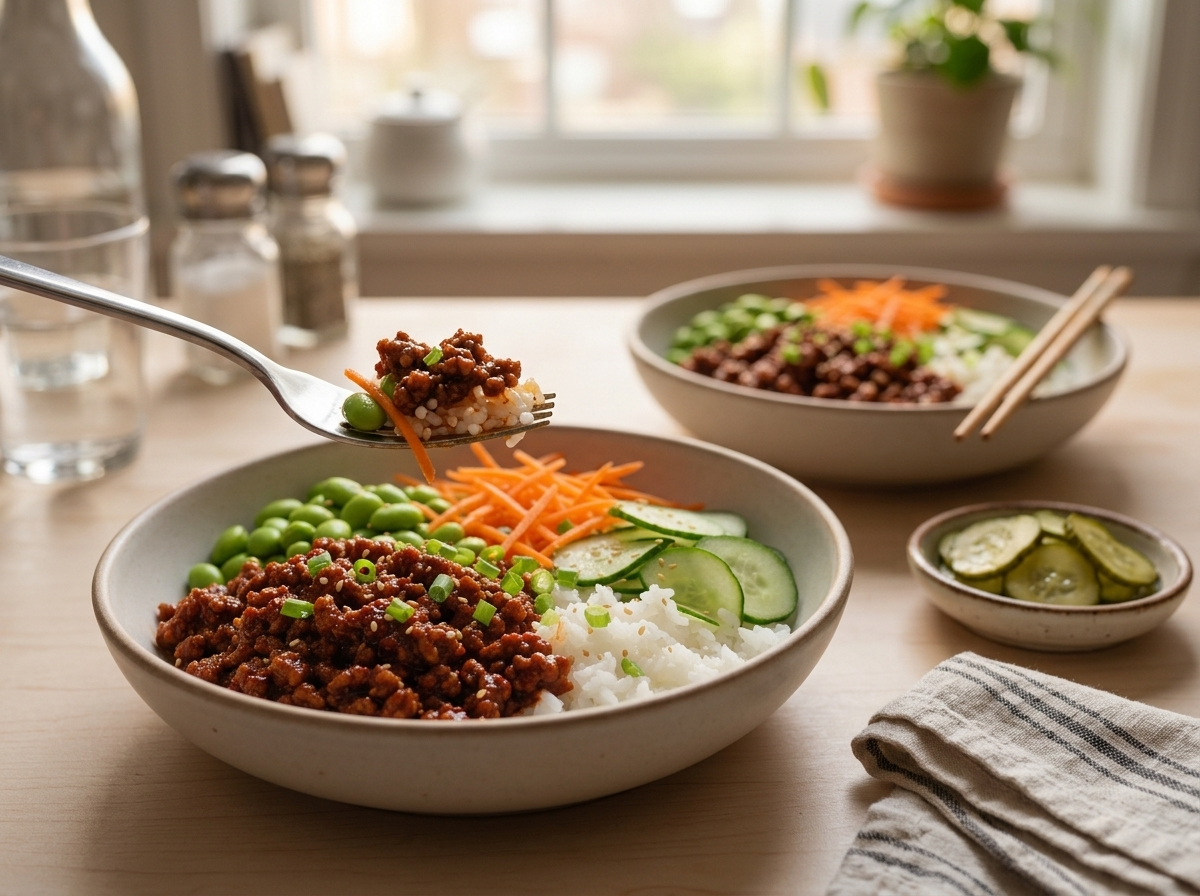
Serve it over rice with shredded carrot and cucumber for crunch. It holds up fine for lunches the next day too.
Why You’ll Love This Recipe
- Hits 32 grams of protein without any protein powder
- Ready in about 35 minutes using one skillet
- Edamame adds extra protein and a fresh crunch
- Leftovers reheat well for next-day lunches
Ingredient Notes
- ground beef 80/20: The fat keeps the beef from drying out in the sauce. Leaner beef like 90/10 works but can taste dry, so add an extra teaspoon of sesame oil if you go that route.
- edamame: Frozen shelled edamame is what I keep in the chest freezer for this. It adds about 8 grams of protein per serving on top of the beef.
- gochujang: This Korean chili paste gives the sauce its heat and color. Start with 1 tablespoon if you’re not sure how spicy you want it, then add more.
- soy sauce: Use low-sodium soy sauce or the sauce turns overly salty once it reduces. Tamari works if you need it gluten free.
- cornstarch: This is what thickens the sauce so it clings to the beef instead of running to the bottom of the bowl. Don’t skip the slurry step.
Spicy Skillet Korean Ground Beef Bowls with Edamame
Ingredients
Method
- If your rice isn't already cooked, start it now. You'll need 500 g / about 3 cups cooked rice for this recipe.
- Bring water to a boil in a 2-quart saucepan, add the frozen edamame, and cook for 3 to 4 minutes until bright green and tender. Drain and set aside.
- In a small bowl, whisk together the soy sauce, brown sugar, gochujang, sesame oil, and rice vinegar until the sugar dissolves.
- In a separate small bowl, stir the cornstarch into the 2 tbsp water until smooth. Set the slurry aside.
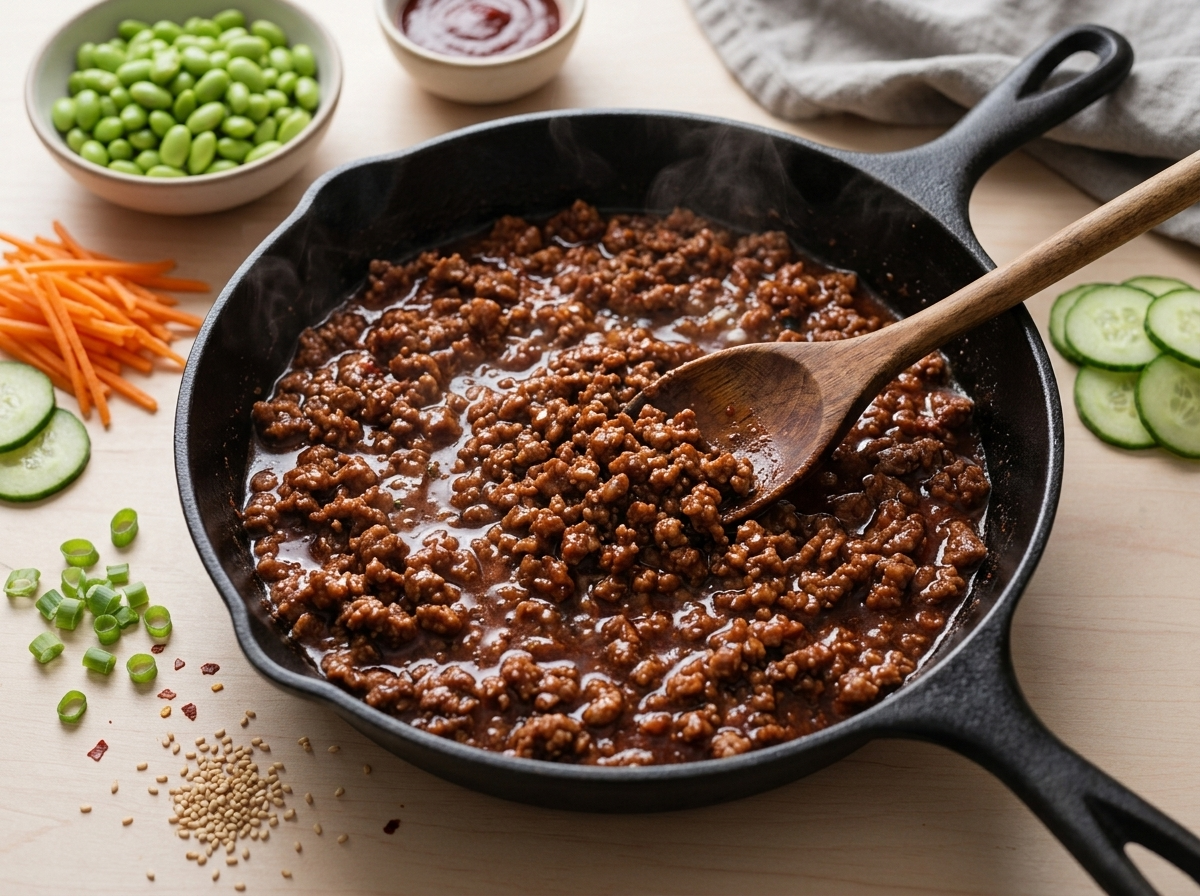
- Heat the vegetable oil in a 12-inch skillet over medium-high heat. Add the ground beef and break it up with a wooden spoon.
- Cook for 6 to 8 minutes, stirring occasionally, until the beef is no longer pink and reaches 160 F / 71 C on an instant-read thermometer. Drain off excess fat if the skillet looks greasy.
- Add the garlic and ginger to the skillet and cook for 30 seconds until fragrant.
- Pour the sauce over the beef and stir to coat. Simmer for 2 minutes.
- Stir in the cornstarch slurry and cook for 1 to 2 minutes, until the sauce thickens enough to coat the back of a spoon.
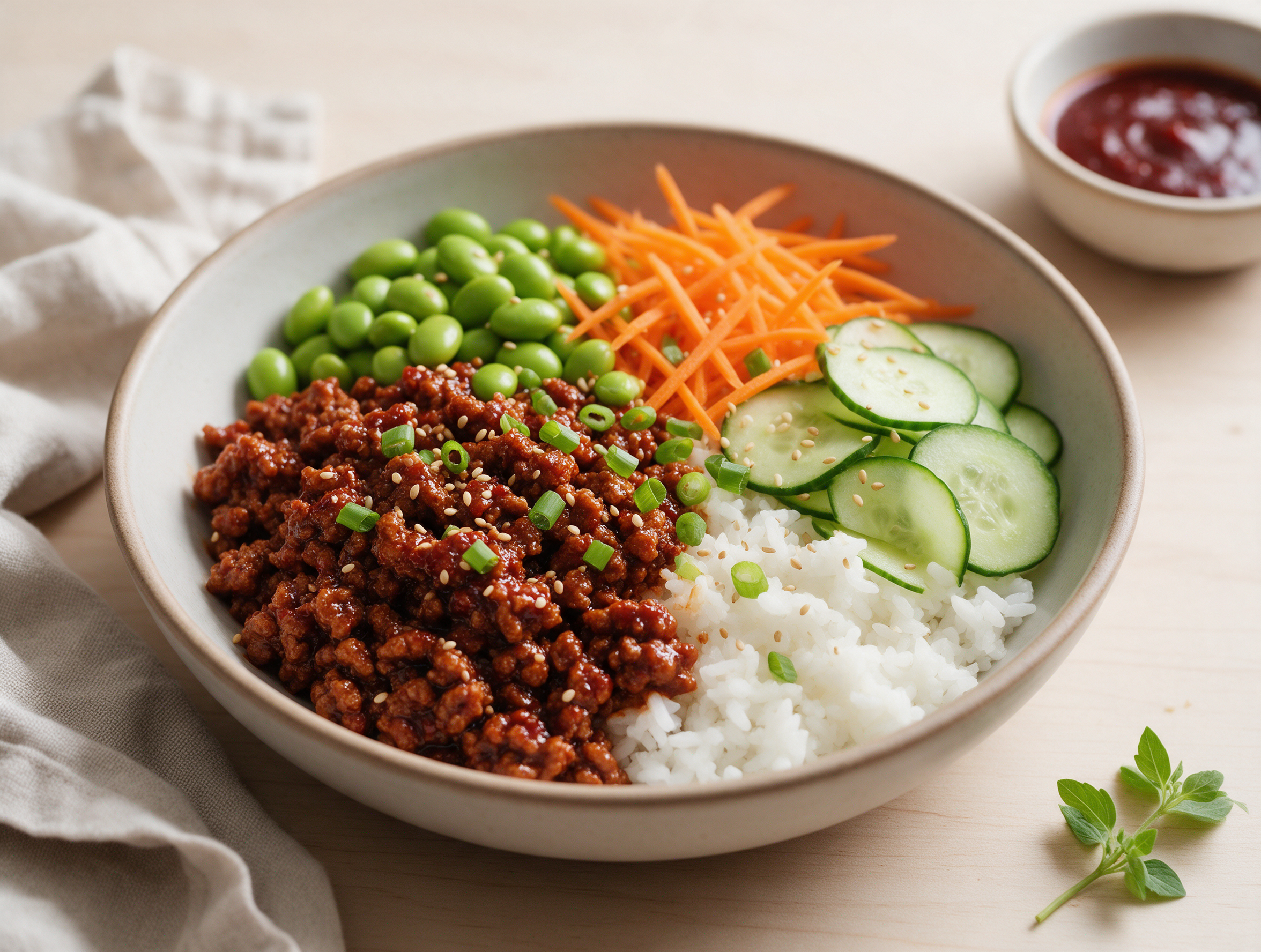
- Divide the rice among four bowls. Top each with the beef, edamame, shredded carrot, and cucumber.
- Scatter green onions and sesame seeds over the top and serve right away.
Notes
- Use 80/20 ground beef; leaner blends dry out in the sauce.
- Drain excess fat after browning if the skillet looks greasy.
- Simmer the cornstarch slurry a full 2 minutes or the sauce stays thin.
- Cook edamame just 3 to 4 minutes so it stays bright, not mushy.
Tips for Success
- Drain the beef fat if it pools in the skillet, or the sauce will taste greasy instead of glossy.
- Cook the cornstarch slurry a full 2 minutes so the sauce actually thickens instead of staying watery.
- Shred the carrots and slice the cucumber while the beef browns so everything finishes at the same time.
- Taste the sauce before it hits the beef and adjust the gochujang if you want more heat.
- Cook the rice earlier in the day or use a pouch of microwave rice to save 15 minutes.
Variations
- Swap ground beef for ground turkey; you’ll lose about 4 grams of protein per serving but keep the same cook time.
- Add a fried egg on top for another 6 grams of protein and a runny yolk to stir into the sauce.
- Use cauliflower rice instead of white rice to cut the carb count, though the bowl won’t be as filling.
Storage and Reheating
Store leftover beef and sauce in an airtight container in the fridge for 3 to 4 days. Keep the rice, edamame, and fresh vegetables in a separate container so the cucumber doesn’t turn soggy.
Reheat the beef in a skillet over medium heat for 3 to 4 minutes, or in the microwave in 45-second bursts, stirring between each, until it’s hot throughout. Warm the rice separately and assemble the bowl fresh with cold carrot and cucumber for the best texture.
The beef and sauce freeze well for up to 3 months in a freezer bag laid flat. Thaw overnight in the fridge and reheat in a skillet before building a new bowl with fresh rice and vegetables.
Serving Suggestions
Korean beef bowls work as a full dinner on their own, but a side of quick-pickled cucumber or kimchi adds acidity that cuts through the richness of the beef.
For a lighter version, skip the rice and serve the beef and edamame over shredded lettuce or cabbage instead. A jammy soft-boiled egg on top adds another 6 grams of protein if you want to push past the base 32 grams.
Pack leftovers into containers with the sauce on the bottom and rice on top for grab-and-go lunches during the week.
FAQ
Why is my Korean beef bowl sauce watery instead of glossy?
The cornstarch slurry probably needs more time on the heat. Stir it into the beef and simmer for a full 1 to 2 minutes, not just a quick stir, until it coats the back of a spoon. If you skip the slurry entirely, the sauce stays thin no matter how long you cook it.
Can I use ground turkey instead of ground beef for this Korean beef bowl?
Yes, ground turkey works well, though you’ll lose about 4 grams of protein per serving since it has less protein density than 80/20 beef. Cook it the same way, 6 to 8 minutes, but check that it hits 165 F / 74 C since poultry needs a higher safe temperature than beef.
Can I freeze this Korean beef bowl with edamame?
The beef and sauce freeze well for up to 3 months in a sealed freezer bag. Don’t freeze the assembled bowl since the rice turns mushy and the cucumber gets watery once thawed. Thaw the beef overnight in the fridge and build fresh bowls with new rice and vegetables.
What goes with Korean beef bowls besides rice?
Shredded lettuce or cabbage work well if you want a lighter base, and a side of kimchi or quick-pickled cucumber adds acidity against the sweet-spicy sauce. A soft-boiled egg on top is a good add if you want more protein at the table.
Is this Korean beef bowl gluten free?
Not as written, since regular soy sauce and most gochujang brands contain wheat. Swap in tamari or a gluten-free soy sauce and check the gochujang label for a gluten-free version. The rest of the ingredients are naturally gluten free.
What’s the difference between this Korean beef bowl and bulgogi?
Bulgogi uses thin marinated slices of beef that are grilled or pan-seared, while this version uses ground beef simmered in a similar sweet-soy sauce for a faster weeknight version. The flavor base is close, but the texture and cook time are different.