Jump to Recipe
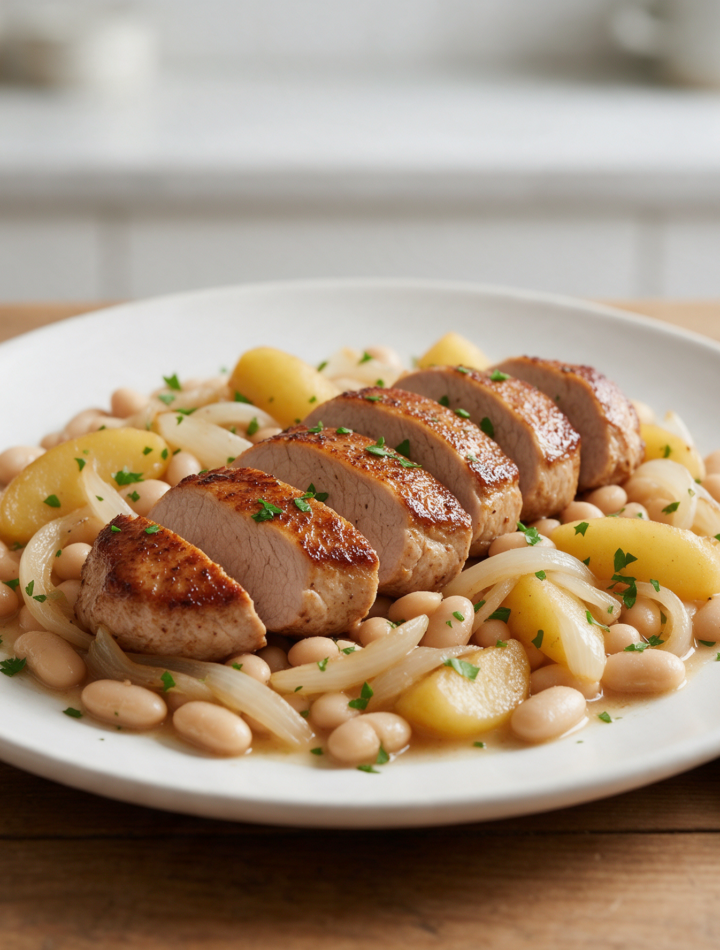
This skillet pork tenderloin with apple and white beans has about 42 g of protein per serving and takes 58 minutes from start to finish. The protein comes from pork and cannellini beans, not powder, so it tastes like a regular weeknight dinner.
Everything cooks in one 30 cm / 12-inch oven-safe skillet. You sear the pork, cook the onion and apple in the drippings, stir in the beans, then roast it all together. I use my garage-sale cast iron pan, but any heavy oven-safe skillet works.
The trade-off is the pork itself. Tenderloin is lean, so it goes from juicy to chalky in a few degrees. Pull it at 145 F / 63 C and rest it for 5 minutes, and the slices stay moist.
Each serving is roughly 170 g of pork before cooking, about 120 g of beans, and a few apple wedges. That comes to around 450 calories.
Why You’ll Love This Recipe
- 42 g protein per serving from pork and beans
- One 12-inch skillet, so cleanup is a single pan
- Apples soften just enough to sweeten the beans
- Canned beans and a supermarket tenderloin, nothing special to find
Ingredient Notes
- Pork tenderloin: Buy two tenderloins around 340 g each. Trim the thin, silvery membrane with a sharp knife, since it shrinks in the heat and curls the meat. Pork loin is a different cut and needs a different method.
- Cannellini beans: Great northern or navy beans work at the same weight. Rinse them for 30 seconds to wash off the starchy canning liquid and some of the sodium.
- Apples: Use Honeycrisp or Granny Smith. Both hold their shape through the roast, while soft apples like McIntosh collapse into sauce.
- Low-sodium chicken broth: Vegetable broth works fine. Check the label if you need it gluten free, since some brands add wheat-based flavorings.
- Apple cider vinegar: It cuts the sweetness of the apples. White wine vinegar or lemon juice can stand in at the same amount.
Skillet Pork Tenderloin with Apples and White Beans
Ingredients
Method
- Heat the oven to 220 C / 425 F with a rack in the middle. Pat the tenderloins dry, trim off any silver skin, and rub them with 3/4 tsp salt, the pepper and the thyme.
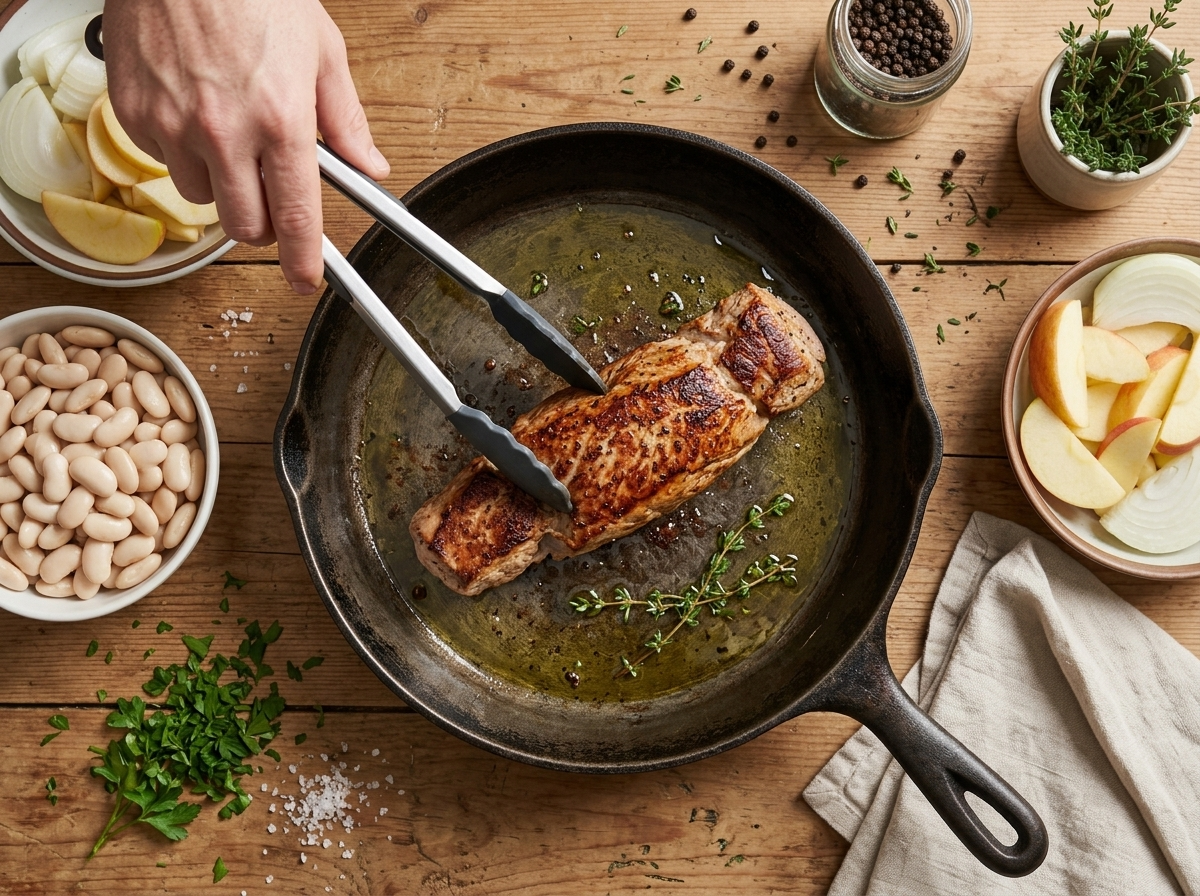
- Heat 1 1/2 tsp of the oil in a 30 cm / 12-inch oven-safe cast-iron skillet over medium-high heat for 2 minutes, until it shimmers. Sear one tenderloin for 5 to 6 minutes, turning every 1 to 2 minutes, until browned on all sides. Move it to a plate, add another 1 1/2 tsp oil, and sear the second tenderloin the same way.
- Reduce the heat to medium. Add the remaining 1 tbsp oil and the onion, and cook for 4 minutes, scraping up the browned bits, until softened. Add the apple wedges and garlic and cook for 2 minutes, until the garlic is fragrant.
- Stir in the broth, mustard, vinegar and 1/4 tsp salt, then add the beans. Simmer for 3 minutes, then turn off the heat.
- Tuck the thin tail of each tenderloin under itself and nestle both on top of the beans, pouring in any juices from the plate. Roast uncovered for 12 to 15 minutes, checking from 12 minutes, until a thermometer in the thickest part reads 145 F / 63 C. The center will be faintly blush pink.
- Wearing a mitt, set the hot skillet on the stovetop. Move the pork to a cutting board and rest it for 5 minutes, then slice it into 1.5 cm rounds. Stir the beans, spoon them onto plates, top with the pork, and sprinkle with parsley.
Notes
- Sear one tenderloin at a time so the skillet stays hot and the crust browns.
- Pull the pork at 145 F / 63 C and rest it 5 minutes before slicing.
- Slice across the grain into rounds about 1.5 cm thick.
- Use a mitt on the skillet handle after it comes out of the 220 C / 425 F oven.
Tips for Success
- Trim the silver skin with a thin knife before seasoning, or it tightens in the heat and curls the pork.
- Tuck the thin tail end of each tenderloin under itself before roasting so it doesn’t finish before the thick middle.
- Start checking the temperature at 12 minutes in the thickest part, and pull the skillet at 145 F / 63 C.
- Cut apple wedges at least 1 cm thick so they soften through the roast but still hold their shape.
- Pat the pork completely dry with paper towels before it hits the hot oil, or it steams instead of browning.
Variations
- Swap the cannellini for great northern beans or chickpeas at the same 480 g drained weight to keep the protein close.
- Add 2 tbsp chopped fresh sage with the garlic, and replace 60 ml of the broth with apple cider for a stronger autumn flavor.
- Stir 60 g of baby spinach into the beans right after roasting and let it wilt in the leftover heat of the skillet.
Storage and Reheating
Leftover skillet pork tenderloin with apple and white beans keeps 3 to 4 days in an airtight container in the fridge. Cool it and refrigerate within 2 hours of cooking. Store the pork whole if you can and slice it just before reheating.
Reheat a portion in a covered skillet over medium-low heat for 6 to 8 minutes with 2 tbsp of broth or water. Or microwave it at 50% power for 2 to 3 minutes. Gentle heat matters because lean pork turns tough fast.
The beans and apples freeze well for up to 2 months in a zip-top freezer bag. Cooked tenderloin gets drier after freezing, so freeze only the bean base. Thaw it overnight in the fridge and cook fresh pork on top.
Serving Suggestions
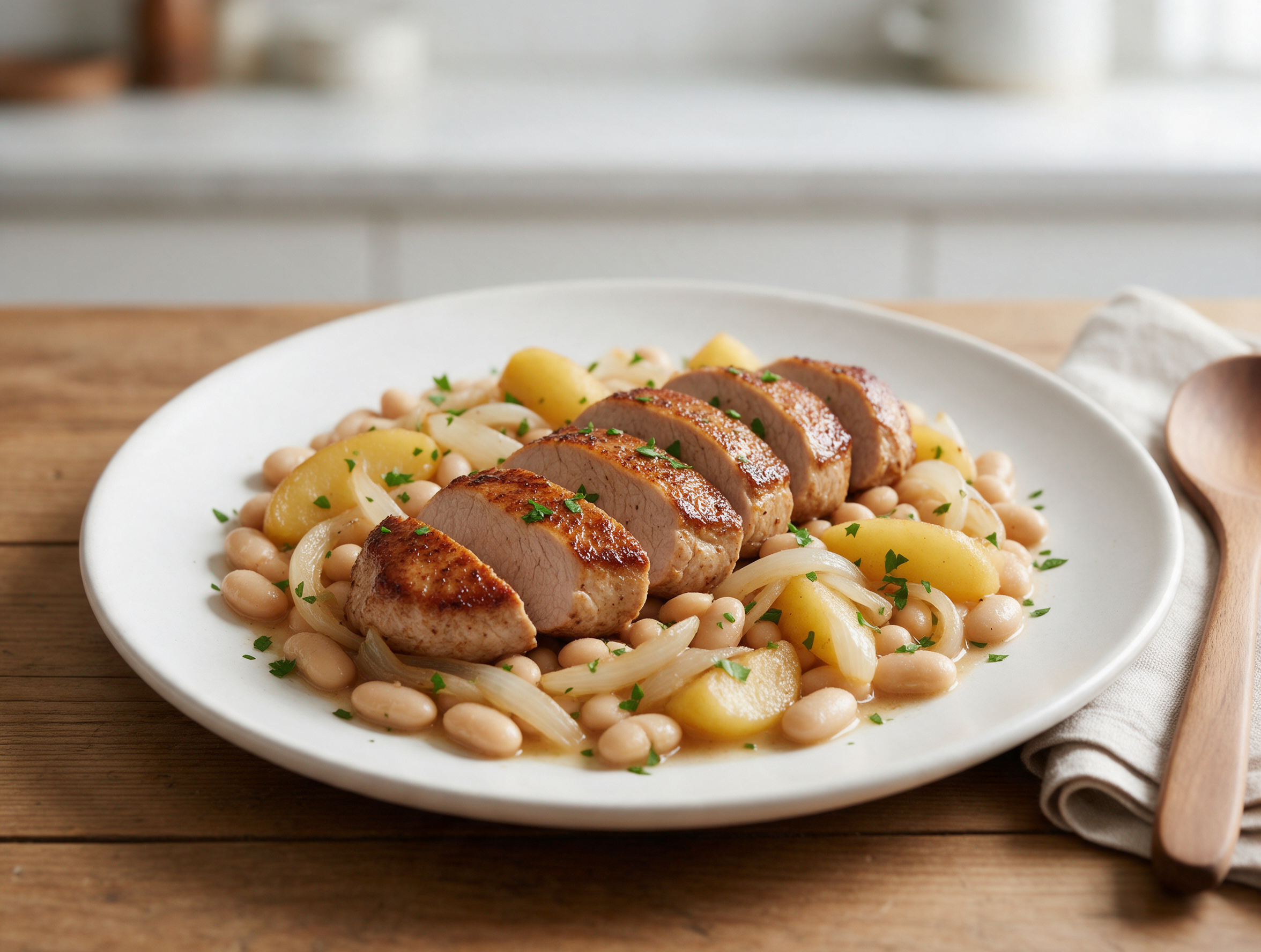
Spoon a generous scoop of the beans and apples onto each plate and fan the pork slices on top. Cut the rounds about 1.5 cm thick so the faintly blush pink center shows. Drizzle any pan juices over the top.
A sharp green side balances the sweet apples. Roasted broccoli, green beans or an arugula salad dressed with lemon juice and olive oil all work. Crusty bread is useful for the bean juices.
For a drink, sparkling water with lemon or a dry hard cider fits the apple flavor without competing with it.
FAQ
How do I know when pork tenderloin is done without cutting into it?
Push an instant-read thermometer into the thickest part of the pork. It should read 145 F / 63 C, which is the USDA safe temperature for whole pork cuts. The center will look faintly blush pink with clear juices. Much past that point, the slices turn dry and chalky quickly.
Can I use dried white beans instead of canned for pork tenderloin with beans?
Yes. Soak 200 g of dried cannellini overnight, then simmer them for about 60 to 75 minutes until tender, which gives roughly 450 to 500 g cooked. Drain them and use them as written. It adds a lot of time, so I stick with canned on weeknights.
Can I season the pork tenderloin the night before cooking?
Yes, season it up to 12 hours ahead. Rub on the salt, pepper and thyme, then refrigerate it uncovered on a plate. The salt works as a dry brine and the surface dries out, which helps it brown in the skillet. Slice the apples on cooking day, since cut apples brown fast.
What goes well with pork tenderloin and white beans?
Something green and a little sharp. Roasted broccoli or a lemony arugula salad both cut the sweetness of the apples. For the broccoli, toss 400 g of florets with oil and roast them on a sheet pan in the same 220 C / 425 F oven for 15 to 18 minutes.
Is skillet pork tenderloin with apple and white beans gluten free?
Yes, the ingredients are naturally gluten free and dairy free as written. The one thing to check is the chicken broth label, because some brands add wheat-based flavorings. Dijon mustard is usually fine, but read that label too if you cook for someone with celiac disease.
What is the difference between pork tenderloin and pork loin in this recipe?
Pork tenderloin is a narrow, lean muscle that weighs about 340 to 450 g and roasts in 12 to 15 minutes. Pork loin is a wider roast, usually 1 kg or more, with a fat cap. It needs a much longer, lower roast, so don’t swap it in without changing the method.