Jump to Recipe
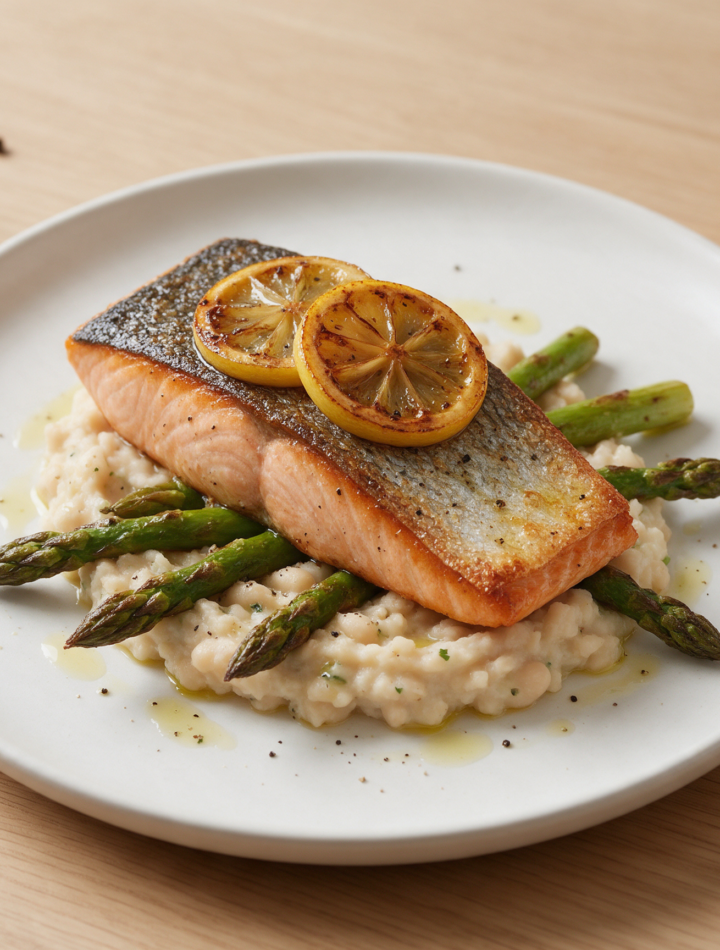
Baked salmon with white bean mash has about 43 g of protein per serving and takes 30 minutes from start to finish. The protein comes from salmon and cannellini beans, not powder, so it tastes like a normal dinner and nothing else.
Each plate is roughly 385 g of food: one 170 g (6 oz) fillet, a generous scoop of garlicky mash, and about 110 g of asparagus. The salmon and asparagus share one sheet pan. The mash simmers on the stove while the oven does the work.
Bake the salmon to 145 F / 63 C. That’s the USDA number, and it gives you opaque flesh that flakes with a fork. It’s a little firmer than restaurant salmon, and that’s the trade-off for a fish you don’t have to second-guess.
My two kids don’t care about macros. They do care that the mash is smooth, so I mash it until it holds a spoon trail.
Why You’ll Love This Recipe
- 43 g protein per plate from fish and beans, no powder
- Salmon and asparagus bake together on one sheet pan
- The bean mash is finished in the time the oven needs
- Dairy-free and gluten-free without any special swaps
Ingredient Notes
- salmon fillets: Buy center-cut, skin-on fillets about 2.5 cm thick. Each 170 g fillet gives about 33 g of protein. Coho or sockeye work too, but they’re leaner and dry out faster.
- cannellini beans: Two 425 g (15 oz) cans, drained, give about 8 g of protein per serving. Great Northern beans swap in one for one.
- asparagus: Choose medium spears about the thickness of a pencil. Very thin spears burn at 200 C / 400 F, and thick ones need 5 extra minutes.
- lemons: You need two. One is zested and juiced into the mash, and the other is cut into 8 thin rounds that roast on top of the salmon.
- smoked paprika: It adds color and a faint smoky edge to the salmon. Regular sweet paprika works if that’s what you have.
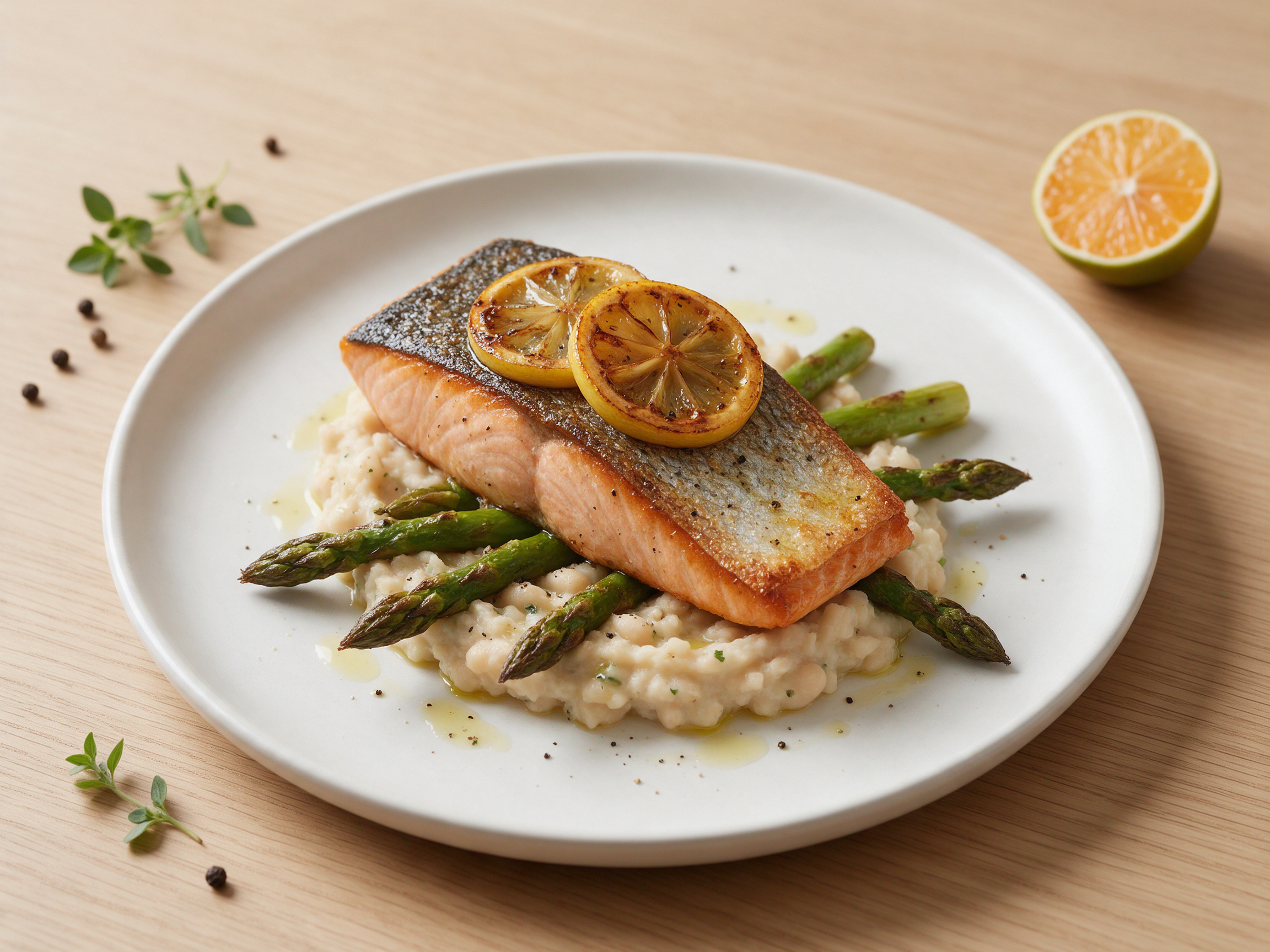
Sheet Pan Baked Salmon over Garlicky White Bean Mash
Ingredients
Method
- Heat the oven to 200 C / 400 F with a rack in the middle. Pat the salmon dry with paper towels. Zest one lemon, juice it, and set both aside for the mash. Cut the second lemon into 8 thin rounds. Drain and rinse the beans.
- Spread the asparagus on one half of a 33 x 46 cm / 13 x 18-inch rimmed sheet pan and toss with 1 tbsp olive oil and 1/4 tsp salt. Set the salmon skin-side down on the other half. Rub with the remaining 1 tbsp oil, 1/4 tsp salt, pepper, and paprika, then top each fillet with 2 lemon rounds. If a fillet has a thin tail, fold the last 3 cm under so it cooks at the same pace as the thick end.
- Bake for 12 to 15 minutes, until the thickest part of the salmon reads 145 F / 63 C and the flesh is opaque and flakes with a fork. The asparagus should be tender with browned tips.
- While the pan bakes, heat 2 tbsp olive oil in a 3-quart / 2.8 L saucepan over medium heat for 1 minute. Add the garlic and thyme and cook for 45 to 60 seconds until fragrant but not brown. Add the beans, 60 ml water, and 1/2 tsp salt, then simmer for 5 minutes until the beans are soft and most of the water is absorbed.
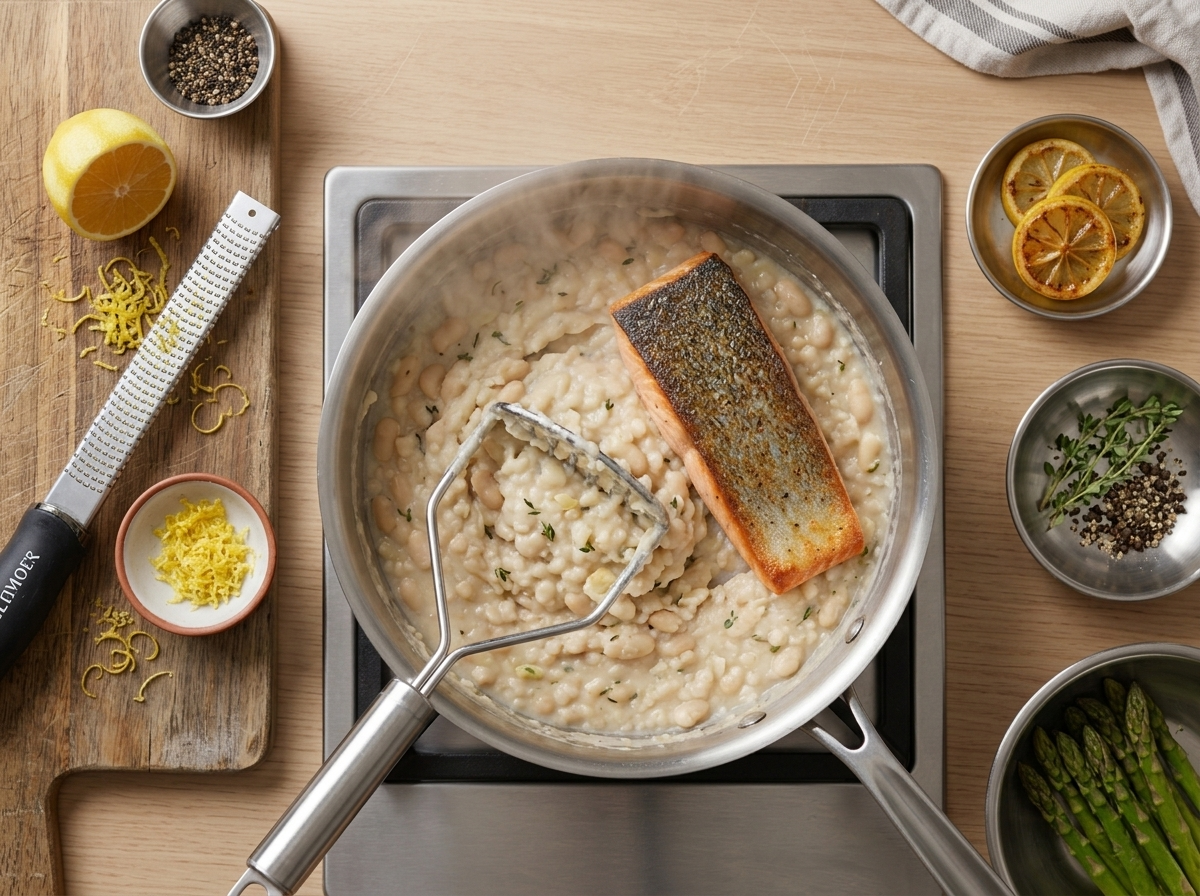
- Take the saucepan off the heat and mash the beans with a potato masher until mostly smooth with a few whole beans left. Stir in the lemon zest, 2 tbsp of the lemon juice, and 1/4 tsp pepper. Add a splash of water if the mash feels stiff, then cover to keep warm.
- Divide the mash among 4 plates, top with a salmon fillet, and set the asparagus alongside. Squeeze the roasted lemon rounds over the fish and serve right away.
Notes
- Pat the salmon dry so the oil and paprika stick and the surface roasts.
- Skin-on fillets stay moister, and the skin peels off easily after baking.
- Drain the rinsed beans fully before simmering, or the mash turns watery.
- Serve right away, because the mash firms up as it cools.
- The 43 g protein figure is an estimate based on 170 g raw fillets.
Tips for Success
- Buy center-cut salmon fillets about 2.5 cm thick so all four pieces cook in the same 12 to 15 minutes.
- Rinse canned white beans under cold water for 30 seconds to wash off the can liquid, which makes the mash taste tinny.
- Mash with a potato masher, not a food processor, which turns beans gluey. Leave a few whole beans for texture.
- Slide an instant-read thermometer sideways into the thickest part of the fillet and pull the pan at 145 F / 63 C.
- Spread the asparagus in a single layer with space between spears so the tips brown instead of steaming.
Variations
- Swap the asparagus for trimmed green beans or broccoli florets, and give them a 5-minute head start in the oven.
- Stir 2 tablespoons of chopped sun-dried tomatoes and a handful of baby spinach into the hot mash for color and a sweeter edge.
- Mix 1 teaspoon Italian seasoning and 1 tablespoon grated Parmesan into the mash for an Italian-American version. This adds dairy.
Storage and Reheating
Baked salmon with white bean mash keeps in the fridge for 3 to 4 days. Store the salmon, mash, and asparagus in separate airtight containers so the fish doesn’t pick up asparagus smell and the mash stays thick.
Reheat the mash in the microwave for 1 to 2 minutes with a splash of water, stirring halfway. Warm the salmon under foil in a 135 C / 275 F oven for 10 to 12 minutes until warmed through. You can also flake it cold over the mash.
The mash freezes for up to 3 months. Thaw it overnight in the fridge. Don’t freeze the baked salmon, since it turns dry and mealy.
Serving Suggestions
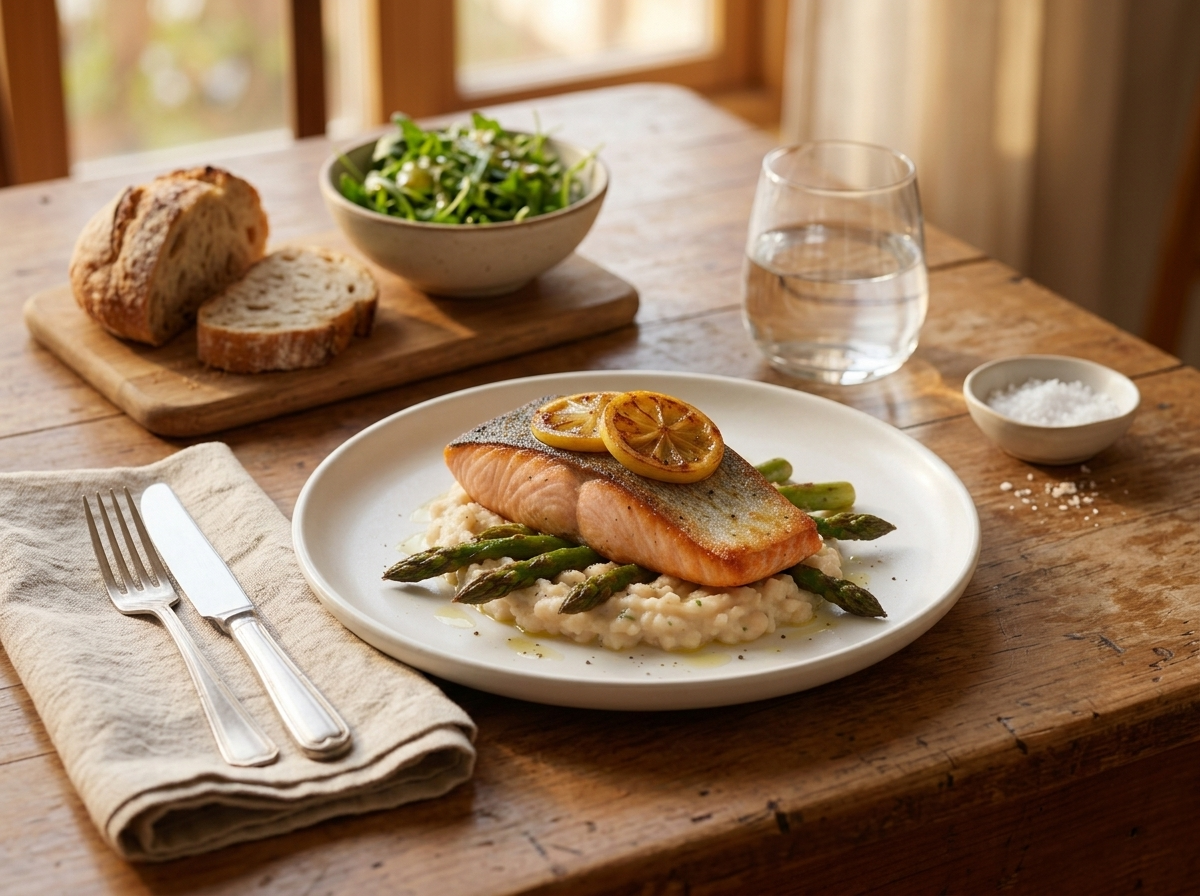
Spoon about 140 g of mash onto each plate, set a salmon fillet on top, and lay the asparagus alongside. Squeeze the roasted lemon rounds over everything just before eating.
A handful of arugula dressed with lemon juice and olive oil adds a peppery contrast to the mash. Crusty bread is good for scraping up what’s left.
For picky eaters, flake the salmon straight into the mash and serve it like a warm bean dip with the asparagus on the side.
FAQ
How do I know when baked salmon is done without cutting it open?
Check that the thickest part reads 145 F / 63 C on an instant-read thermometer. Without one, press a fork into the thickest part and twist gently. Done salmon looks opaque pink and separates into flakes, while raw flesh stays translucent and glossy. Fillets about 2.5 cm thick take 12 to 15 minutes at 200 C / 400 F.
Can I use chickpeas or Great Northern beans instead of cannellini in the white bean mash?
Yes. Great Northern beans swap in one for one and give nearly the same creamy texture. Chickpeas also work, but the mash comes out grainier and nuttier, so add an extra 1 to 2 tablespoons of water. Protein stays close, since all three beans sit around 6 to 8 g per 100 g drained.
Can I freeze the white bean mash, and what about the leftover salmon?
Freeze the mash, but not the salmon. The mash keeps 3 months in a sealed container and thaws overnight in the fridge. Baked salmon turns dry and mealy after freezing, so keep it in the fridge for 3 to 4 days and eat it cold over the mash or warm it gently.
What goes well with baked salmon and white bean mash besides asparagus?
A lemony arugula salad is the easiest add, since the peppery leaves cut through the olive oil in the mash. Roasted broccoli florets or trimmed green beans can replace the asparagus on the same pan if you give them a 5-minute head start. Crusty bread works for scooping up extra mash.
Is baked salmon with white bean mash gluten free and dairy free?
Yes to both as written. The recipe uses olive oil rather than butter, and none of the ingredients contain wheat or milk. Check the labels on the canned beans and smoked paprika if you’re cooking for celiac disease or a milk allergy, since some brands are processed on shared equipment.
Why is white stuff oozing out of my baked salmon?
That white ooze is albumin, a harmless protein that squeezes out as the muscle fibers tighten. A little shows up on almost every fillet baked to 145 F / 63 C. A lot means the salmon cooked past that point, so pull it sooner next time and rely on a thermometer instead of the clock.