Jump to Recipe
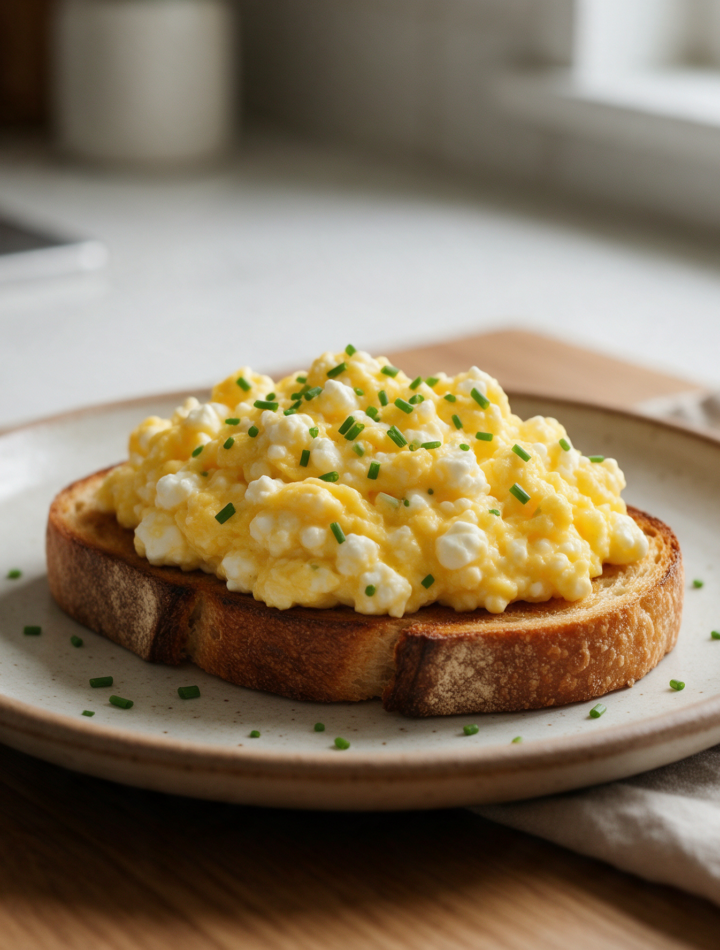
This cottage cheese scrambled eggs on toasted sourdough has 33 grams of protein per serving and takes 15 minutes start to finish. The protein comes from eggs and cottage cheese, not powder, so it tastes like a regular scramble, just creamier and a little richer.
The trick is whisking the cottage cheese right into the raw eggs before anything hits the pan. The curds soften as they warm up and mostly disappear into the eggs, so you get a scramble that looks normal but eats heavier.
Heat matters more than usual here. If you crank the burner to get breakfast done fast, the cottage cheese breaks and weeps water, and you end up with a thin, rubbery scramble instead of something soft. Low heat and patience fix that.
My kids don’t know there’s cottage cheese in these eggs and they eat two slices apiece without a fight, which is the only review I actually trust on a Tuesday morning.
Why You’ll Love This Recipe
- 33g protein per serving from real eggs and cottage cheese, no powder
- One skillet, 15 minutes, no fancy technique required
- Cottage cheese melts into the eggs so kids don’t notice it’s there
- Costs less than a protein bar and actually fills you up
Ingredient Notes
- Eggs: Use large eggs straight from the fridge is fine. They whisk into the cottage cheese better cold than at room temp.
- Cottage cheese: Small curd, 4% or low-fat both work. If your carton looks watery, drain it in a fine-mesh sieve for 5 minutes first or the eggs will turn thin.
- Sourdough bread: Day-old sourdough toasts better than fresh. Any hearty sandwich bread works if that’s what’s in your freezer.
- Butter: Used for the pan, not the toast. Sub olive oil if you want a dairy-free swap for the cooking fat.
- Chives: Optional, just for color and a mild oniony bite. Sliced scallion greens work the same way.
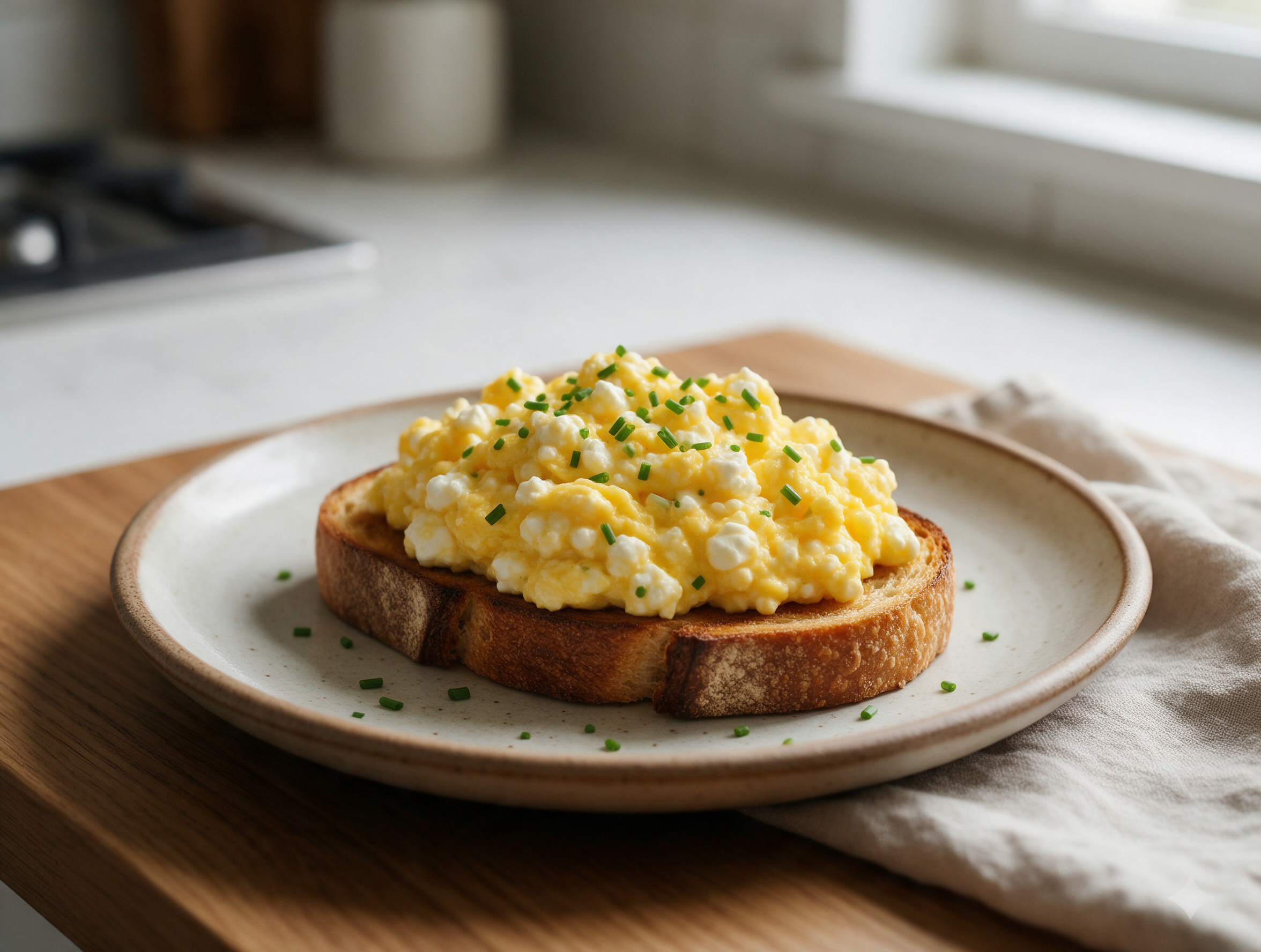
Cottage Cheese Scrambled Eggs on Toasted Sourdough
Ingredients
Method
- Crack the 4 eggs into a mixing bowl. Add the 280 g cottage cheese, salt, and pepper, and whisk with a fork until mostly combined. Small curds are fine.
- If your cottage cheese looked watery in the carton, drain it in a fine-mesh sieve for 5 minutes before mixing it in step 1.
- Drop the sourdough slices into the toaster and toast while the eggs cook, so they finish around the same time.
- Melt the butter in a 10-inch nonstick skillet over low heat, tilting the pan so it coats the bottom.
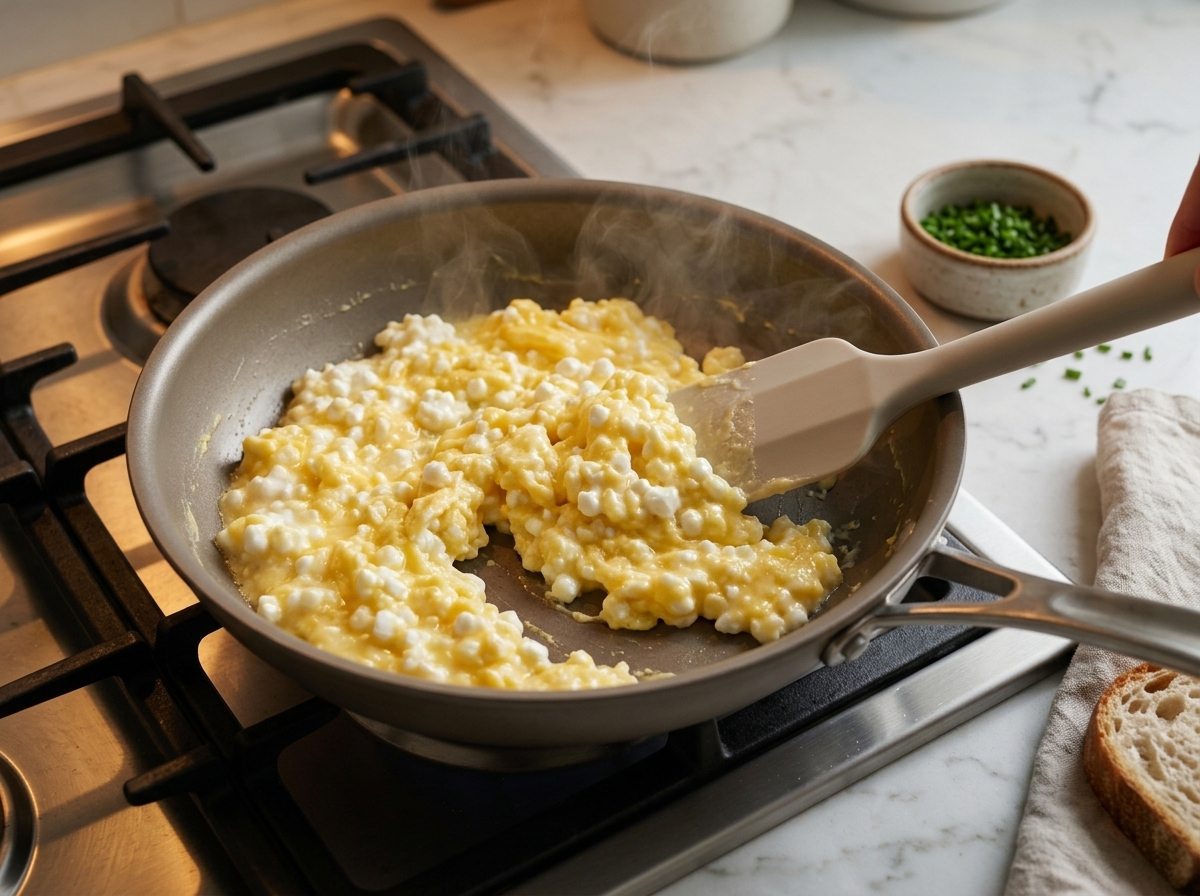
- Pour in the egg and cottage cheese mixture. Let it sit undisturbed for 30 seconds, then start pushing it gently with a rubber spatula from the edges toward the center.
- Keep the heat low and keep folding gently, forming soft curds, for 4 to 5 minutes until the eggs are mostly set but still a little glossy on top.
- Pull the skillet off the heat while the eggs still look slightly wet, they'll finish setting from carryover heat in the next minute.
- Plate the toasted sourdough and spoon the eggs over the top. Sprinkle with chopped chives and serve right away.
Notes
- Whisk cottage cheese into raw eggs, don't fold it in after cooking
- Cook low and slow, high heat breaks the cottage cheese and makes it watery
- Toast the sourdough before starting the eggs so it's ready on time
- Drain watery cottage cheese in a sieve for 5 minutes before mixing
Tips for Success
- Keep the burner on low the whole time, cottage cheese breaks and turns watery over medium-high heat.
- Whisk the cottage cheese into the raw eggs with a fork so you don’t end up with big cold curds in the finished scramble.
- Toast the sourdough before you start the eggs, cold toast under warm eggs turns soggy within a minute.
- Drain runny cottage cheese in a sieve for 5 minutes if your brand is thin, this keeps the eggs from going watery.
- Cook in a nonstick or well-seasoned cast iron skillet, dairy sticks harder than plain eggs and you’ll fight it in a bare pan.
Variations
- Swap sourdough for whole wheat toast and add sliced tomato underneath for extra volume without changing the protein count.
- Stir in a handful of shredded cheddar during the last minute of cooking for a sharper, more savory finish.
- Top with sliced avocado and everything bagel seasoning instead of chives for a heartier weekend version.
Storage and Reheating
Cottage cheese scrambled eggs keep in an airtight container in the fridge for 2 days. The texture softens a bit but the flavor holds up fine.
Reheat gently in the microwave at 50% power in 20 to 30 second bursts, stirring between each one, until just warmed through. Don’t reheat on high or the eggs turn rubbery fast.
Toast the sourdough fresh each time instead of storing it with the eggs. Bread stored under warm eggs turns soft and loses the crisp edge that makes this worth eating.
Serving Suggestions
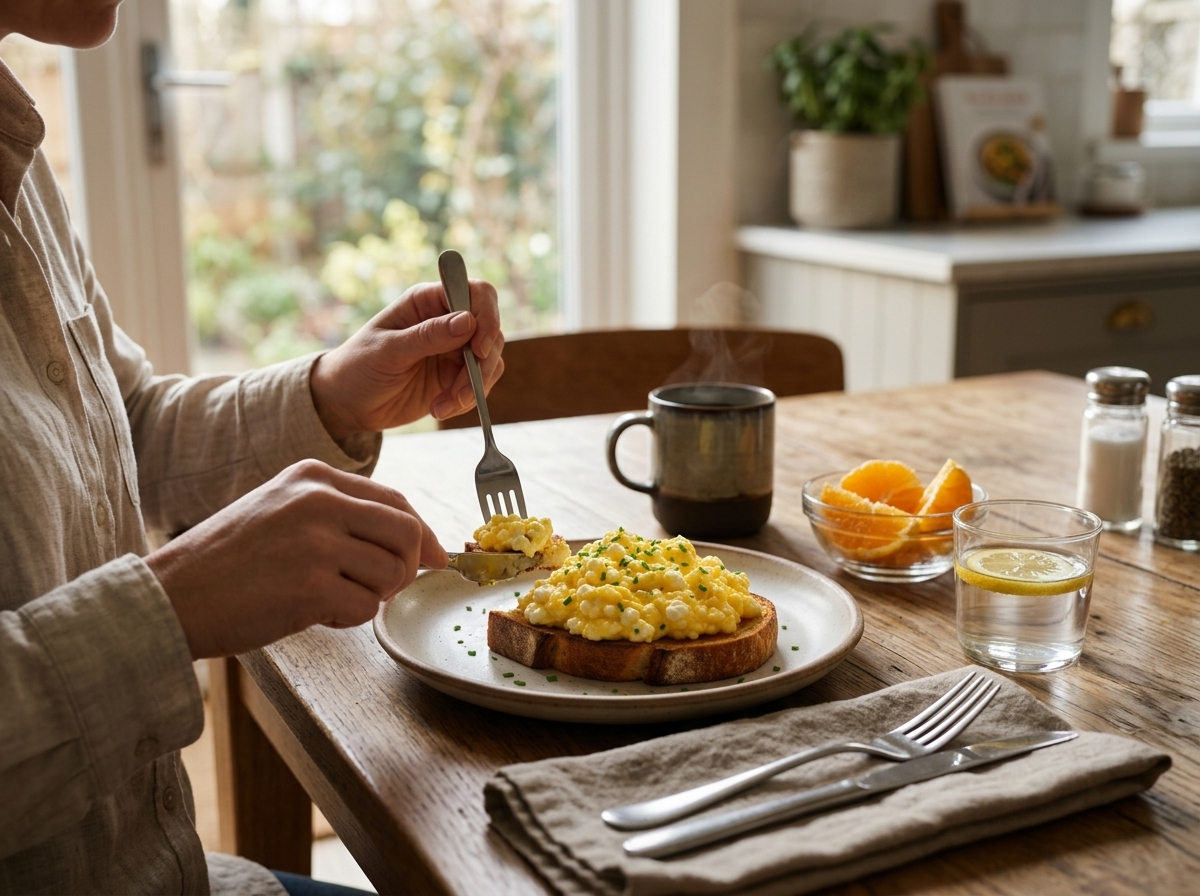
Cottage cheese scrambled eggs on toasted sourdough works fine on its own, but a side of fruit rounds it out. I usually put out sliced orange or a handful of berries since we’ve got a chest freezer full of them from last summer.
A couple slices of bacon or breakfast sausage on the side pushes this toward a full weekend spread if you want more than eggs and toast.
For coffee mornings, a drizzle of hot sauce or a shake of black pepper on the eggs wakes the whole plate up without adding anything to chop.
FAQ
Why did my cottage cheese scrambled eggs turn watery?
The heat was probably too high. Cottage cheese releases water fast over medium or high heat, which thins out the whole scramble. Cook on low, stir gently, and pull the eggs off while they still look a little glossy, they’ll finish setting on their own.
Can I use ricotta instead of cottage cheese in this recipe?
Yes, ricotta works and gives a smoother texture since it doesn’t have curds. It has slightly less protein per gram than cottage cheese though, so use a bit more, around 300g instead of 280g, to keep the protein count close to 33g per serving.
Can I whisk the egg and cottage cheese mixture the night before?
Yes, whisk it and store it covered in the fridge for up to 12 hours. Give it another quick whisk before it hits the pan since the cottage cheese settles a bit overnight. Toast the sourdough fresh in the morning instead of prepping that ahead.
What goes well with cottage cheese scrambled eggs besides fruit?
Bacon, breakfast sausage, or a side of roasted potatoes all work well alongside this dish. Since the eggs already carry a good amount of protein, I usually keep the side simple, fruit or a light green salad if it’s later in the day.
Is cottage cheese scrambled eggs on sourdough gluten free?
No, sourdough bread contains gluten, so this recipe as written isn’t gluten free. Swap the bread for a certified gluten-free loaf or serve the eggs over roasted potatoes instead of toast and the rest of the recipe stays the same.
What’s the difference between this and regular scrambled eggs?
Regular scrambled eggs use milk or cream for softness, while this version whisks in cottage cheese instead, which adds about 15 extra grams of protein per serving. The texture ends up just as soft, with small pockets of melted curd instead of a smooth custard.