Jump to Recipe
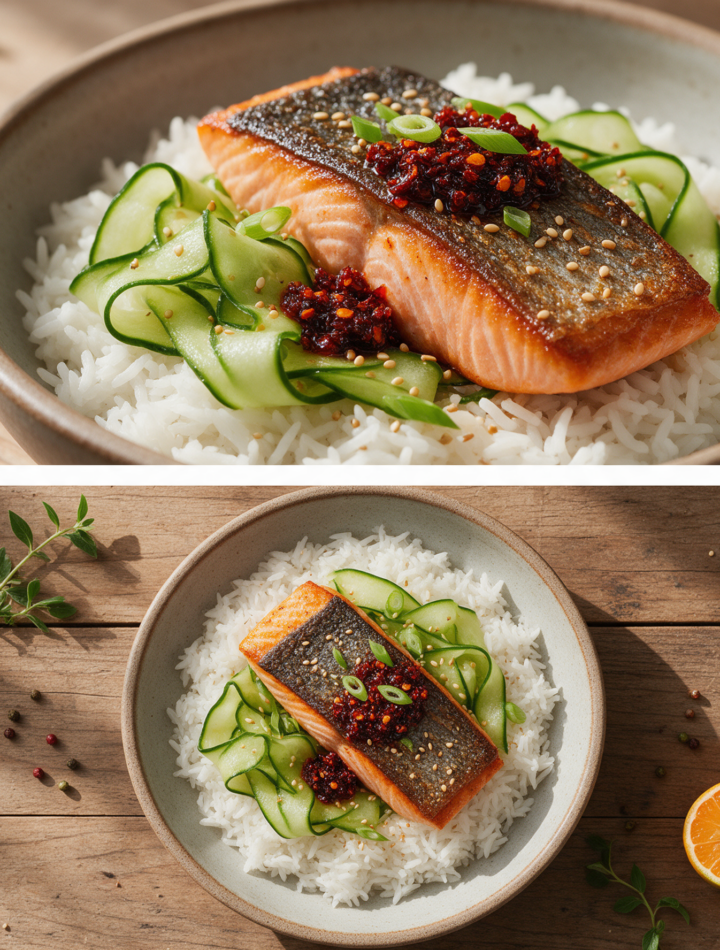
These salmon rice bowls with cucumber and chili crisp put about 39 grams of protein on the table per serving and take 45 minutes start to finish. All of that protein comes from the salmon fillet itself, not a scoop of powder, so the bowl tastes like actual seared fish, crisp skin included.
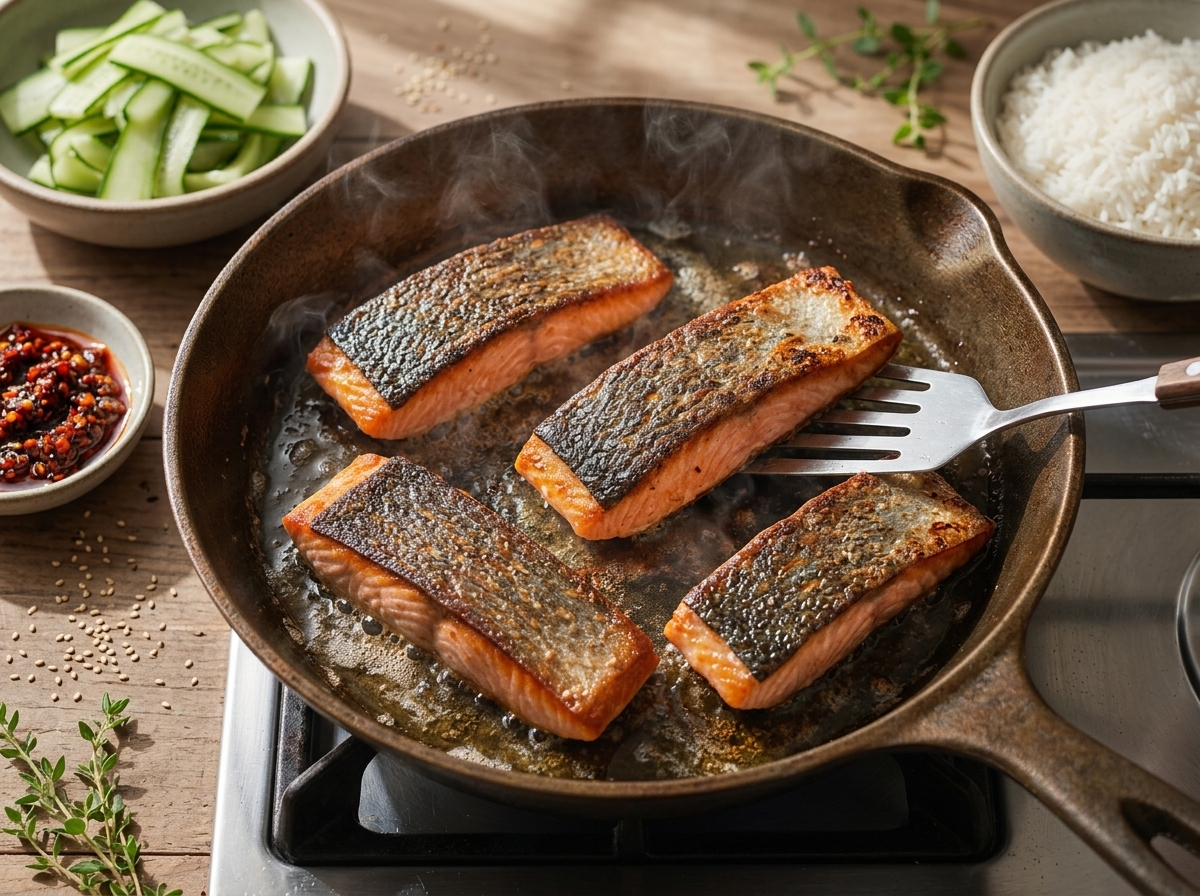
I sear the salmon skin-side down in my garage-sale cast iron pan until the skin actually crackles, then flip it for a few more minutes. The fish comes out flaky and opaque all the way through, no guessing needed if you check it with a thermometer.
Warm rice underneath soaks up a little of the marinade, and the cucumber gets a quick vinegar soak so it stays crunchy next to the hot fish. A spoonful of chili crisp on top brings the heat and the crunchy fried bits that make the whole bowl work.
This is a Tuesday dinner for me, kids at practice, one skillet, nothing else to plate.
Why You’ll Love This Recipe
- Crispy-skin salmon delivers 39 grams of protein per bowl
- One skillet and one pot, ready in 45 minutes
- Quick-pickled cucumber keeps every bite crunchy, not soggy
- Chili crisp adds heat without any extra cooking step
Ingredient Notes
- Salmon fillets: Skin-on fillets crisp up best in a hot skillet. Ask your fishmonger to leave the skin on if it’s already been removed.
- Chili crisp: Lao Gan Ma or Fly By Jing both work here. Start with 1 tablespoon per bowl and add more once you taste it, since brands vary a lot in heat.
- Rice vinegar: Plain white vinegar works in a pinch. Use about half as much since it’s more acidic than rice vinegar.
- Fresh ginger: Ground ginger, about 1/4 teaspoon, works if you don’t have fresh, though the flavor comes out milder.
- Jasmine rice: Day-old rice from the fridge actually works better here since it separates instead of clumping when it hits the bowl.
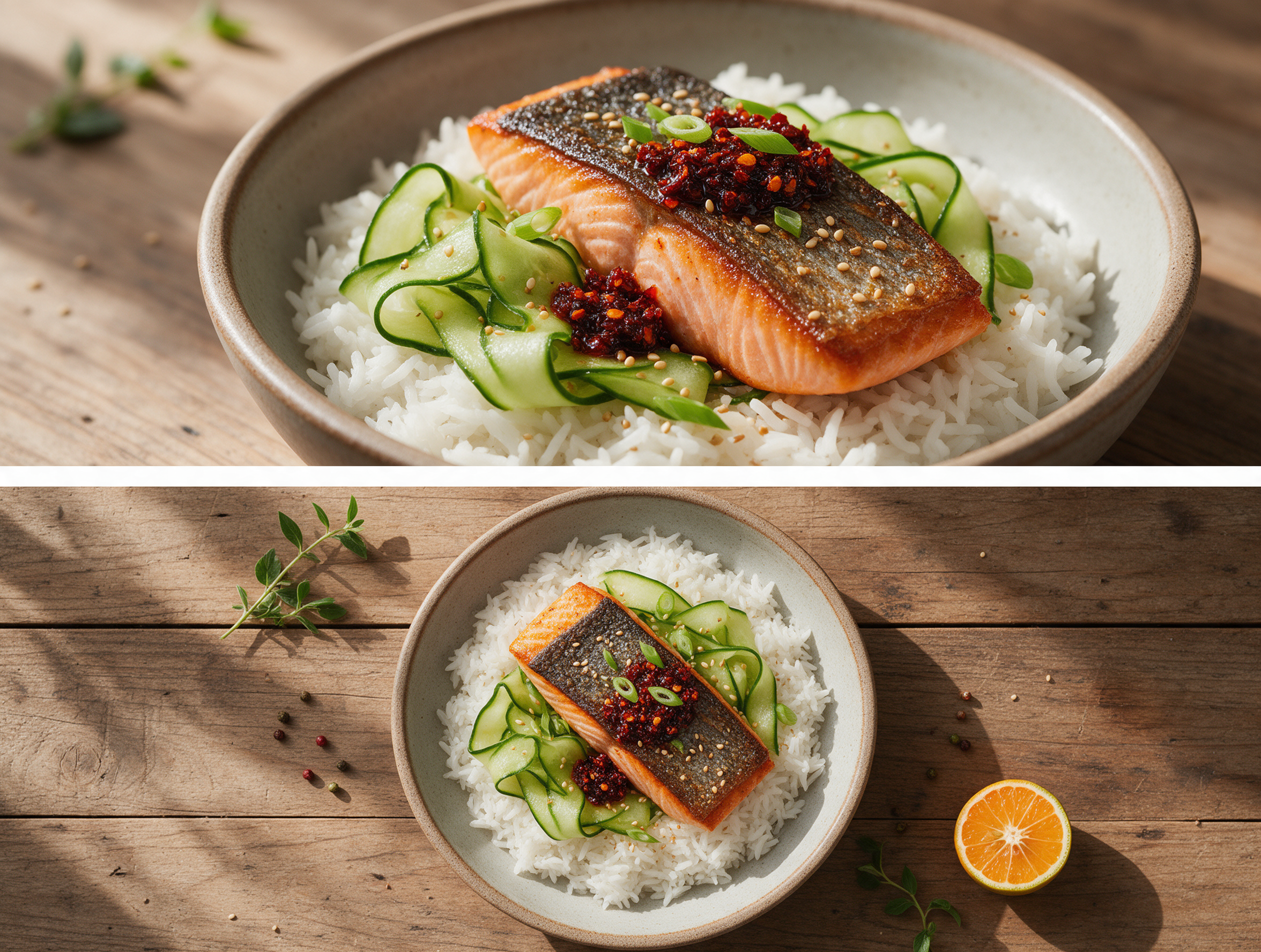
Seared Salmon Rice Bowls with Cucumber and Chili Crisp
Ingredients
Method
- Rinse the jasmine rice until the water runs mostly clear, then cook with 2.25 cups water in a saucepan or rice cooker, about 18 minutes, and let it steam covered for 5 minutes off heat.
- Whisk the soy sauce, 1 tablespoon rice vinegar, sesame oil, garlic, and ginger together in a shallow dish. Add the salmon fillets, turn to coat, and let them marinate at room temperature for 15 minutes.
- Pat the salmon dry with paper towels, this helps the skin crisp instead of steam, then season both sides with salt and pepper.
- Heat the 12-inch cast iron skillet over medium-high with the neutral oil until it shimmers.
- Lay the fillets in skin-side down with space between them, press gently for 10 seconds so the skin stays flat, and sear for 4 to 5 minutes until the skin is crisp and releases from the pan on its own.
- Flip and cook 3 to 4 minutes more until the salmon reaches 145 F / 63 C on an instant-read thermometer and the flesh is opaque and flakes easily with a fork.
- Toss the sliced cucumber with the remaining 2 tablespoons rice vinegar and a pinch of salt in a small bowl.
- Divide the rice among 4 bowls, top each with a salmon fillet, a pile of dressed cucumber, and a spoonful of chili crisp.
- Garnish with sliced green onions and sesame seeds, and serve with lime wedges on the side.
Notes
- Pat salmon fully dry before searing for crisp skin.
- Don't flip the fillet until skin releases naturally, about 4 minutes.
- Cook rice ahead and reheat with a splash of water for faster assembly.
- Use tamari instead of soy sauce for a gluten-free version.
Tips for Success
- Pat the salmon completely dry with paper towels before it hits the pan so the skin actually crisps.
- Let the skillet heat until the oil shimmers before adding the fish, a cold pan gives you soft, pale skin.
- Cook the rice up to 2 days ahead and reheat with a splash of water so it steams back to soft.
- Slice the cucumber paper thin with a mandoline if you have one, it soaks up the vinegar faster.
- Taste your chili crisp brand before measuring, some are much spicier than others and you may want less.
Variations
- Swap the salmon for firm tofu steaks, sear the same way, and skip the internal temperature check.
- Add a soft-boiled egg and a drizzle of extra sesame oil for a richer, heartier bowl.
- Use cauliflower rice instead of jasmine rice to cut the carbs, though the bowl will taste noticeably lighter.
Storage and Reheating
Salmon rice bowls are best eaten right after searing, since the crisp skin turns soft and rubbery once it sits in the fridge or goes through a microwave. Reheating salmon also tends to push out extra moisture, so the fillet gets dry and stringier than the first time around.
For make-ahead, cook the rice and mix the marinade up to 2 days in advance, storing them separately in the fridge. Marinate the salmon for up to 4 hours before you plan to cook it, then sear it fresh right before serving.
Leftover rice keeps 4 to 5 days in a sealed container and reheats fine with a splash of water in the microwave. Slice the cucumber fresh each time instead of storing it dressed, since it turns soft and watery within a few hours.
Serving Suggestions
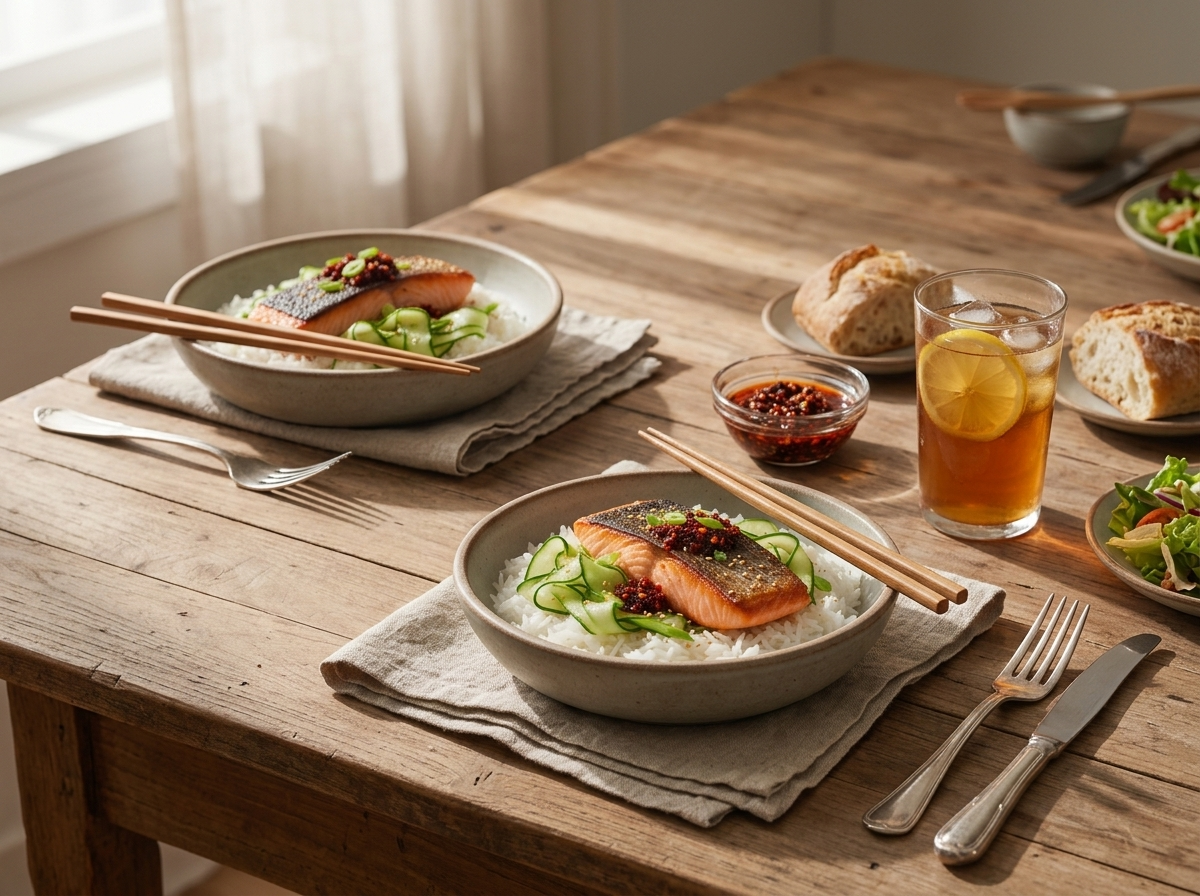
Salmon rice bowls with cucumber and chili crisp work as a full dinner on their own, but a side of steamed edamame or a quick miso soup rounds things out if you want more on the table.
For extra crunch, add shredded carrot or thinly sliced radish alongside the cucumber. A soft-boiled egg on top turns the bowl into a heartier lunch the next day.
Cold beer or iced green tea cuts through the chili crisp heat well. My kids skip the chili crisp entirely and just want extra sesame seeds and a squeeze of lime.
FAQ
Why is my salmon skin not crisping up in the pan?
Usually the pan wasn’t hot enough or the skin was still wet. Pat the salmon completely dry before it touches the skillet, and let the cast iron heat until the oil shimmers before adding the fish. Also resist flipping too soon, the skin releases on its own once it’s crisp, usually around 4 to 5 minutes.
Can I use brown rice instead of jasmine rice for these salmon rice bowls?
Yes, brown rice works, though it needs about 40 minutes to cook instead of 18 and has a chewier bite. Rinse it the same way and add a splash more water since it absorbs more liquid. The protein count in the bowl stays close to the same either way.
Can I meal prep these salmon rice bowls for the week?
Cook the rice and marinate the salmon up to a day ahead, then sear the fish fresh when you’re ready to eat. Salmon skin turns rubbery in the microwave, so it’s better fresh than reheated. Slice the cucumber right before serving so it stays crisp.
What goes well with salmon rice bowls besides chili crisp?
A soft-boiled egg or sliced avocado on top adds richness without much extra work. Quick pickled radish or shredded carrot gives the bowl more crunch alongside the cucumber. Steamed edamame on the side is an easy way to round out the meal.
Are salmon rice bowls with chili crisp gluten free?
Not as written, since regular soy sauce contains wheat. Swap in tamari or a gluten-free soy sauce and check your chili crisp label, since some brands add wheat-based crackers or malt vinegar. Everything else in the bowl, rice, cucumber, salmon, is naturally gluten free.
What’s the difference between chili crisp and sriracha in a bowl like this?
Chili crisp is oil-based with crunchy bits of fried garlic, shallot, and chili flake, so it adds texture as well as heat. Sriracha is a smooth, vinegar-forward sauce with no crunch. For these bowls, chili crisp holds up better against the rice and doesn’t water down the marinade flavor.