Jump to Recipe
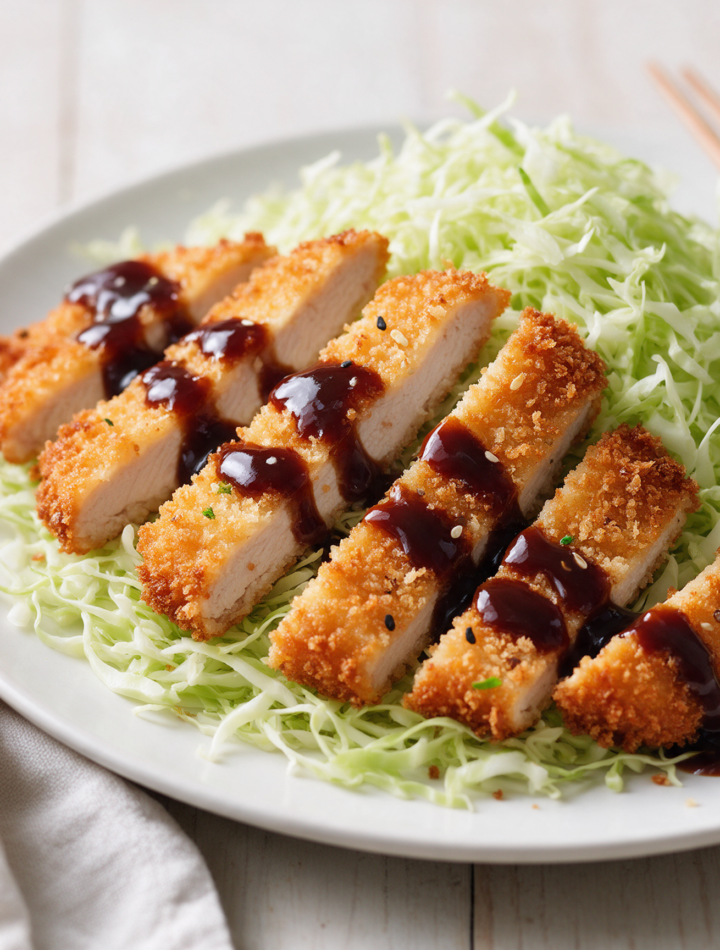
This baked chicken katsu has 44 g of protein per serving and takes 50 minutes from start to finish. The protein comes from chicken breast and eggs, not powder, so it tastes like the real thing: a crisp panko crust over juicy chicken.
The way to get a fried-style crust without a deep fryer is to toast the panko in a little oil first. It turns golden in 4 minutes on the stove and finishes crisp in the oven.
Bake the cutlets on a wire rack. Skip the rack and the bottoms steam and go soft.
Here’s the trade-off. The crust is crunchy, but not as shattering as deep-fried tonkatsu. For a weeknight with one sheet pan and no oil splatter, I’ll take that.
Each serving is two cutlets, about 150 g of shredded cabbage and 2 tbsp of sauce, roughly 370 g of food.
Why You’ll Love This Recipe
- 44 g of protein per serving from real chicken
- No deep fryer and no pot of hot oil
- Toasted panko gives a golden crust without frying
- Tonkatsu sauce takes 2 minutes from pantry staples
Ingredient Notes
- boneless skinless chicken breasts: Four breasts of about 175 g each give eight cutlets once sliced in half. Thighs work too, with about 5 g less protein per serving.
- panko: Use plain Japanese-style panko, not seasoned bread crumbs. Regular dry crumbs are denser and brown unevenly.
- Worcestershire sauce: It supplies the tangy, fruity base of the sauce. Check the label if you need it gluten-free, since some brands contain malt vinegar.
- green cabbage: Shred it as thin as your knife allows. Savoy is more tender but holds less crunch under the warm cutlets.
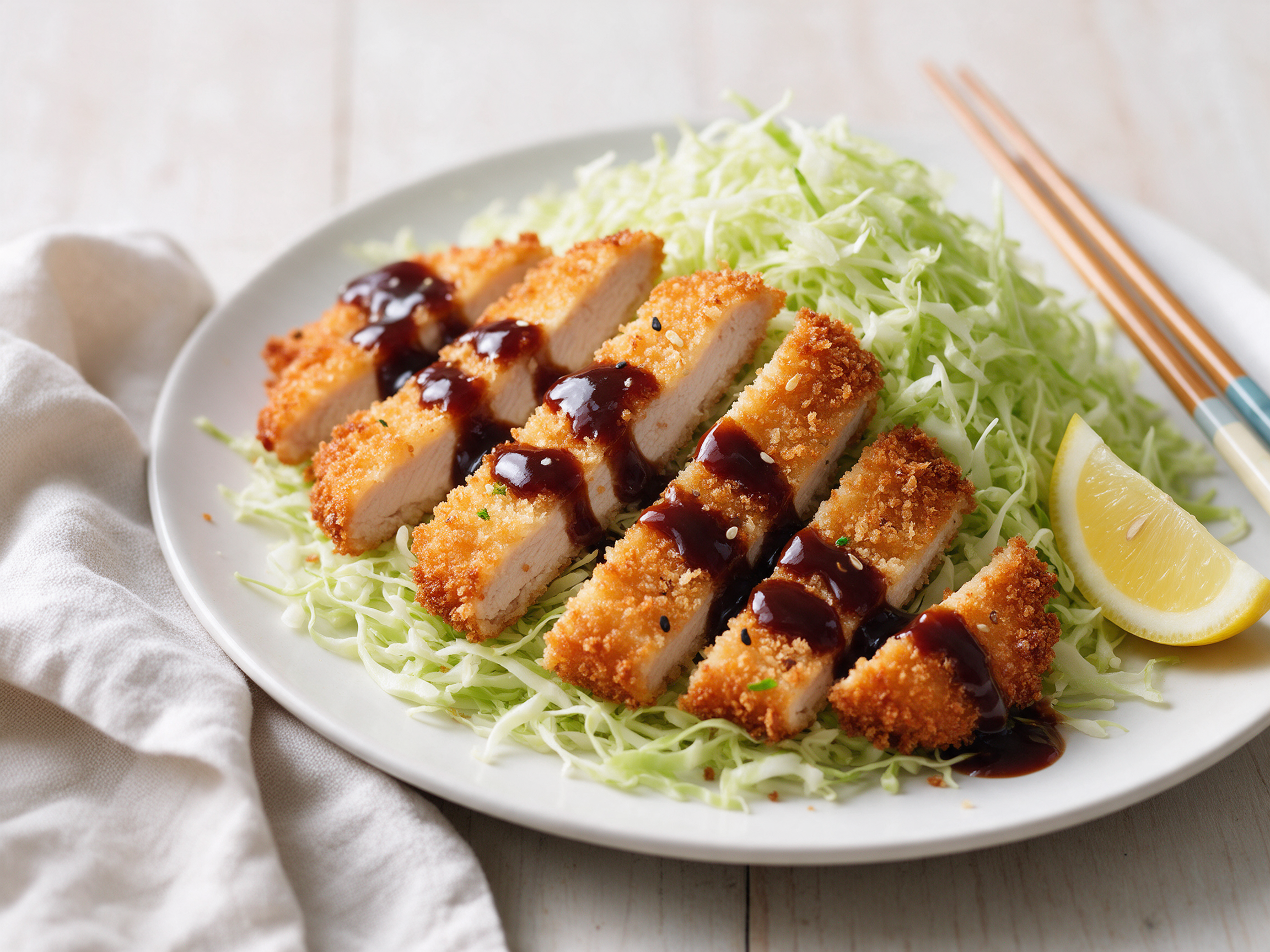
Baked Chicken Katsu with Cabbage and Tonkatsu Sauce
Ingredients
Method
- Heat the oven to 220 C / 425 F with a rack in the middle. Set a wire rack inside a 33 x 46 cm / 13 x 18 inch rimmed sheet pan and coat the rack lightly with cooking spray.
- Heat the 2 tbsp oil in a 26 cm / 10-inch skillet over medium heat. Add the panko and stir constantly for 3 to 4 minutes, until evenly golden brown. Tip it into a shallow dish and let it cool while you prep the chicken.
- Slice each breast in half horizontally to make 8 cutlets. Pound them between sheets of plastic wrap to an even 1.5 cm thickness, pat dry, and season both sides with the 1 tsp salt and the pepper.
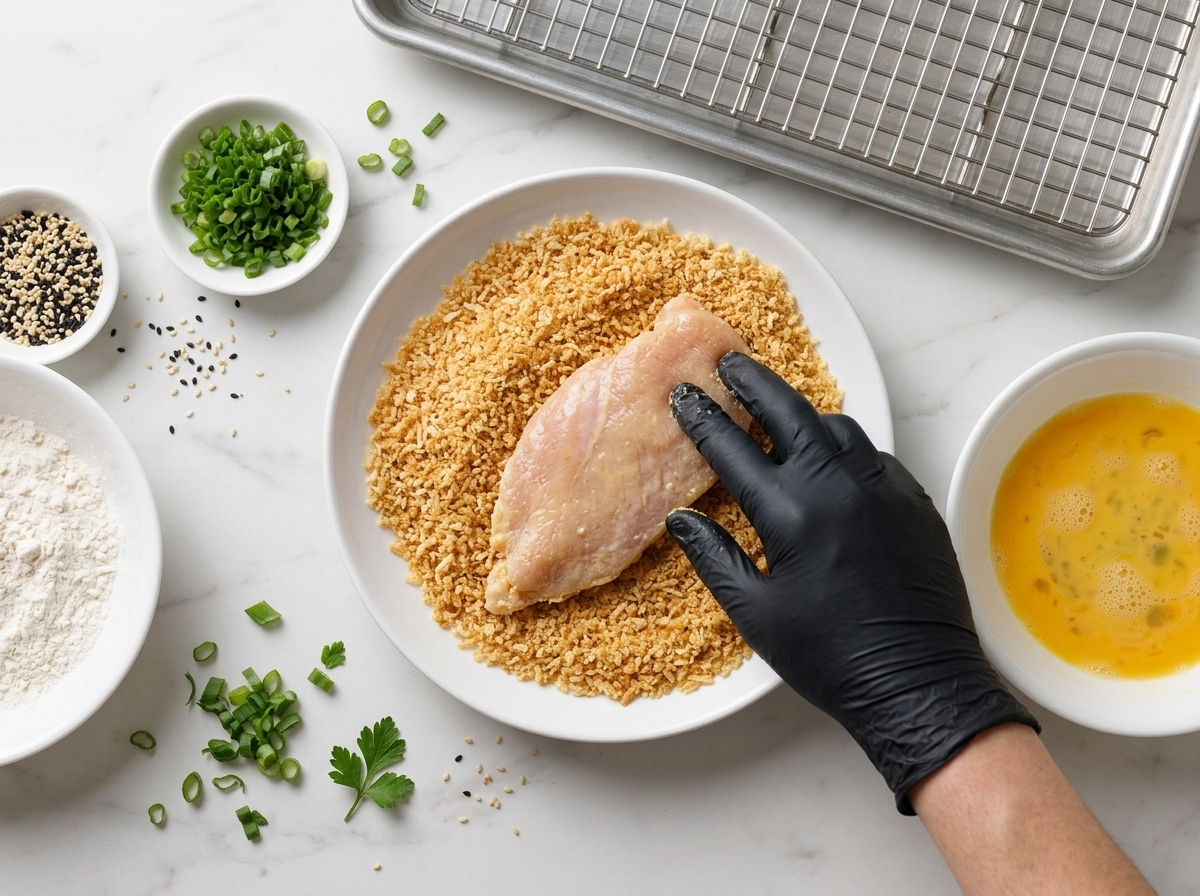
- Set the flour, beaten eggs and toasted panko in three shallow dishes. Dredge each cutlet in flour and shake off the excess, dip it in egg, then press it firmly into the panko on both sides. Place the cutlets on the rack with about 2 cm between them.
- Bake for 18 to 20 minutes, flipping once at the 10-minute mark, until the crust is deep golden and a thermometer in the thickest cutlet reads 165 F / 74 C.
- While the cutlets bake, toss the shredded cabbage with the rice vinegar, sesame oil and 1/4 tsp salt. In a small bowl, stir together the ketchup, Worcestershire, soy sauce and sugar until smooth.
- Slice each cutlet into 2 cm strips. Divide the cabbage among four plates, fan 2 cutlets over each, and spoon over the sauce. Serve with lemon wedges.
Notes
- Slice each breast horizontally into two cutlets before pounding, giving 8 cutlets total.
- Leave about 2 cm between cutlets on the rack so hot air reaches every side.
- Pull the cutlets at 165 F / 74 C, since overbaked breast turns dry fast.
- No protein powder is used, so there is nothing to substitute or subtract.
Tips for Success
- Pound the cutlets to an even 1.5 cm so the thin end doesn’t dry out before the thick end reaches 165 F / 74 C.
- Stir the panko constantly in the 26 cm / 10-inch skillet, because it goes from pale to burnt quickly once it starts to color.
- Keep one hand for the dry flour and panko and the other for the egg so your fingers don’t clump with coating.
- Insert an instant-read thermometer sideways into the thickest cutlet and pull the pan at 165 F / 74 C instead of judging by color.
- Keep the shredded cabbage undressed until the cutlets come out, so it stays crisp against the warm chicken.
Variations
- Mix 2 tbsp grated Parmesan into the toasted panko for an Italian-American crust. This makes the recipe contain dairy.
- Stir 1 tsp sriracha into the tonkatsu sauce for a spicy version, or add a spoonful of Japanese-style curry roux for katsu curry.
- Pile sliced cutlets, cabbage and sauce onto soft white bread for a katsu sando that uses leftovers well.
Storage and Reheating
Baked chicken katsu keeps 3 to 4 days in an airtight container in the fridge. Store the cabbage undressed in a separate container for up to 3 days, and the sauce in a jar for up to 1 week.
Reheat the cutlets on a wire rack set in a sheet pan at 200 C / 400 F for 10 to 12 minutes, until a thermometer reads 165 F / 74 C and the crust has dried out again. The microwave turns the coating soft, so skip it.
For the freezer, freeze the breaded raw cutlets rather than baked ones. Lay them on a tray for 1 hour, then bag them and keep up to 2 months. Bake straight from frozen at 220 C / 425 F for 25 to 28 minutes, flipping once.
Serving Suggestions
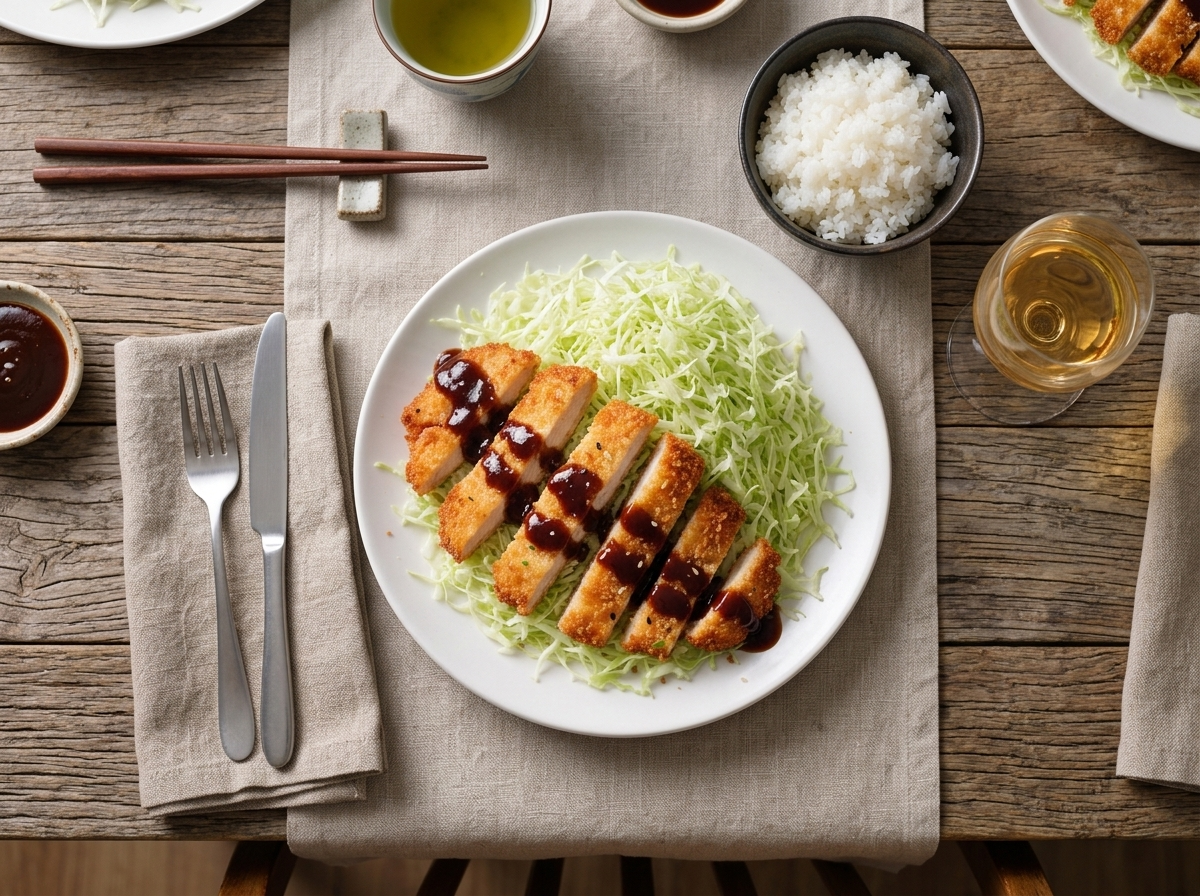
Baked chicken katsu is best sliced into 2 cm strips and fanned over a bed of shredded cabbage, with sauce spooned across the top and a lemon wedge on the side. Serve within 15 minutes of leaving the oven, while the crust is crisp.
Steamed short-grain rice and a bowl of miso soup round it out. A cup of cooked rice adds about 4 g of protein per serving.
My two kids don’t care about macros, they care about the sauce, so I put a small bowl of extra on the table.
FAQ
Why is my baked chicken katsu crust pale or soggy?
A pale or soggy crust usually means the panko wasn’t toasted or the cutlets sat flat on the pan. Toast the panko in 2 tbsp of oil for 3 to 4 minutes until golden before breading, and bake on a wire rack so air reaches the bottom. A 220 C / 425 F oven matters too, since lower heat dries the chicken before the crust browns.
Can I use chicken thighs instead of breasts for baked katsu?
Yes, boneless skinless thighs work. Pound them to 1.5 cm and add 2 to 3 minutes to the bake, until they reach 165 F / 74 C. Thighs have about 5 g less protein per serving than breast here, so you’d land near 39 g instead of 44 g, and the cutlets come out juicier.
Can I freeze breaded chicken katsu before baking it?
Yes, breaded raw cutlets freeze well. Freeze them in a single layer on a tray for 1 hour, then bag them for up to 2 months. Bake straight from frozen at 220 C / 425 F for 25 to 28 minutes, flipping once, until a thermometer reads 165 F / 74 C. Don’t thaw them first or the coating turns gummy.
What is the difference between chicken katsu and tonkatsu?
Tonkatsu is a deep-fried breaded pork cutlet, while katsu is the broader word for any breaded cutlet, so chicken katsu is the chicken version. This one is baked instead of fried, so the crust is crisp but lighter than restaurant tonkatsu. The sauce here is a quick stand-in for the bottled kind.
What do you serve with baked chicken katsu and cabbage?
Steamed short-grain rice and miso soup are the usual pairings. Quick pickled cucumbers or a carrot slaw add acidity if you want more than the cabbage. Leftover cutlets also make a good sandwich on soft white bread with the cabbage and a spoonful of sauce.
How do I make baked chicken katsu gluten free?
Swap in gluten-free panko, a gluten-free flour blend, tamari for the soy sauce, and a Worcestershire labeled gluten-free, since some brands use malt vinegar. Watch the panko closely while toasting, because gluten-free versions can brown faster. The method and bake time stay the same.